
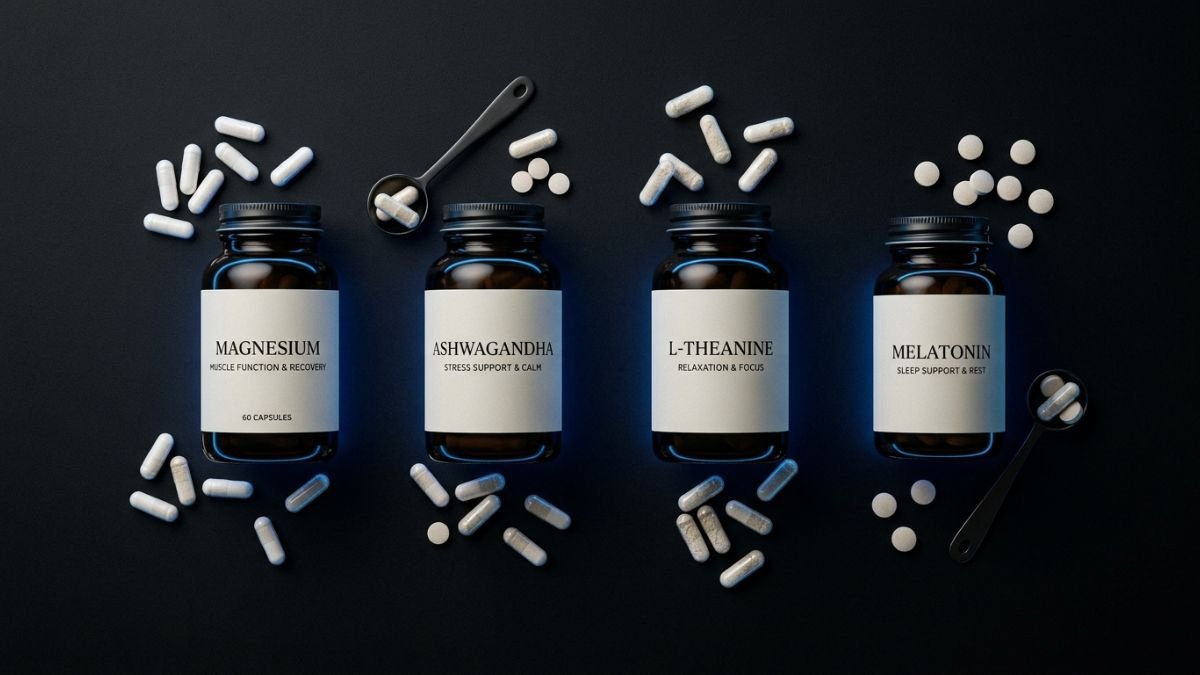
Best Sleep Supplements for Cognitive Performance (2026)
Want to learn more about Best Sleep Supplements for Cognitive Performance?
If you’ve tried nootropics, optimized your diet, and built a morning routine — but still wake up foggy, struggle to focus before noon, or feel like your brain never fully resets — this guide is for you.
The uncomfortable truth most supplement guides won’t tell you: no nootropic stack can compensate for poor sleep. The cognitive damage from chronic sleep deprivation accumulates faster than any supplement can repair it.
But the right sleep supplements — used correctly, at the right doses — can meaningfully improve the quality of your sleep architecture, which translates directly into sharper focus, better memory, and faster cognitive recovery.
This guide covers what the research actually says, which supplements work and why, the exact doses that are effective (not the inflated doses most products sell you), and how to build a protocol you can start tonight.
⚡ Quick Verdict
Best overall: Magnesium L-Threonate — crosses the blood-brain barrier, supports both deep sleep and memory consolidation. Best for cortisol/stress: Ashwagandha KSM-66 — clinically proven to improve sleep quality and reduce cortisol in 8 weeks. Best budget option: Magnesium Glycinate + L-Theanine stack — under $25/month, highly effective for sleep onset and quality. Most misused: Melatonin — most people take 10x the effective dose. Less is significantly more.
👉 Top pick: Magnesium L-Threonate | 📊 Full dosage table included below
What Sleep Actually Does to Your Brain
Before we get to supplements, you need to understand what’s at stake — because this changes how you think about sleep entirely.
During deep sleep, your brain activates the glymphatic system: a biological waste-clearance network that physically flushes out toxic proteins, including amyloid beta — the same compound found in excessive amounts in Alzheimer’s patients.
A 2017 study published in PNAS found that just one night of poor sleep increases amyloid beta accumulation by up to 50%. One night.
Beyond waste clearance, sleep is where memory consolidation happens. The hippocampus — your brain’s memory center — replays and transfers experiences from short-term to long-term storage during slow-wave sleep. REM sleep handles emotional processing, pattern recognition, and creative insight.
Disrupt either of those stages, and you’re not just tired. You’re cognitively impaired in ways that compound over time.
The CDC classifies insufficient sleep (under 7 hours) as a public health epidemic, with over 35% of American adults chronically sleep-deprived. And research from the University of Pennsylvania shows that after 10 days of sleeping 6 hours per night, cognitive performance drops to the equivalent of being legally drunk — while most people don’t even feel impaired.
Sleep isn’t rest. It’s maintenance. And the supplements below support that maintenance process at the biological level.

How We Evaluate Sleep Supplements
Not all sleep supplements are created equal. Here’s the criteria we use before recommending anything on this site:
Clinical evidence: Is there peer-reviewed research, ideally randomized controlled trials, supporting the specific claim? We don’t accept “may support” language backed only by animal studies.
Mechanism clarity: Do we understand how it works? Supplements with clear mechanisms are more predictable and safer to stack.
Dose accuracy: Most supplements on the market are either underdosed (to keep costs down) or overdosed (to make you feel an effect). We reference the doses used in the research, not the doses that sell products.
Sleep architecture specificity: Does the supplement improve quality of sleep (deep sleep duration, REM cycles, sleep efficiency) — or just make you feel sedated? These are very different outcomes.
Absence of dependency: We prioritize supplements that support your natural sleep biology rather than replacing it.
Our Top Picks
1. Magnesium L-Threonate — Best for Cognitive Sleep Recovery
Magnesium is involved in over 300 enzymatic reactions in the body, including regulation of the NMDA receptor (critical for learning and memory) and promotion of GABA — the brain’s primary inhibitory neurotransmitter that enables relaxation and sleep onset.
Most forms of magnesium (oxide, citrate, glycinate) don’t cross the blood-brain barrier effectively. L-Threonate is different — it was specifically developed by MIT researchers to maximize brain uptake.
A 2010 study in Neuron showed that Magnesium L-Threonate increased synaptic density in the hippocampus and significantly improved both short-term and long-term memory in animal models. Human trials have since confirmed cognitive benefits in older adults with cognitive decline.
For sleep specifically, magnesium deficiency is strongly correlated with poor sleep quality, nighttime awakenings, and reduced slow-wave sleep. Correcting that deficiency — especially with a form that reaches the brain — addresses the root cause rather than just sedating you.
What it does well:
- Supports deep sleep (slow-wave sleep) duration
- Reduces nighttime cortisol levels
- Improves sleep efficiency without grogginess
- Provides long-term cognitive benefits beyond sleep
Limitations:
- More expensive than other magnesium forms
- Cognitive benefits accumulate over weeks, not overnight
- Some people experience loose stools initially (start with lower dose)
Recommended dose: 1,500–2,000mg of Magnesium L-Threonate (providing ~144mg elemental magnesium), taken 1–2 hours before bed. If cost is a concern, Magnesium Glycinate at 300–400mg is an excellent and much more affordable alternative with similar sleep benefits, minus the direct cognitive enhancement.
2. Ashwagandha (KSM-66 Extract) — Best for Stress-Disrupted Sleep
If your sleep problems are driven by a mind that won’t quiet down, elevated cortisol, or anxiety — this is your most important supplement.
Ashwagandha is an adaptogen: it helps the body regulate stress responses rather than simply suppressing them. The KSM-66 extract is the most researched form, standardized to a minimum of 5% withanolides (the active compounds).
A 2019 randomized, double-blind, placebo-controlled trial published in Medicine gave 600mg of Ashwagandha root extract daily to adults with self-reported sleep problems. After 8 weeks, the Ashwagandha group showed statistically significant improvements in:
- Total sleep time (+24 minutes on average)
- Sleep onset latency (time to fall asleep) — reduced by 15 minutes
- Sleep efficiency (+6%)
- Morning alertness (self-reported significantly higher)
The mechanism is primarily cortisol regulation. Ashwagandha reduces serum cortisol levels by 14–28% in clinical studies (depending on baseline stress levels and duration). Since cortisol is a primary driver of sleep fragmentation — particularly the fragmentation of deep sleep stages — reducing it has a direct structural effect on sleep quality.
What it does well:
- Reduces cortisol chronically (not just the night you take it)
- Improves sleep onset — the falling-asleep phase
- Protects slow-wave sleep architecture
- Secondary benefits: reduced anxiety, improved physical recovery
Limitations:
- Takes 4–8 weeks of consistent use for full effect
- Not suitable for people with thyroid conditions or those on immunosuppressants (consult your doctor)
- Quality varies widely between brands — always verify KSM-66 or Sensoril extract on the label
Recommended dose: 300–600mg of KSM-66 or Sensoril extract, taken with dinner or 1 hour before bed. Evening dosing is preferred for sleep optimization.
3. L-Theanine — Best for Sleep Onset Without Sedation
L-Theanine is an amino acid found naturally in green tea, and one of the most well-studied supplements for calm focus and sleep quality. What makes it unique is that it doesn’t sedate — it shifts your brain into a more relaxed state without impairing alertness or causing grogginess the next day.
It works by promoting alpha brainwave activity — the state your brain enters during relaxed wakefulness, meditation, or just before sleep. It also increases GABA, serotonin, and dopamine levels, supporting mood and sleep onset simultaneously.
A 2011 study in Nutritional Neuroscience found that 400mg daily of L-Theanine improved sleep quality, reduced sleep onset time, and decreased anxiety in boys with ADHD. Multiple subsequent studies in adults confirmed similar effects.
Crucially, L-Theanine improves sleep quality — particularly REM sleep duration — without causing dependence or tolerance. You can take it every night and it will keep working.
What it does well:
- Reduces time to fall asleep
- Improves REM sleep quality and duration
- Zero grogginess — you wake up clear
- Stacks excellently with Magnesium
Limitations:
- Mild effects when used alone at low doses; more effective at 200–400mg
- Primarily helps with sleep onset and quality — less effective for maintaining sleep through the night
Recommended dose: 200–400mg, 30–45 minutes before bed. For most people, 200mg is a good starting point. Can be combined with Magnesium Glycinate for a highly effective, affordable nightly stack.
4. Low-Dose Melatonin — Most Misused Supplement in Sleep
Melatonin is a hormone your brain produces naturally in response to darkness. It’s a circadian signal — it tells your body it’s nighttime and time to prepare for sleep. It is not, despite how it’s marketed, a sedative.
This distinction matters enormously for how you use it.
The standard doses sold over the counter — 5mg, 10mg, even 20mg — are between 5 and 50 times higher than what your brain naturally produces. These doses don’t improve sleep quality. Research consistently shows they cause next-day grogginess, suppress your natural melatonin production over time, and can dysregulate your circadian rhythm with chronic use.
The effective dose is 0.3mg to 1mg. A 2001 MIT study (from the team that first identified melatonin’s role in sleep) confirmed that 0.3mg is as effective as 1mg for improving sleep onset, and both are significantly more effective than 10mg for actual sleep quality.
At the right dose, melatonin is useful for:
- Jet lag and travel across time zones
- Shift work and irregular schedules
- Resetting a disrupted circadian rhythm
- Occasional use when sleep onset is delayed
What it does well:
- Fast-acting for circadian rhythm correction
- Effective at doses most people never try
- Well-researched, minimal risk at low doses
Limitations:
- Not a long-term solution for chronic insomnia
- High doses (the norm in US products) are counterproductive
- Should not replace behavioral sleep interventions
Recommended dose: 0.3–1mg, taken 30–60 minutes before your target bedtime. Use only as needed, not as a nightly permanent addition to your stack.
You might be interested to know: Select Best Nootropics for Focus: The 2026 Science-Backed Guide
Dosage Guide
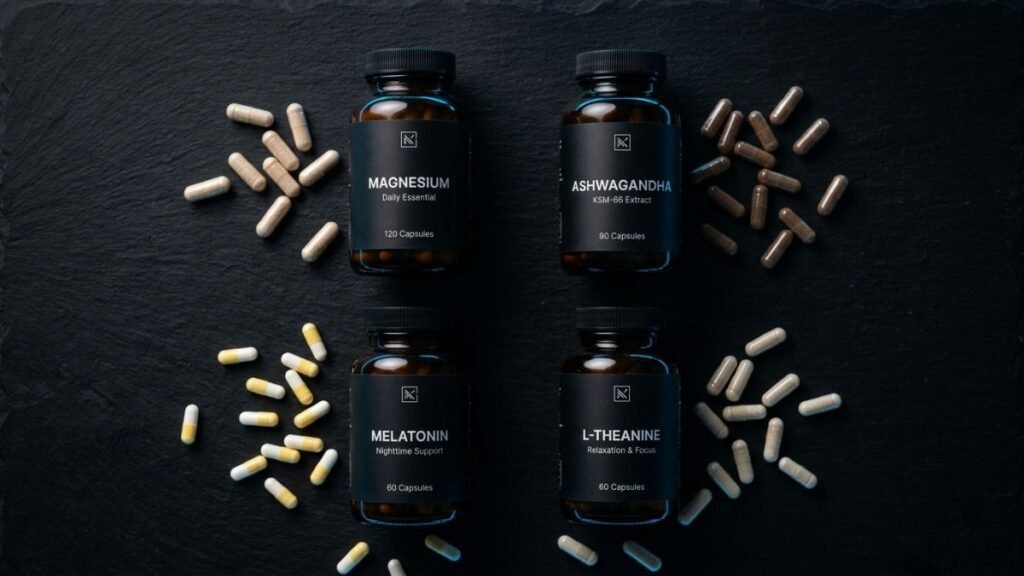
| Supplement | Effective Dose | Timing | Notes |
|---|---|---|---|
| Magnesium L-Threonate | 1,500–2,000mg | 1–2h before bed | Long-term cognitive benefits |
| Magnesium Glycinate | 300–400mg | 30–60 min before bed | Best budget option |
| Ashwagandha KSM-66 | 300–600mg | With dinner or 1h before bed | 4–8 weeks for full effect |
| L-Theanine | 200–400mg | 30–45 min before bed | Stacks well with Magnesium |
| Melatonin | 0.3–1mg | 30–60 min before bed | Use as needed, not nightly |
Building Your Stack: Two Practical Options
Option A — Budget Stack (~$20–25/month) Magnesium Glycinate (300–400mg) + L-Theanine (200mg), taken 30–60 minutes before bed. This addresses the two most common sleep problems — difficulty relaxing and poor sleep quality — at a cost most people can sustain long-term.
Option B — Full Cognitive Sleep Stack (~$60–80/month) Magnesium L-Threonate (1,500mg) + L-Theanine (200mg) + Ashwagandha KSM-66 (300mg). Take the Ashwagandha with dinner and the Magnesium + Theanine 1 hour before bed. This stack addresses cortisol, sleep architecture, and long-term cognitive maintenance simultaneously.
Add low-dose Melatonin (0.3mg) to either option when your schedule is disrupted, during travel, or when you notice your sleep onset extending beyond 30 minutes.
The Environment Your Supplements Can’t Fix
No stack works if your sleep environment is actively destroying your sleep architecture. Here are the four factors the research consistently identifies as most impactful:
Temperature: Your core body temperature needs to drop 1–2°F to initiate sleep. Keep your room at 65–68°F (18–20°C). If you don’t have air conditioning, a small fan directed at your feet is a surprisingly effective solution — the feet and hands are your body’s primary heat-release zones.
Light: Blue light from screens suppresses melatonin production by up to 3 hours. After 9pm, reduce screen brightness to 30% or lower and switch to warm, low-intensity lighting in your space. The effect is cumulative — small changes every night add up.
Consistency: Waking up at the same time every day (including weekends) is one of the most powerful sleep interventions available, costs nothing, and is consistently underestimated. A one-hour variance on weekends is acceptable. Two or three hours creates measurable circadian disruption — social jet lag — that you feel on Monday.
Alcohol: Even one standard drink reduces REM sleep by up to 24% in the first half of the night. Alcohol is a sedative, not a sleep aid. It may help you fall asleep faster but it completely disrupts sleep architecture. If you drink socially, finish your last drink at least 3 hours before bed.
How to Track Whether Your Sleep Is Actually Improving
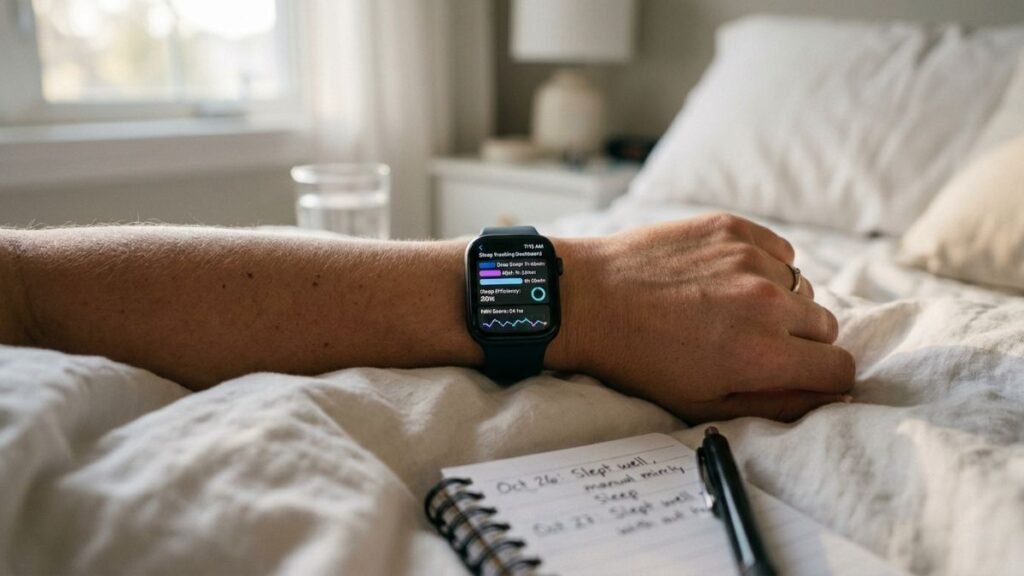
You don’t need expensive technology to measure whether these interventions are working.
Free — The Morning Log: Every morning, answer three questions within 5 minutes of waking: How long did it take me to fall asleep? Did I wake up during the night? How rested do I feel on a scale of 1–10? After two weeks, the patterns become undeniable.
Low cost — Sleep Cycle or Pillow app: Both use your phone’s microphone or accelerometer to estimate sleep stages and give you a nightly quality score. Not perfectly accurate, but consistent enough to track trends.
Advanced — Wearables: Oura Ring, WHOOP, or Garmin provide actual sleep stage data, HRV, and resting heart rate trends. HRV (Heart Rate Variability) is particularly valuable — it directly reflects how well your nervous system recovered overnight, and it predicts cognitive performance the next day better than subjective “how rested I feel” assessments.
Target metrics: Deep sleep 1–2 hours, REM 90+ minutes, sleep efficiency above 85%, time to fall asleep under 20 minutes.
Frequently Asked Questions
Can I take all four supplements together?
Yes, they complement each other without known negative interactions. The most common combination is Magnesium + L-Theanine, taken together before bed. Ashwagandha works well taken earlier (with dinner) due to its slower onset. Melatonin should be reserved for when you genuinely need circadian support, not taken nightly with the others.
How long before I notice results?
L-Theanine and Magnesium Glycinate can show effects the first night for some people — particularly reduced time to fall asleep and fewer nighttime awakenings. Ashwagandha requires 4–8 weeks of consistent daily use to see its cortisol-regulating benefits. Magnesium L-Threonate’s cognitive benefits accumulate over 4–6 weeks.
I already sleep 8 hours. Why do I still feel foggy?
Duration and quality are not the same thing. You can spend 8 hours in bed but have fragmented, shallow sleep with insufficient deep sleep and REM stages. This is where tracking becomes valuable — you may be sleeping 8 hours but achieving only 60% sleep efficiency, which is equivalent to sleeping less than 5 hours of quality sleep.
Is melatonin safe for long-term daily use?
The evidence doesn’t clearly support long-term nightly use at any dose. High-dose nightly use (5–10mg) is particularly problematic because it can suppress your natural melatonin production. Low-dose melatonin (0.3–1mg) appears safer, but we recommend using it situationally rather than as a permanent nightly supplement.
I have anxiety that keeps me awake. Should I prioritize Ashwagandha or L-Theanine?
For anxiety-driven sleeplessness, Ashwagandha addresses the root cause (elevated cortisol and HPA axis dysregulation) more directly than L-Theanine. However, L-Theanine provides more immediate relief the same night you take it. A practical approach: use L-Theanine for immediate support while Ashwagandha builds up to full effect over 4–8 weeks.
Are these supplements safe to combine with medication?
Ashwagandha interacts with thyroid medications, immunosuppressants, and some sedatives. Magnesium can interact with certain antibiotics and blood pressure medications. If you’re taking any prescription medication, consult your doctor before adding these supplements. L-Theanine and low-dose Melatonin have minimal known interactions but the same caution applies.
Bottom Line
Sleep is the foundation that every other cognitive intervention builds on. Without it, nootropics underperform, exercise recovers you less, and even good nutrition can’t fully compensate for the neurological repair that only happens during quality sleep.
The supplements in this guide don’t replace sleep. They support the biological processes that make sleep restorative — reducing the cortisol that fragments your sleep, providing the magnesium your nervous system needs to downregulate, promoting the alpha brainwave activity that eases you into sleep without a hangover.
Start with the basics: Magnesium Glycinate and L-Theanine tonight. Track your morning alertness for two weeks. Add Ashwagandha if stress or cortisol is part of your picture. Use Melatonin when you need it, at a fraction of the dose you’ve probably been using.
Your brain does its most important work while you sleep. Give it the conditions to do that work.
Cognitive Insight Lab provides evidence-based information for educational purposes. This content is not medical advice. Consult a qualified healthcare provider before starting any new supplement protocol, especially if you have a medical condition or take prescription medications.

Daniel Mercer é um escritor de ciências da saúde especializado em desempenho cognitivo, nootrópicos e pesquisas sobre saúde cerebral. Com formação em ciências biomédicas e mais de uma década de experiência revisando literatura clínica sobre desempenho mental e suplementação, ele fundou o Cognitive Insight Lab para simplificar informações irrelevantes e fornecer análises baseadas em evidências para pessoas que levam a sério sua saúde cognitiva. Daniel não aceita conteúdo patrocinado e não possui vínculos financeiros com as marcas analisadas neste site.