
Best Supplements for Brain Fog in 2026: Ranked, Reviewed and Compared
Medical Disclaimer: This content is for informational and educational purposes only. It does not constitute medical advice and is not intended to diagnose, treat, cure, or prevent any medical condition. Always consult your healthcare provider before starting any new supplement, especially if you take prescription medications or have an existing health condition.
The best supplements for brain fog aren’t just about taking a capsule and waiting for clarity to arrive. They work differently — through different mechanisms, on different root causes, over different timeframes. And choosing the wrong one for your specific type of fog is one of the most common mistakes adults make when trying to reclaim their cognitive edge.
If you’ve spent time reading labels on nootropic products, you already know how overwhelming this space can be. Some ingredients have decades of clinical research behind them. Others are backed by little more than a marketing claim and a wellness influencer. The difference between those two categories matters enormously.
In this guide, we’ve reviewed the current evidence for the seven most clinically supported supplements for brain fog in adults — looking at mechanisms of action, quality of evidence, effective dosages, and realistic expectations. No hype, no miracle claims. Just a clear-eyed breakdown of what the research actually supports.
Whether your fog is driven by chronic stress, nutritional gaps, poor sleep, or cognitive fatigue from modern life, at least one — and likely two or three — of these supplements is relevant to what you’re experiencing.
How to use this guide: Start with the Quick Verdict table to identify your most relevant options. Then read the full review for each one you’re considering. The Comparison Table and Stacking Guide at the end will help you build a targeted, evidence-based approach.
KNOW MORE: Best Sleep Supplements for Cognitive Performance (2026)
Quick Verdict — Top Supplements for Brain Fog at a Glance
| Rank | Supplement | Best For | Evidence Level |
|---|---|---|---|
| #1 | Lion’s Mane Mushroom | Neuroplasticity, long-term clarity | Strong — clinical trials |
| #2 | Citicoline (CDP-Choline) | Memory, acetylcholine support | Strong — multiple RCTs |
| #3 | Bacopa Monnieri | Stress-induced fog, recall | Strong — meta-analyses |
| #4 | Ashwagandha KSM-66 | Cortisol, burnout fog | Strong — multiple RCTs |
| #5 | Rhodiola Rosea | Mental fatigue, focus under stress | Moderate — consistent |
| #6 | Omega-3 DHA | Neuroinflammation, foundational | Very strong — extensive |
| #7 | Magnesium L-Threonate | Sleep-related fog, synaptic density | Moderate — emerging |
What to Look for Before Buying a Brain Fog Supplement
Before diving into the individual supplements, it’s worth establishing the criteria that actually separate effective products from expensive placebos. These are the standards every recommendation in this guide is held to.
Clinical Evidence Quality
There is a significant difference between a study conducted on rodents in a lab and a randomized controlled trial conducted on adult humans. In this guide, we distinguish between:
- Strong evidence: Multiple randomized controlled trials (RCTs) or published meta-analyses in peer-reviewed journals
- Moderate evidence: Consistent positive findings across smaller human studies, with biological plausibility
- Emerging/preliminary: Early-stage research, mostly in vitro or animal studies, with limited human data
Bioavailability and Form
The same ingredient can have dramatically different bioavailability depending on its form. Magnesium oxide, for example, has roughly 4% absorption — virtually useless for brain function. Magnesium L-Threonate was specifically designed to cross the blood-brain barrier. Form matters as much as ingredient.
Dosage Transparency
Effective supplementation requires knowing exactly how much of each active ingredient you’re getting. Products that use proprietary blends — where individual ingredient amounts are hidden — should be approached with skepticism. The effective doses for most evidence-backed supplements are well-established and publicly documented.
Third-Party Testing
For quality assurance, look for supplements that are certified by independent testing organizations: NSF International, USP (United States Pharmacopeia), or Informed Sport. These certifications verify that what’s on the label is actually in the capsule — and that it doesn’t contain contaminants.
The 7 Best Supplements for Brain Fog: Full Reviews
1. Lion’s Mane Mushroom — Best Overall for Cognitive Clarity

Lion’s Mane (Hericium erinaceus) has earned its reputation as one of the most compelling natural nootropics available. Unlike most supplements that work acutely — producing a few hours of sharper focus — Lion’s Mane supports the structural integrity of the brain over time.
How it works
Lion’s Mane contains two unique bioactive compounds — hericenones and erinacines — that stimulate the production of Nerve Growth Factor (NGF). NGF is a protein that promotes the growth, maintenance, and survival of neurons. It also plays a central role in neuroplasticity — the brain’s ability to form new connections and adapt to changing demands. This is the mechanism most directly relevant to brain fog: a brain with healthy NGF levels maintains sharper cognitive function and recovers more efficiently from stress.
What the research shows
A landmark double-blind placebo-controlled trial published in Phytotherapy Research (2009) found that adults with mild cognitive impairment who took 3g of Lion’s Mane daily for 16 weeks showed significant improvements on cognitive function tests compared to placebo. Scores declined after supplementation was stopped — suggesting the effect is dependent on continued use.
More recent research from 2023 published in the Journal of Neurochemistry demonstrated that specific compounds in Lion’s Mane could rapidly stimulate neuron growth and memory formation in preclinical models — with effects at doses translatable to practical supplementation.
Effective dosage
- Standard research dose: 500mg–3,000mg daily of fruiting body extract
- Look for products standardized to at least 25–30% beta-glucans
- Avoid mycelium-on-grain products — they deliver significantly less active compounds
Who it’s best for
Adults experiencing chronic, persistent brain fog — particularly those with cognitive fatigue related to burnout, aging, or post-illness recovery. Effects build over 4–8 weeks of consistent use; this is not an acute supplement.
Potential side effects
Generally well-tolerated. Rare reports of mild digestive discomfort and, in isolated cases, allergic reactions in individuals sensitive to mushrooms.
2. Citicoline (CDP-Choline) — Best for Memory and Mental Speed

Citicoline — also known as CDP-choline — is one of the most evidence-backed cognitive supplements available. It serves as a precursor to both acetylcholine (the primary neurotransmitter for memory and learning) and phosphatidylcholine (a critical structural component of neuronal membranes).
How it works
Once ingested, citicoline is cleaved into choline and cytidine in the gut. The choline is used to synthesize acetylcholine in the brain. The cytidine converts to uridine, which supports neuronal membrane repair and dopaminergic activity. The net effect is improved neurotransmitter balance, stronger neuronal membrane integrity, and enhanced cerebral blood flow.
What the research shows
Citicoline has been studied extensively — including as a pharmaceutical agent in Europe (Cognizin brand) for stroke rehabilitation and age-related cognitive decline. A 2021 randomized controlled trial published in Nutrients found that healthy adults taking 500mg of citicoline daily for 12 weeks showed significant improvements in attention, memory, and psychomotor speed compared to placebo. Importantly, these results were observed in otherwise healthy adults — not just those with diagnosed cognitive impairment.
Effective dosage
- Evidence-supported dose: 250mg–500mg daily
- Higher doses (up to 2,000mg) used in clinical neurological applications
- Look for Cognizin-branded citicoline — the most studied form
Who it’s best for
Adults experiencing brain fog characterized by slow recall, difficulty holding information in working memory, and reduced mental speed. Particularly relevant for those in mentally demanding roles or academic environments.
Potential side effects
Well-tolerated at recommended doses. Some individuals report mild insomnia when taken late in the day — morning dosing is recommended.
3. Bacopa Monnieri — Best for Stress-Induced Fog and Memory Consolidation
Bacopa monnieri is an Ayurvedic herb with a research profile that stands out for its consistency. Unlike many botanical nootropics that rely on single studies, Bacopa has been examined in multiple independent randomized controlled trials — including a rigorous meta-analysis.
How it works
Bacopa’s active compounds — bacosides A and B — enhance the activity of acetylcholinesterase inhibitors (slowing the breakdown of acetylcholine) and reduce oxidative stress in the hippocampus. It also modulates cortisol response, making it particularly effective for the cognitive impairment driven by chronic psychological stress. Additionally, Bacopa supports dendritic branching — the physical expansion of neuronal connections that underlies memory consolidation.
What the research shows
A 2014 meta-analysis of nine randomized controlled trials, published in the Journal of Ethnopharmacology, found that Bacopa monnieri consistently improved memory free recall compared to placebo. Effects were most pronounced for delayed recall — the ability to retrieve information hours after initial learning — which is one of the cognitive functions most commonly impaired by brain fog.
Effective dosage
- Evidence-supported dose: 300mg–600mg daily of extract standardized to 20–55% bacosides
- Important: Bacopa typically requires 8–12 weeks before meaningful cognitive effects are observed
- Take with food — Bacopa is fat-soluble
Who it’s best for
Adults whose brain fog is closely tied to chronic stress, anxiety, or difficulty retaining new information. Also well-suited for those preparing for high-cognitive-demand periods (exams, major projects, high-stakes presentations).
Potential side effects
Most commonly reported: mild GI discomfort, particularly nausea when taken on an empty stomach. Taking with a meal and starting at a lower dose (300mg) typically resolves this.
4. Ashwagandha (KSM-66) — Best for Cortisol-Driven and Burnout Fog
Ashwagandha (Withania somnifera) is arguably the most studied adaptogen in clinical literature. Its relevance to brain fog is specific: it targets the HPA axis — the stress response system whose dysregulation is one of the primary drivers of cognitive fog in high-functioning, chronically stressed adults.
How it works
Ashwagandha’s primary active compounds — withanolides — modulate cortisol production and reduce HPA axis hyperactivation. By bringing cortisol within a healthier range, Ashwagandha reduces the neuroinflammatory and neurotoxic effects of chronic stress on the brain. It also demonstrates anxiolytic (anti-anxiety) effects through GABA receptor modulation — addressing the anxiety component of cognitive fog without sedation.
What the research shows
A double-blind, placebo-controlled trial published in Medicine (2019) found that adults taking 240mg of KSM-66 Ashwagandha extract daily for 60 days showed significantly reduced cortisol levels, improved memory and cognitive function, and reduced self-reported stress and anxiety. A separate 2021 study in PLOS ONE replicated these findings using a larger cohort, confirming improvements in both subjective cognitive performance and objective stress biomarkers.
Effective dosage
- Evidence-supported dose: 300mg–600mg daily of KSM-66 or Sensoril extract
- KSM-66 (full-spectrum root extract) is the most studied form — look for it by name
- Can be taken once daily; some evidence supports AM dosing for cortisol regulation
Who it’s best for
Adults whose brain fog presents alongside chronic stress, burnout, anxiety, or difficulty unwinding. If your fog is worst during periods of high demand and improves significantly on vacation, Ashwagandha is likely highly relevant to your situation.
Potential side effects
Generally well-tolerated. Not recommended during pregnancy. Rare reports of thyroid hormone interference — those with thyroid conditions should consult their physician before use.
5. Rhodiola Rosea — Best for Mental Fatigue and Fog Under Pressure
Rhodiola rosea is a northern European adaptogen with a specific and well-defined cognitive profile: it reduces mental fatigue and maintains performance under conditions of sustained cognitive demand and psychological stress. Think of it as the supplement for the brain fog that appears specifically when you’re pushing hard.
How it works
Rhodiola’s active compounds — rosavins and salidroside — influence the balance of serotonin, dopamine, and norepinephrine by inhibiting their enzymatic breakdown (MAO inhibition). This maintains neurotransmitter availability during periods of stress. Rhodiola also reduces the production of cortisol in response to acute stress and supports mitochondrial energy production in neurons — directly addressing the “cognitive battery drain” that characterizes stress-induced fog.
What the research shows
A double-blind placebo-controlled trial published in Phytomedicine found that adults taking Rhodiola extract for just 2 weeks showed significant improvements in fatigue, mental performance, and stress response compared to placebo — with effects appearing within the first 3–7 days. This relatively rapid onset distinguishes Rhodiola from slower-acting supplements like Bacopa and Lion’s Mane.
Effective dosage
- Evidence-supported dose: 200mg–600mg daily of extract standardized to 3% rosavins and 1% salidroside
- Best taken in the morning or early afternoon — can be mildly stimulating for some individuals
- Cycle use: 5 days on, 2 days off is commonly recommended in functional medicine
Who it’s best for
High-performing adults who experience brain fog specifically during periods of high workload, travel, sleep restriction, or sustained mental demand. Also relevant for early morning fog and difficulty achieving peak cognitive performance before 10am.
Potential side effects
Mild stimulant effect in some individuals — avoid late-day dosing if sensitive to stimulants. Not recommended for those with bipolar disorder due to potential mood-activating effects.
6. Omega-3 DHA — The Foundational Non-Negotiable

Omega-3 DHA (docosahexaenoic acid) is not a trendy nootropic. It is a fundamental structural component of the human brain — constituting approximately 40% of the polyunsaturated fatty acids in neural tissue. Including it in this ranking is not optional: without adequate DHA, every other supplement on this list is operating on a suboptimal foundation.
How it works
DHA maintains the fluidity of neuronal cell membranes — which determines how efficiently signals travel between neurons. It also directly regulates the production of pro- and anti-inflammatory compounds in the brain. Low DHA status is associated with increased neuroinflammation, impaired synaptic transmission, and reduced BDNF (brain-derived neurotrophic factor) production. All three of these mechanisms contribute directly to brain fog.
What the research shows
The evidence base for omega-3 DHA and cognitive function is among the most extensive in nutritional neuroscience. A 2022 Cochrane review analyzing 25 randomized trials found consistent associations between DHA supplementation and improved cognitive performance in adults with documented low omega-3 status — with effects particularly pronounced for memory and processing speed.
Effective dosage
- Evidence-supported dose: 1,000mg–2,000mg of combined EPA+DHA daily, with DHA as the primary component
- Look for triglyceride-form fish oil — significantly better absorbed than ethyl ester forms
- Algae-based DHA is the recommended option for vegans and vegetarians
Who it’s best for
Anyone whose diet does not include 2–3 servings of fatty fish per week. This describes the majority of Western adults. DHA is foundational — consider it the floor on which other cognitive supplements stand.
Potential side effects
Fishy aftertaste with low-quality products (refrigerate capsules to minimize). Theoretical blood-thinning effect at very high doses — those on anticoagulants should consult their physician.
7. Magnesium L-Threonate — Best for Sleep-Related Fog and Synaptic Density
Magnesium is involved in over 300 enzymatic reactions in the human body — including several directly relevant to brain function. The challenge is getting it into the brain. Most forms of magnesium do not cross the blood-brain barrier effectively. Magnesium L-Threonate was specifically engineered to solve this problem.
How it works
Developed by researchers at MIT, Magnesium L-Threonate (tradename Magtein) elevates magnesium levels in cerebrospinal fluid more effectively than other forms. In the brain, magnesium regulates NMDA receptor activity — a key mechanism in synaptic plasticity and memory formation. It also improves sleep architecture (particularly slow-wave sleep), which is directly relevant to brain fog driven by unrestorative sleep.
What the research shows
A 2016 study published in The Journal of Alzheimer’s Disease found that adults taking Magnesium L-Threonate showed improvements in overall cognitive ability, short-term memory, and long-term memory over a 12-week period. Brain scans also indicated increased synaptic density — suggesting structural, not just functional, improvements.
Effective dosage
- Evidence-supported dose: 1,500mg–2,000mg of Magtein daily (delivering approximately 144mg elemental magnesium)
- Divide into two doses: one with lunch, one 1–2 hours before bed
- The evening dose is particularly beneficial for improving sleep quality
Who it’s best for
Adults whose brain fog is closely linked to poor sleep quality, difficulty falling asleep, or waking unrested. Also relevant for those over 40, as magnesium absorption from food decreases with age.
Potential side effects
Well-tolerated. High doses may cause loose stools — start at 1,500mg and adjust as needed.
Full Comparison Table
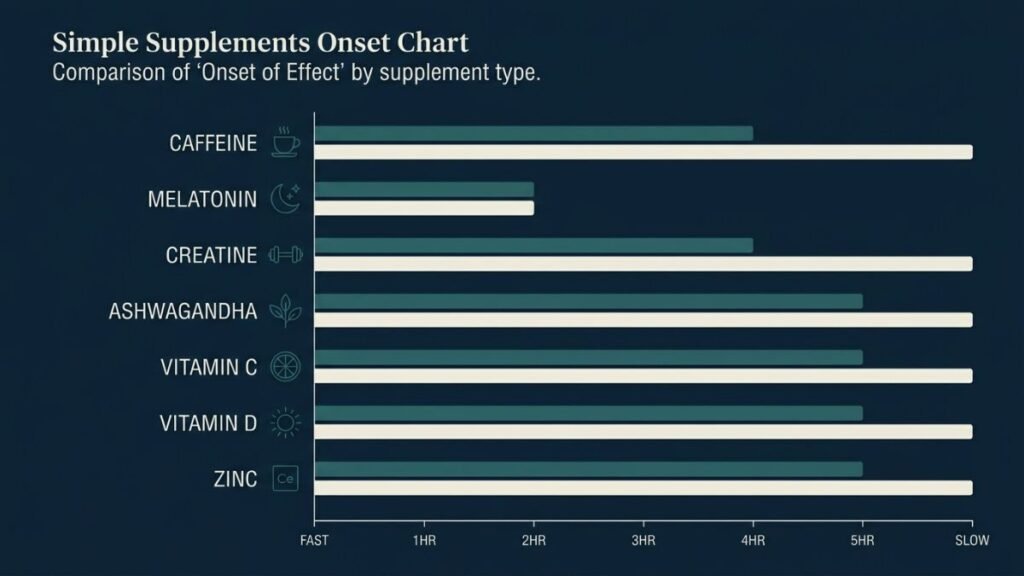
| Supplement | Primary Mechanism | Onset of Effect | Best Evidence | Recommended Form | Daily Dose |
|---|---|---|---|---|---|
| Lion’s Mane | NGF synthesis, neuroplasticity | 4–8 weeks | Clinical trials | Fruiting body extract (25%+ beta-glucans) | 500–3,000mg |
| Citicoline | Acetylcholine, membrane repair | 2–4 weeks | Multiple RCTs | Cognizin CDP-Choline | 250–500mg |
| Bacopa Monnieri | Memory consolidation, cortisol | 8–12 weeks | Meta-analysis | Standardized extract (20–55% bacosides) | 300–600mg |
| Ashwagandha | HPA axis, cortisol regulation | 2–6 weeks | Multiple RCTs | KSM-66 root extract | 300–600mg |
| Rhodiola Rosea | Neurotransmitter balance, fatigue | 3–7 days | Consistent trials | 3% rosavins / 1% salidroside | 200–600mg |
| Omega-3 DHA | Neuroinflammation, membranes | 4–12 weeks | Extensive RCTs | Triglyceride-form fish oil | 1,000–2,000mg |
| Magnesium L-Threonate | Synaptic density, sleep quality | 2–4 weeks | Clinical trials | Magtein (trademarked form) | 1,500–2,000mg |
How to Stack These Supplements: A Practical Approach
Not every supplement on this list is appropriate for everyone — and taking all seven simultaneously is neither practical nor necessary. Here are three evidence-informed stack approaches based on the most common brain fog profiles.
Stack A — Stress and Burnout Fog Best for: professionals under sustained pressure, cortisol-driven fog, anxiety-related mental cloudiness
- Ashwagandha KSM-66 (300–600mg AM)
- Rhodiola Rosea (200–400mg AM)
- Omega-3 DHA (1,000–2,000mg with meals)
Stack B — Memory and Mental Speed Fog Best for: difficulty retaining information, slow recall, word-finding problems, post-illness cognitive lag
- Citicoline (250–500mg AM)
- Bacopa Monnieri (300mg with evening meal)
- Omega-3 DHA (1,000–2,000mg with meals)
Stack C — Deep Cognitive Recovery (Long-term) Best for: persistent fog that hasn’t responded to lifestyle changes, neuroplasticity support, 40+ adults
- Lion’s Mane (1,000–2,000mg daily)
- Magnesium L-Threonate (1,500mg split AM/PM)
- Omega-3 DHA (2,000mg with meals)
Important: Introduce one supplement at a time, at the lowest effective dose, and allow 2–4 weeks before adding the next. This makes it possible to identify what’s working — and what isn’t — without the noise of simultaneous changes.
What to Avoid: Common Brain Fog Supplement Mistakes
Proprietary blends with undisclosed doses If a product lists multiple ingredients but conceals individual amounts under a “proprietary blend” label, there is no way to verify whether any ingredient is present at an effective dose. Transparency is non-negotiable.
Expecting immediate results from slow-acting supplements Bacopa and Lion’s Mane require consistent use over weeks to months before meaningful effects appear. Expecting results within a week and abandoning them prematurely is one of the most common mistakes in this category.
Neglecting the foundational variables Supplements work in service of — not instead of — adequate sleep, regular movement, a low-inflammatory diet, and effective stress management. A Lion’s Mane capsule taken alongside 5 hours of sleep and a high-sugar diet is fighting an uphill battle.
Mega-dosing More is not better. The doses listed in this guide reflect the ranges used in clinical research. Significantly exceeding them provides no additional benefit and increases the risk of side effects.
Important Notice: The supplements reviewed in this article have been selected based on the quality of their research evidence. However, supplement effectiveness varies between individuals depending on age, health status, medications, and the specific root causes of their brain fog. This article does not constitute medical advice. If you experience persistent cognitive symptoms, please consult a qualified healthcare provider before beginning any supplementation protocol.
Conclusion
The best supplements for brain fog are those that match your specific situation — your root causes, your timeline, and your tolerance for a multi-week commitment. There is no single answer. But there are clear, evidence-based options.
If you’re starting from scratch, the most universally supported combination is: Omega-3 DHA as the non-negotiable foundation, Ashwagandha or Rhodiola if stress is a primary driver, and either Lion’s Mane or Citicoline for long-term cognitive support.
Three things to remember:
- Match the supplement to the cause. Ashwagandha addresses cortisol-driven fog. Magnesium L-Threonate addresses sleep-related fog. Citicoline addresses cholinergic fog. Knowing your primary driver makes the decision significantly clearer.
- Quality matters more than quantity. One well-dosed, third-party tested supplement will outperform five low-quality products in a proprietary blend.
- Consistency beats intensity. The most effective supplements in this category require weeks of regular use. Give them the time they need.
Use this guide as a reference and revisit it as your situation evolves. Cognitive health is not a problem you solve once — it’s something you maintain.
Frequently Asked Questions
How long before brain fog supplements start working?
It depends on the supplement. Rhodiola Rosea can produce noticeable effects within 3 to 7 days. Ashwagandha and Citicoline typically require 2 to 4 weeks. Bacopa Monnieri and Lion’s Mane require 8 to 12 weeks of consistent use before meaningful cognitive effects are reported. Omega-3 DHA and Magnesium L-Threonate sit in the 4 to 8 week range for most users.
Can I take multiple brain fog supplements together?
Yes, with care. The supplements reviewed in this guide are generally safe to combine. The recommended approach is to introduce one at a time, at the lowest effective dose, and allow 2 to 4 weeks before adding another. This makes it easier to identify what is and isn’t working for your specific situation.
Are natural supplements for brain fog safe?
The supplements reviewed in this guide have well-established safety profiles at the doses indicated. That said, “natural” does not automatically mean safe for everyone. Ashwagandha may interact with thyroid medications. High-dose omega-3s may affect blood clotting. Always consult your healthcare provider if you take prescription medications or have a diagnosed health condition.
Do brain fog supplements work without lifestyle changes?
Supplements can provide meaningful support, but they work most effectively when combined with adequate sleep, regular physical activity, a low-inflammatory diet, and effective stress management. Attempting to supplement your way out of chronic sleep deprivation or a high-sugar diet will produce limited results.
What is the difference between nootropics and brain fog supplements?
The terms overlap considerably. “Nootropic” is a broader category that includes any substance intended to enhance cognitive function — including some pharmaceuticals. Brain fog supplements are a subset: they specifically target the reduction of cognitive cloudiness and mental fatigue rather than acute cognitive enhancement. Some supplements, like Citicoline and Bacopa, appear on both lists.
Is Lion’s Mane or Ashwagandha better for brain fog?
They target different root causes. Lion’s Mane works through neuroplasticity and NGF stimulation — it is better suited for persistent, structural cognitive fog and long-term brain health support. Ashwagandha targets cortisol and HPA axis dysregulation — it is better suited for stress-driven fog and burnout. If chronic stress is your primary driver, Ashwagandha is likely more immediately relevant. For long-term cognitive recovery and resilience, Lion’s Mane is the stronger choice.
Should I consult a doctor before taking supplements for brain fog?
Yes — particularly if your brain fog is persistent, worsening, or accompanied by other symptoms. A healthcare provider can identify or rule out underlying medical causes and advise on supplement interactions with any medications you take. Supplements are most appropriately used as a supportive intervention alongside — not instead of — appropriate medical care.