
Cognitive Exhaustion: Why Your Brain Feels Tired Even When You’re Not Doing Much
It usually starts as something you can’t quite explain. You’re not lifting weights, not running from meeting to meeting, not doing anything that looks “hard”… and yet your mind feels heavy. Decisions feel expensive. Reading takes twice the time. Simple tasks trigger resistance. The strange part is the mismatch: your day doesn’t look demanding, but your brain feels drained. That experience is often described as cognitive exhaustion—a state where mental energy, attention, and self-regulation drop below your usual baseline, even when life looks “quiet” on the outside.
This matters because it’s not a rare problem. Across many countries, stress has become a background condition. In a global Ipsos survey across 31 countries, 62% said they’ve felt stressed to the point it impacted daily life at least once, with wide variation by country and demographic group. Gallup’s global tracking also shows that in 2024, a significant share of adults reported experiencing stress or worry, reflecting how common emotional strain has become at scale. When stress becomes ambient, the brain adapts—and one common “price” is the slow erosion of cognitive stamina.
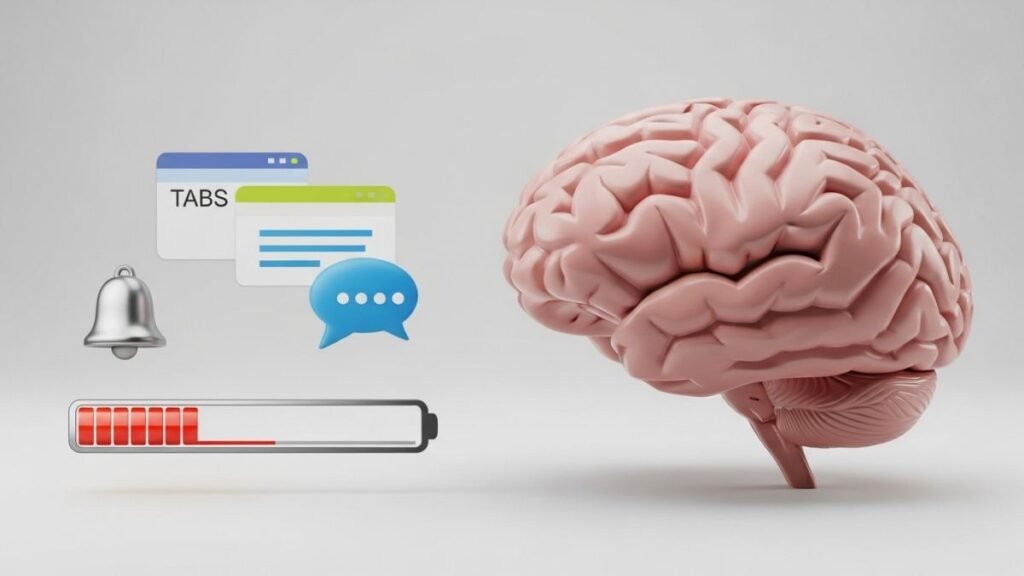
In practice, when we observe people in modern routines—hybrid work, constant messaging, rapid context switching, always-on information—one pattern repeats: mental energy gets spent in tiny invisible payments all day. Notifications, micro-decisions, background anxiety, switching tabs, remembering unfinished tasks. None of it feels dramatic. But stacked over weeks, it can flatten focus, memory, mood, and motivation.
In this guide, you’ll learn what cognitive exhaustion looks like in real life, what typically causes it, how it differs from burnout or depression, and what practical changes tend to restore clarity—without exaggeration, without “quick fixes,” and with clear guidance on when professional support is the smartest next step.
RELATED VIDEO: Watch the full breakdown on cognitive exhaustion (YouTube)
What cognitive exhaustion is (and why it doesn’t feel like “normal tiredness”)
Cognitive exhaustion is not simply “being sleepy.” It’s the felt and functional drop in your capacity to sustain mental effort—especially for tasks that require attention, working memory, planning, emotional regulation, and decision-making. When it hits, the issue is rarely raw intelligence. The issue is bandwidth.
It changes choices, not just feelings
One reason cognitive exhaustion is so frustrating is that it alters your behavior in ways that look like personality flaws. You avoid tasks that require effort. You choose the easiest option. You procrastinate, even when you care. Research on mental fatigue helps explain this: as cognitive fatigue increases, people tend to shift away from effortful actions, as if the brain is trying to protect limited resources.
Why it can happen when you “didn’t do much”
A day can be low on physical activity and still be extremely high on cognitive load. Common examples include:
- Repeated context switching (messages, emails, tabs, notifications)
- Emotion-heavy processing (worry, rumination, conflict)
- Decision saturation (constant small choices with no recovery)
- Sleep that is long enough in hours but weak in quality or regularity
Attention: “I didn’t do anything today” often means “I didn’t do anything visible.” Your brain may have worked nonstop on micro-tasks, micro-stressors, and mental bookkeeping.
The most common signs (including the ones people overlook)
Cognitive exhaustion rarely arrives with one obvious symptom. More often, it shows up as small failures and subtle personality shifts—until you realize they’ve become a pattern.
Cognitive signs (attention, memory, thinking speed)
- Difficulty starting tasks (the first step feels like a wall)
- Reading without retaining (you re-read the same paragraph)
- Short-term memory slips (forgetting what you just opened a tab for)
- Slower decision-making (even simple choices feel heavy)
- “Brain fog” (low clarity, low mental sharpness)
Emotional and behavioral signs (the hidden cost)
- Irritability that feels out of proportion
- Low tolerance for noise, interruptions, and unpredictability
- Avoidance of social interaction because it feels like “more input”
- Procrastination paired with guilt (you delay and then punish yourself)
Physical signs that often get misread
- End-of-day headaches
- Jaw/neck tension, tight shoulders
- Sleep that doesn’t refresh, even after a full night
Bullet list: quick self-check questions
- Do small decisions feel harder than they used to?
- Do you “escape” into scrolling because thinking feels expensive?
- Do you feel mentally tired before the day is even halfway done?
- Does your patience disappear faster than usual?
- Do you need more effort to do tasks you normally handle easily?
Practical tip: A simple early marker is your tolerance for tiny frustrations. When everything feels irritating, the world may not have changed—your mental “fuel tank” may be near empty.
What’s draining your brain: modern causes that seem harmless
Most people look for one dramatic explanation. The reality is usually a combination of everyday factors that quietly add up.
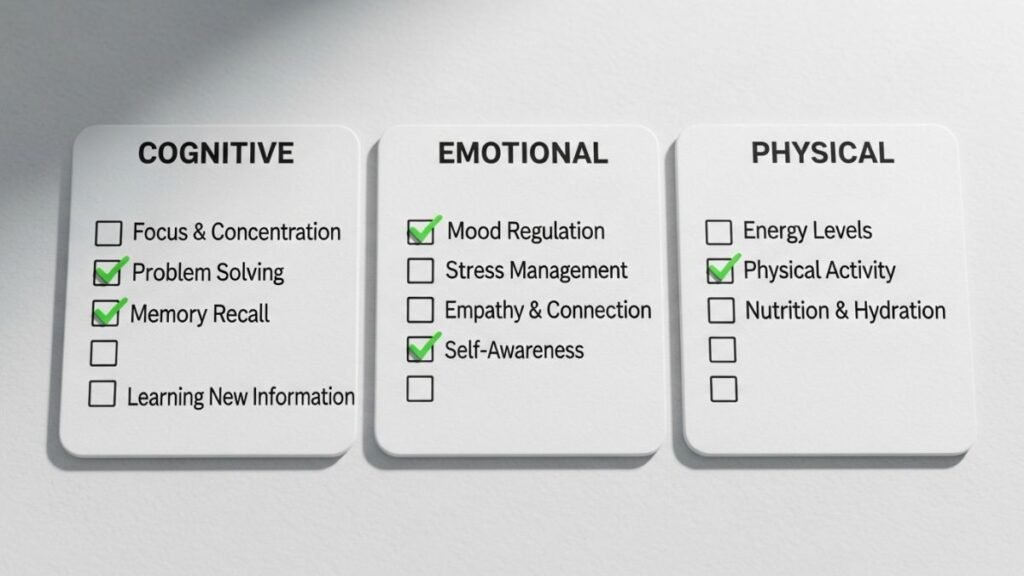
1) Context switching: the invisible energy leak
Switching tasks forces the brain to re-orient—what matters, what the goal is, what you were doing, what comes next. When this happens repeatedly, your mind spends energy “reloading” instead of progressing. The problem is not doing many things. The problem is constantly changing tracks.
2) Information overload without digestion
Consuming content feels like downtime, but it can still be cognitive work. Your brain is processing novelty, comparing, evaluating, reacting. Scrolling isn’t always rest; it’s often a different form of stimulation that keeps your system turned on.
3) Chronic stress as an environment
When stress becomes a constant background state, the nervous system stays closer to “alert mode.” In Ipsos’ global report, stress is widely reported across countries and groups, suggesting this is not a niche issue. Gallup’s global data also reflects sustained levels of stress and worry in 2024. Over time, that steady tension can reduce cognitive flexibility and mental stamina.
4) Sleep debt and inconsistent recovery
It’s not only how long you sleep—it’s regularity, timing, and conditions. Irregular schedules, late-night screens, and stimulant timing can keep recovery shallow.
Bullet list: common accelerators of cognitive exhaustion
- Always-on notifications
- Work or study environments with frequent interruptions
- Open loops (unfinished tasks you keep “holding” in your head)
- Doomscrolling or constant novelty in micro-breaks
- Caffeine late in the day for your physiology
- Low daylight exposure in the morning
- No real breaks (breaks that still involve a screen)
What’s happening in the brain: a useful way to understand mental fatigue
It helps to drop the moral framing. Cognitive exhaustion isn’t a character flaw. It’s a state shift.
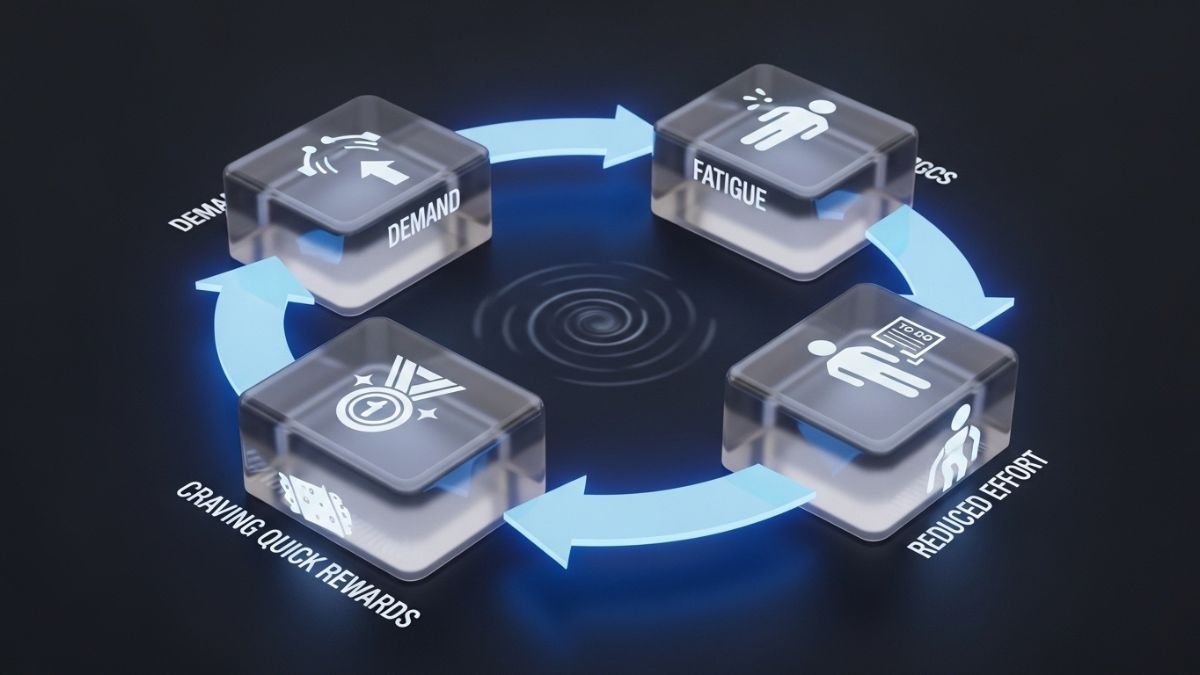
A practical way to think about mental fatigue is that the brain constantly evaluates effort versus reward. When the system senses that sustained effort is becoming too costly, it nudges you away from high-effort tasks and toward low-effort relief—often in the form of quick rewards or avoidance. Research on cognitive fatigue supports this effort-allocation idea: as fatigue rises, the willingness to invest effort decreases, influencing persistence and choices.
Why “quick rewards” become so tempting
When cognitive resources are low, the brain seeks:
- Automatic tasks (things you can do without thinking)
- Instant relief (scrolling, short videos, snacking)
- Fewer decisions (avoidance, delaying, letting things slide)
- Lower emotional friction (silence, isolation, numbness)
That doesn’t mean you’re weak. It means your system is trying to reduce load.
Numbered list: three core “energy drains” that compound fast
- Decision density (too many choices, too little structure)
- Attention fragmentation (constant switching and interruptions)
- Emotional background processing (worry, conflict, uncertainty)
Best practice: Treat cognitive exhaustion as a signal to rebalance load and recovery, not as proof that you “can’t handle life.”
Cognitive exhaustion vs. burnout vs. depression vs. poor sleep
Many symptoms overlap, so people try to label themselves too quickly. The better goal is to understand patterns: what triggers it, how long it lasts, and what changes it.
The World Health Organization describes burnout as an occupational phenomenon tied to chronic workplace stress that hasn’t been successfully managed—and emphasizes it should not be used for experiences outside work. That distinction can help organize your thinking.
Comparison table (for orientation, not self-diagnosis)
| Criterion | Cognitive exhaustion | Burnout (work-related) | Depression/anxiety | Sleep deprivation |
|---|---|---|---|---|
| Typical trigger | High mental load + fragmented attention | Chronic workplace stress | Persistent mood/anxiety symptoms | Poor sleep quantity/quality/regularity |
| Core feeling | “Mental heaviness,” low clarity | Exhaustion + cynicism + reduced efficacy | Low mood/interest or constant alarm | Sleepiness, slow thinking, irritability |
| Response to rest | Partial improvement with real breaks | Often slower, needs work changes | Not always improved by rest alone | Improves when sleep stabilizes |
| Key clue | Avoiding effortful thinking | Work-centered detachment | Emotional suffering is central | Daytime drowsiness, microsleeps |
A realistic recovery plan: restoring mental energy without pretending life is simple
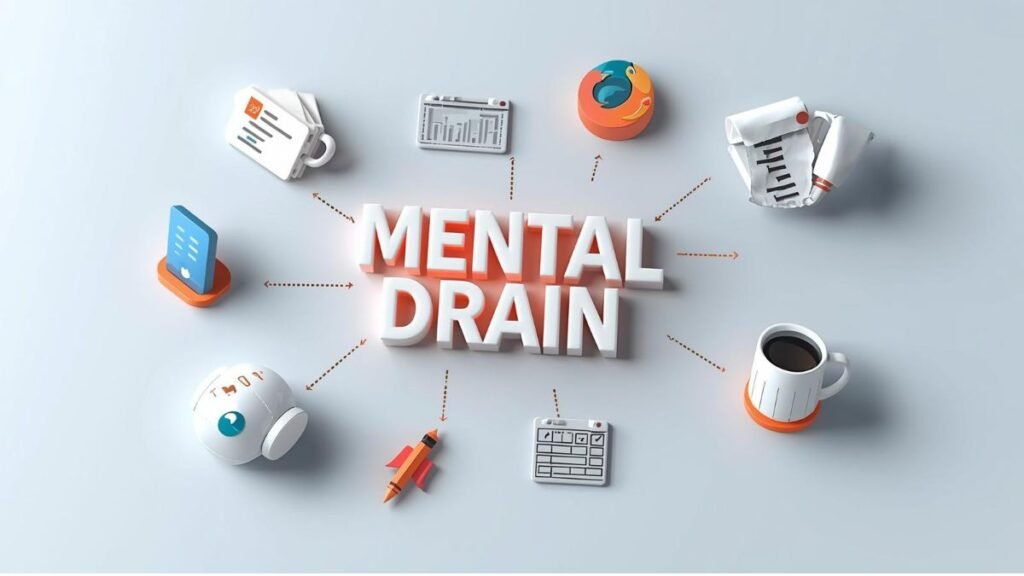
Recovery is not “take one day off.” It’s changing how you spend mental energy and protecting the conditions that restore it. The goal is not perfection. The goal is to stop the daily leak.
A 7-day reset to reduce invisible cognitive load
- Create two interruption-free focus windows per day (25–45 minutes)
Why: fewer switches reduce the “reload cost” your brain pays repeatedly. - Disable nonessential notifications for seven days
Why: every alert is a micro-interruption—even if you ignore it. - Use a “thought parking lot” (paper or a notes app)
Why: open loops drain attention. Capturing them reduces background processing. - Protect the first 10–20 minutes of your morning from screens
Why: early attention sets the tone; starting with novelty fragments focus fast. - Take real breaks: 5 minutes without screens every 60–90 minutes
Why: scrolling is stimulation; recovery needs lower input. - Test your caffeine timing honestly
Why: late caffeine can harm sleep and keep the cycle running. - Stabilize bedtime and wake time for four nights in a row
Why: regularity often beats weekend “catch-up” attempts.
Bullet list: changes that usually have outsized impact
- Single tasking in short blocks instead of long marathons
- One unified task list (reduces mental “searching”)
- Hard task before messaging apps
- A 5-minute shutdown ritual at day’s end (plan tomorrow, close loops)
- Replacing some screen “rest” with sensory rest (quiet, light walk, shower)
Practical tip: If you change only one thing, choose this: one daily focus block without interruptions plus real screen-free breaks. Many people notice improvements in irritability and clarity within days.
When cognitive exhaustion is a warning sign: when not to handle it alone
Lifestyle changes can help significantly. But there are times when professional support is not optional—it’s the safest move.
Seek professional guidance promptly if you notice:
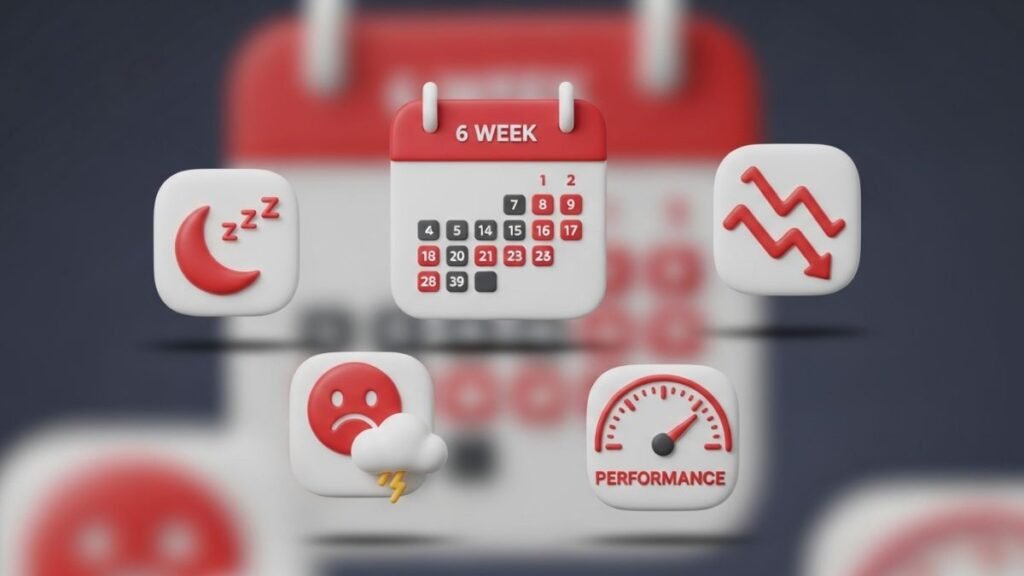
- Symptoms persisting 4–6 weeks without meaningful improvement
- Frequent panic-like episodes or severe anxiety
- Significant functional decline (work, study, relationships)
- Persistent insomnia or extreme daytime sleepiness
- Increased reliance on alcohol, stimulants, or unprescribed medication
- Feelings of hopelessness, intense self-criticism, or thoughts of self-harm
It’s also wise to speak with a clinician if you suspect medical contributors to fatigue (for example, sleep disorders, anemia, thyroid issues, vitamin deficiencies). The point isn’t to self-diagnose. The point is not to ignore red flags.
Important Notice: This article is for educational and informational purposes only. It does not replace guidance from a physician, psychologist, or other qualified professional. If symptoms persist or worsen, seek professional evaluation and care.
Conclusion
Cognitive exhaustion is not laziness. It’s a signal that the way your mental energy is being spent—and the way your recovery is being protected—no longer matches what your brain can sustain. The most reliable path back to clarity usually comes down to three actions: reduce invisible load (context switching, notifications, open loops), rebuild recovery (sleep regularity and real breaks), and restructure your day so your brain isn’t in constant alert mode.
If you apply the 7-day reset with honesty, you’ll usually see early signs: clearer thinking, fewer emotional spikes, easier task initiation, and a stronger sense of internal control. And if you don’t—especially if distress is significant or symptoms persist—treat that as useful information and seek professional support. The goal is not to push harder. The goal is to restore a brain that can think, decide, and live without feeling depleted by ordinary days.
Save this guide for future reference, and if you’re comfortable, share in the comments which sign of cognitive exhaustion you recognized most in your own routine.
FAQ — Frequently asked questions about Cognitive Exhaustion
How long does cognitive exhaustion last?
Mild cases can improve in 7–14 days when you reduce interruptions and stabilize sleep. If the pattern has been building for months, recovery is often gradual and may take 4–8 weeks to feel consistently better. If you see no meaningful improvement after several weeks of practical changes, professional evaluation is a wise next step.
Can cognitive exhaustion happen even if my workload is light?
Yes. Workload on paper can be light while cognitive load is high—constant messaging, worry, multitasking, decision pressure, and information overload. Cognitive exhaustion often comes from fragmented attention and background stress, not only from long hours.
Can I have cognitive exhaustion even if I sleep 8 hours?
Yes. Quantity doesn’t guarantee quality. Irregular schedules, screens at night, late caffeine, stress, and sleep disorders can reduce recovery even when time in bed looks sufficient. A practical test is to stabilize sleep timing for four consecutive nights and reduce screen exposure before bed to see if mental clarity improves.
Should I rest completely or push through?
For most people, neither extreme works well. Rest without changing the drivers often fails because the same pattern returns. Pushing through with guilt usually increases stress and worsens focus. The most effective approach is load management: fewer interruptions, structured focus blocks, and protected recovery.
What does it cost to address this problem?
Some of the most effective steps are free: notification control, focus blocks, screen-free breaks, and sleep regularity. Costs may arise if you seek therapy, medical evaluation, or sleep assessment, depending on location, insurance, and service type. If symptoms are persistent or severe, early support can prevent larger costs later—health, relationships, and performance.
Is cognitive exhaustion the same as burnout?
Not necessarily. Burnout is defined as a work-related phenomenon linked to chronic workplace stress that hasn’t been successfully managed, and it should not be applied to other areas of life. Cognitive exhaustion can occur inside or outside work and is often driven by sustained mental load and attention fragmentation.
Are there alternatives to caffeine for mental energy?
Yes. For many people, the strongest “non-caffeine” gains come from sleep regularity, morning daylight exposure, hydration, screen-free breaks, and reducing attention fragmentation. Caffeine can help, but if timing or dosage worsens sleep or anxiety, it can quietly maintain the cycle you’re trying to escape.