
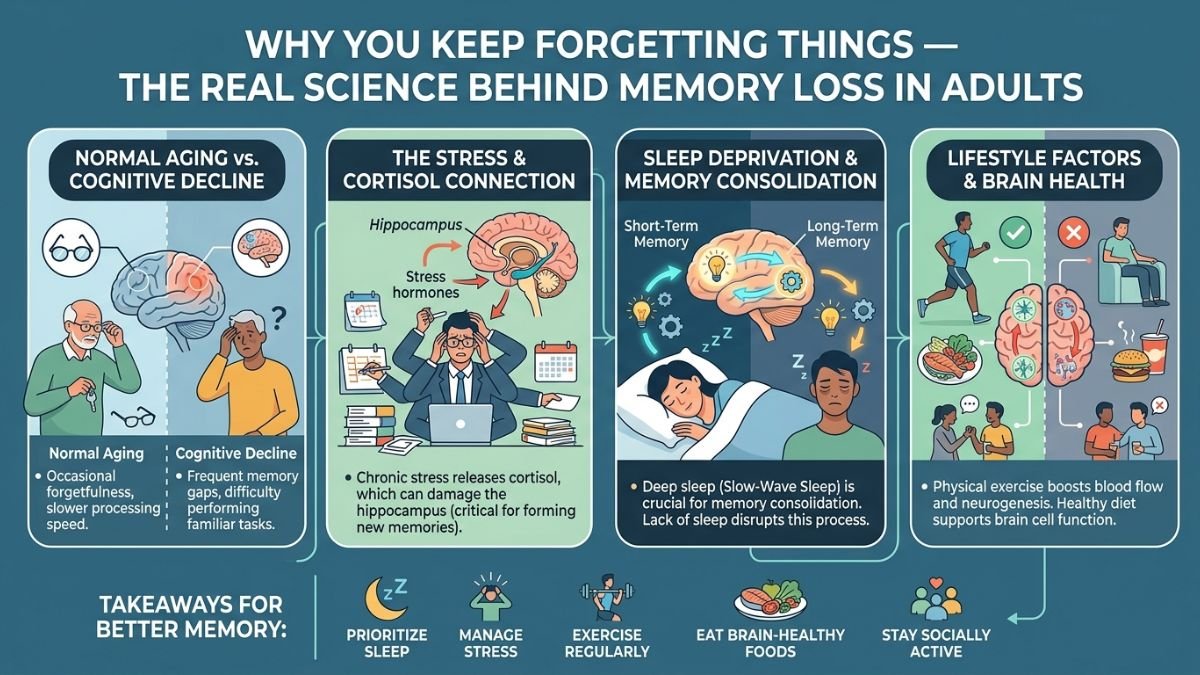
Why You Keep Forgetting Things — The Real Science Behind Memory Loss in Adults
Important Notice: This article is for informational and educational purposes only. The information provided does not replace guidance from a qualified healthcare professional. For personal decisions related to health, consult a licensed professional.
Why You Keep Forgetting Things is a question many adults begin asking themselves as they move through their forties and beyond. Names that once came effortlessly may suddenly slip away, everyday tasks feel harder to remember, and moments of forgetfulness can create quiet concern about cognitive health.
In the United States, concerns about cognitive health have grown significantly as the population ages. According to the National Institute on Aging, nearly one in nine Americans aged 65 or older lives with Alzheimer’s disease, and millions more experience milder forms of memory impairment. However, research also shows that many memory complaints among adults over 40 are not necessarily signs of neurodegenerative disease. Instead, they often reflect complex interactions between lifestyle, stress, sleep, nutrition, and the natural aging process.
From a practical perspective, professionals working in cognitive health and longevity research increasingly observe that memory lapses after 40 rarely emerge from a single cause. Rather, they arise from a combination of subtle biological changes and modern lifestyle pressures—digital overload, chronic stress, fragmented sleep, and metabolic shifts.
This article explores the real science behind memory loss in adults, particularly within the context of health and longevity after 40. You will learn how memory actually works, why it begins to change with age, the most common hidden causes of forgetfulness, and evidence-based strategies that may help maintain cognitive performance over the long term.
Why You Keep Forgetting Things After 40? Understanding How Memory Actually Works
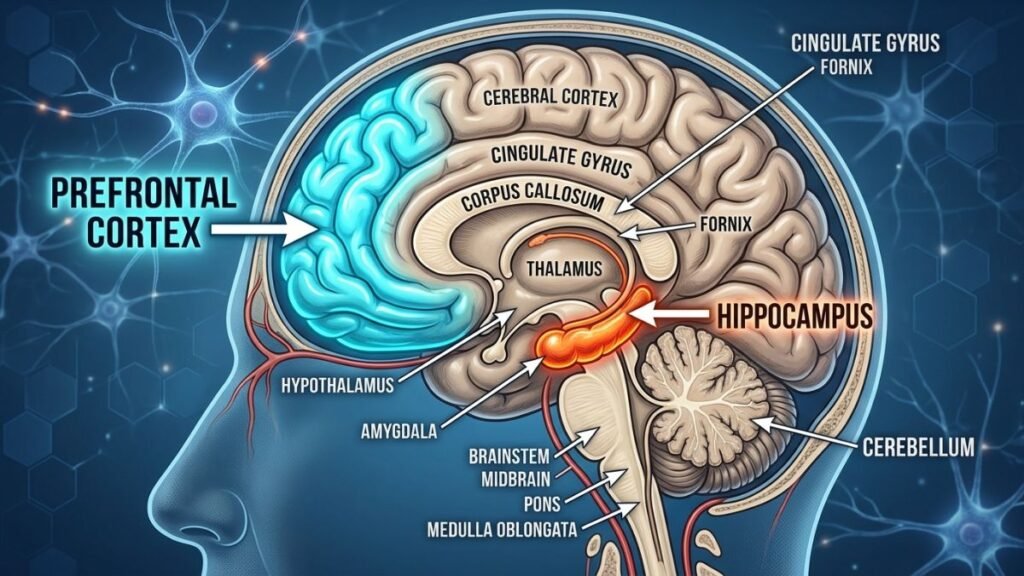
Before exploring why memory changes after 40, it helps to understand how memory functions inside the brain.
Memory is not a single process. Instead, it involves multiple interconnected systems working together to encode, store, and retrieve information.
The Three Main Stages of Memory
- Encoding – The brain converts sensory input into a form that can be stored.
- Storage – Neural connections preserve the information for short or long periods.
- Retrieval – The brain accesses stored information when needed.
Each stage depends on specific brain structures and chemical processes.
Key Brain Regions Involved
Three areas play especially important roles in memory performance:
- Hippocampus
Responsible for forming new memories and transferring them to long-term storage. - Prefrontal Cortex
Handles working memory, focus, and decision-making. - Amygdala
Processes emotional memories and assigns importance to experiences.
As adults age, small changes occur in these regions. Neurons may communicate more slowly, and certain neurotransmitters become less efficient. These changes do not necessarily indicate disease—but they can influence recall speed and mental clarity.
Memory vs. Attention
Many people believe memory problems always reflect brain decline. In reality, attention failures are often the true cause.
When the brain is overloaded with information, distractions, or stress, it may fail to encode information properly. If something was never encoded clearly in the first place, it cannot be retrieved later.
This explains why adults juggling careers, family responsibilities, and digital stimulation often experience more forgetfulness than expected.
Practical Tip: Improving attention and focus often leads to better memory performance without any direct “memory training.”
Why Memory Changes After 40

Changes in memory after 40 are common and usually reflect gradual biological transitions rather than disease.
Several physiological factors contribute to this shift.
Natural Brain Aging
Starting in the early forties, the brain undergoes subtle structural and functional changes:
- Slight reduction in hippocampal volume
- Slower communication between neurons
- Lower production of certain neurotransmitters
- Reduced brain plasticity compared with younger years
These changes may affect processing speed and recall efficiency, even in otherwise healthy individuals.
Hormonal Changes
Hormones influence brain function more than most people realize.
For example:
- Estrogen supports memory and synaptic plasticity in women.
- Testosterone contributes to cognitive performance in men.
During midlife transitions such as perimenopause, menopause, or gradual testosterone decline, many adults notice increased forgetfulness.
Increased Cognitive Load
Adults in their 40s and 50s often experience the most demanding phase of life:
- Career pressures
- Parenting responsibilities
- Financial planning
- Constant digital stimulation
The brain is processing far more information than previous generations faced, which increases mental fatigue and memory errors.
Sleep Quality Declines
Research from Harvard Medical School shows that sleep patterns often change with age. Adults may experience:
- More fragmented sleep
- Reduced deep sleep cycles
- Increased nighttime awakenings
Since deep sleep is essential for memory consolidation, these disruptions can significantly affect recall.
The Hidden Lifestyle Factors That Accelerate Forgetfulness

Many cases of memory loss in adults are strongly influenced by lifestyle habits rather than age alone.
Chronic Stress
When the body experiences prolonged stress, it releases cortisol, a hormone that can impair hippocampal function over time.
High cortisol levels are associated with:
- Reduced memory formation
- Difficulty concentrating
- Slower recall
Digital Overload
Modern adults process enormous volumes of information daily—emails, notifications, social media, news alerts, and work platforms.
This constant stimulation can lead to attention fragmentation, making it harder for the brain to store information effectively.
Attention: Chronic multitasking reduces cognitive efficiency and may increase the likelihood of memory errors.
Poor Sleep Hygiene
Sleep deprivation interferes with the brain’s ability to consolidate memories.
During deep sleep stages, the brain transfers short-term memories into long-term storage. When sleep cycles are disrupted, this process becomes less effective.
Nutritional Deficiencies
Certain nutrients play important roles in cognitive health:
- Vitamin B12
- Omega-3 fatty acids
- Magnesium
- Vitamin D
- Choline
Deficiencies in these nutrients may affect brain function and energy metabolism.
The Connection Between Health and Longevity After 40

Cognitive health is deeply connected to overall physical health.
Researchers studying health and longevity after 40 consistently find that brain function is closely linked to cardiovascular and metabolic health.
The Brain–Body Connection
The brain consumes approximately 20% of the body’s energy, despite representing only about 2% of body weight.
This means brain performance depends heavily on:
- Blood circulation
- Oxygen delivery
- Stable blood sugar levels
- Inflammation control
Cardiovascular Health and Memory
Reduced blood flow to the brain is associated with:
- Cognitive decline
- Memory impairment
- Increased dementia risk
Maintaining heart health through lifestyle habits may therefore help support long-term cognitive function.
Longevity Factors That Support Brain Health
Several habits are strongly associated with cognitive resilience in aging populations.
• Regular physical activity improves blood flow to the brain and stimulates neuroplasticity.
• Balanced nutrition supports neurotransmitter production.
• Social engagement reduces cognitive decline risk.
• Intellectual stimulation helps maintain neural connections.
Best Practice: Longevity research increasingly shows that cognitive health depends on consistent lifestyle habits rather than isolated interventions.
Early Warning Signs That Should Not Be Ignored
Occasional forgetfulness is normal. However, certain patterns may warrant medical attention.
Memory Symptoms Worth Monitoring
The following signs may indicate deeper cognitive concerns:
- Frequently repeating the same questions
- Difficulty completing familiar tasks
- Getting lost in familiar places
- Confusion about time or location
- Problems following conversations
- Sudden personality or behavior changes
These symptoms do not automatically indicate dementia, but they should be evaluated by a healthcare professional.
Normal Aging vs. Concerning Changes
| Symptom | Typical Aging | Possible Concern |
|---|---|---|
| Forgetting names occasionally | Common | Forgetting close family members |
| Misplacing objects | Happens sometimes | Unable to retrace steps |
| Word-finding difficulty | Occasional | Frequent communication breakdown |
| Distraction | Normal | Inability to complete simple tasks |
Attention: Persistent cognitive changes should always be discussed with a licensed medical professional.
Evidence-Based Habits That Support Memory and Brain Health

Scientific evidence increasingly suggests that brain health is highly influenced by daily habits.
The following strategies are commonly recommended in longevity and neuroscience research.
1. Prioritize Consistent Sleep
Sleep is one of the most powerful tools for cognitive health.
Adults should aim for 7–9 hours of sleep per night, with consistent bedtime routines and minimal exposure to screens before sleep.
2. Engage in Regular Physical Activity
Exercise improves circulation and stimulates the release of brain-derived neurotrophic factor (BDNF), a protein that supports neuron growth.
Recommended activities include:
- Brisk walking
- Cycling
- Swimming
- Strength training
3. Support Brain Nutrition
Nutritional patterns associated with cognitive health include elements of the Mediterranean diet.
Key foods include:
• Fatty fish (omega-3 fatty acids)
• Leafy green vegetables
• Nuts and seeds
• Olive oil
• Whole grains
4. Reduce Cognitive Overload
Intentional focus practices can improve memory performance.
Examples include:
- Single-tasking instead of multitasking
- Scheduled digital breaks
- Structured work periods with clear attention goals
Practical Tip: Writing down tasks and commitments reduces mental clutter and frees cognitive resources for deeper thinking.
How to Strengthen Memory With Daily Cognitive Training
Mental stimulation plays an important role in maintaining cognitive flexibility.
Cognitive Activities That Challenge the Brain
Effective brain engagement includes activities that require learning, problem-solving, and novelty.
Examples include:
• Learning a new language
• Playing musical instruments
• Strategy games and puzzles
• Reading complex material
• Creative hobbies such as writing or drawing
Structured Brain Training
Some adults also benefit from structured cognitive exercises that challenge working memory and attention.
However, experts emphasize that real-world learning activities often provide greater cognitive benefits than repetitive digital brain games.
If you are interested in developing long-term cognitive resilience, you may be interested to know
SEE MORE: Memo Max Pro Review: Can This Natural Supplement Really Support Your Memory?
Conclusion
Memory changes after 40 are common, but they rarely occur for a single reason. Instead, they reflect a complex interaction between biological aging, lifestyle habits, stress levels, sleep quality, and overall health.
Understanding how memory works allows adults to approach these changes with greater clarity rather than unnecessary fear. Many cases of forgetfulness are influenced by attention overload, fragmented sleep, or modern lifestyle pressures rather than serious neurological conditions.
Several practical strategies can support long-term cognitive health: maintaining consistent sleep patterns, staying physically active, managing stress, nourishing the brain through balanced nutrition, and continuing to challenge the mind with new learning experiences.
These habits align closely with the broader principles of health and longevity after 40, emphasizing that brain health cannot be separated from overall well-being.
While occasional forgetfulness is a natural part of aging, consistent attention to lifestyle and mental engagement may help adults maintain cognitive vitality for decades to come.
If you found this guide helpful, consider saving it for future reference or sharing it with someone interested in protecting their cognitive health as they age.
Affiliate Disclosure
Some links on this website may be affiliate links, which means we may earn a small commission if you choose to purchase through those links, at no additional cost to you. These commissions help support the maintenance of the website and the creation of educational content. However, our editorial content is created independently, and we only reference products or services that may be relevant to our audience. Always review the official product information before making any purchase decision.
Frequently Asked Questions
Is memory loss normal after age 40?
Yes, mild changes in memory and recall speed are common after 40 due to gradual biological changes in the brain. However, occasional forgetfulness—such as misplacing objects or forgetting names—is usually part of normal aging. Persistent or worsening cognitive symptoms should be evaluated by a healthcare professional.
What is the most common cause of forgetfulness in adults?
In many adults, forgetfulness is linked to lifestyle factors rather than neurological disease. Sleep deprivation, chronic stress, attention overload, and digital distractions are frequent contributors. When the brain is overwhelmed, information may not be encoded properly, making later recall difficult.
Can lifestyle changes improve memory?
Research suggests that several lifestyle habits support cognitive health. Regular exercise, balanced nutrition, adequate sleep, stress management, and intellectual stimulation all contribute to maintaining brain function. These habits also support cardiovascular health, which is closely connected to brain performance.
When should memory problems be evaluated by a doctor?
Medical evaluation is recommended if memory issues interfere with daily life or worsen over time. Examples include difficulty completing familiar tasks, getting lost in familiar locations, confusion about time or events, or repeating questions frequently. Early evaluation helps rule out underlying medical conditions.
Does stress really affect memory?
Yes. Chronic stress increases cortisol levels, which can impair the hippocampus—the brain region responsible for memory formation. Long-term stress exposure may affect concentration, attention, and recall ability. Managing stress through relaxation techniques, physical activity, and structured routines may help protect cognitive health.
Can brain exercises prevent memory loss?
Mental stimulation may support cognitive resilience. Activities that involve learning, problem-solving, and creativity—such as studying new subjects, playing music, or engaging in strategic games—help maintain neural connections and mental flexibility over time.