
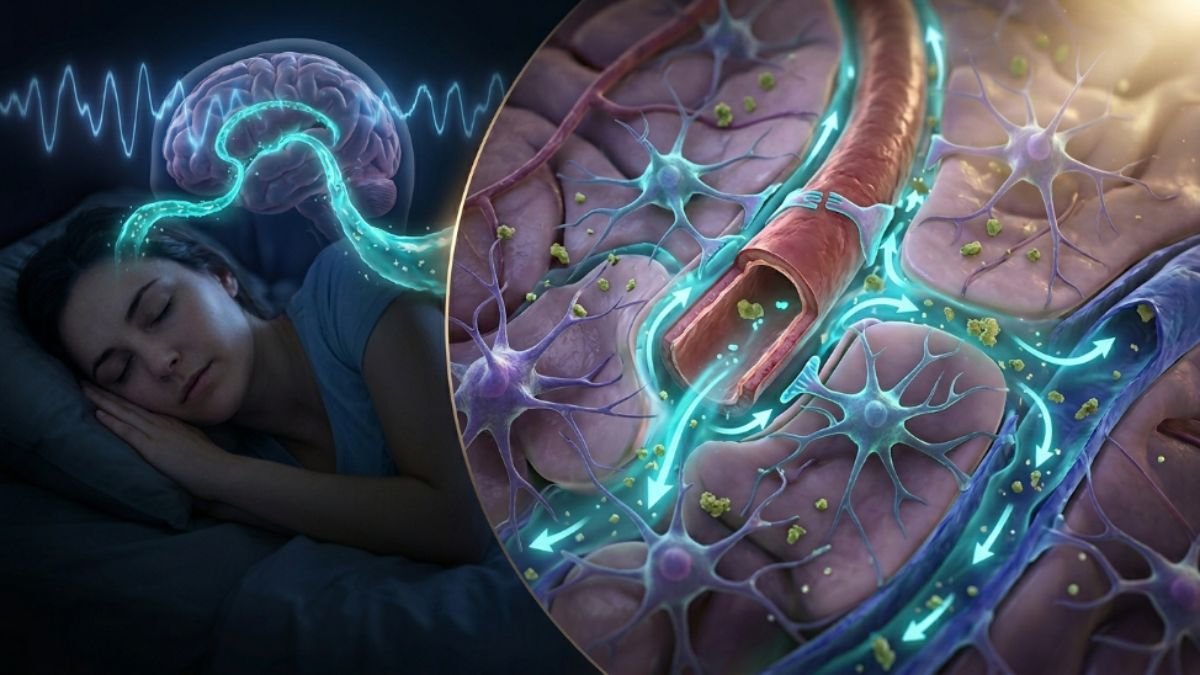
How Deep Sleep Cleans Your Brain — The Glymphatic System
🎬 Watch the short version first: The video covers the core idea in under 4 minutes. This article goes deeper — mechanisms, research, and what you can actually do about it tonight.
⚠️ This content is for informational and educational purposes only. It does not constitute medical advice. Please consult your healthcare provider before making changes to your diet, supplements, or cognitive health routine.
The glymphatic system and deep sleep are two of the most consequential discoveries in modern neuroscience — and understanding how they work together may permanently change how you think about every night of poor sleep you have ever had.
For most of the twentieth century, scientists assumed the brain operated outside the lymphatic system that drains waste from the rest of the body. That assumption was overturned in 2012, when neuroscientist Dr. Maiken Nedergaard and her team at the University of Rochester published a landmark study in Science identifying a previously unknown brain-specific waste-clearance network. They named it the glymphatic system.
The discovery was significant not just because it filled a gap in our anatomy. It was significant because it tied the brain’s ability to clean itself directly to one thing almost everyone is doing less of: deep, uninterrupted sleep.
According to the CDC, one in three American adults does not get enough sleep. If the glymphatic system depends on slow-wave sleep to clear the toxic proteins associated with Alzheimer’s disease, that statistic carries a weight that goes well beyond daytime fatigue.
This article explains exactly what the glymphatic system is, what it removes, what disrupts it, and what you can do — starting tonight — to help it do its job.
⚠️ Disclaimer: This content is for informational purposes only and does not replace professional medical advice. Always consult a qualified healthcare professional before making changes to your health routine.
What Is the Glymphatic System?
The name “glymphatic” is a portmanteau of glial cells and the lymphatic system. It describes a waste-clearance network that operates through a class of brain cells called astrocytes — the most abundant support cells in the central nervous system.
Here is the mechanism, simplified without losing accuracy:
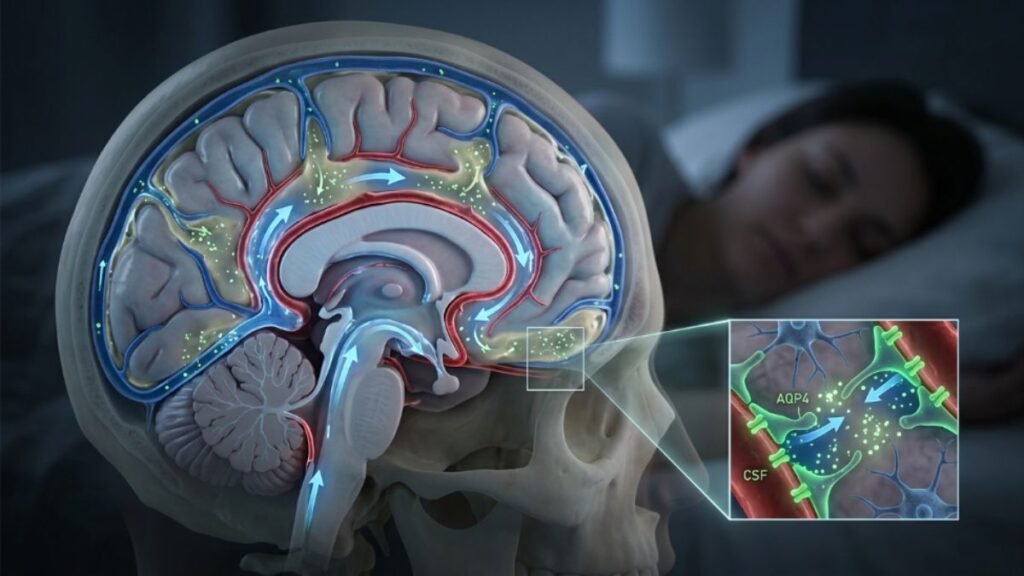
Astrocytes have projections called end-feet that wrap around the blood vessels running through brain tissue. These end-feet are densely packed with a water-channel protein called aquaporin-4 (AQP4). During deep sleep, cerebrospinal fluid (CSF) — a clear, protein-free fluid that surrounds the brain and spinal cord — is actively pumped through the spaces around arteries, flows through the interstitial spaces between neurons, collects metabolic waste, and drains out through venous channels toward the liver and lymph nodes for disposal.
The process works like a pressurized rinse cycle: clean CSF comes in, picks up debris, and exits carrying that debris away from the brain.
Why This Discovery Matters
What makes the glymphatic system more than an anatomical curiosity is what it removes — and when removal fails.
The primary targets of glymphatic clearance include:
- Amyloid-beta (Aβ) — a protein fragment that aggregates into the sticky plaques found in Alzheimer’s disease
- Tau — a protein that, when abnormally modified, forms the neurofibrillary tangles associated with neurodegeneration
- Lactate and other metabolic byproducts produced during normal neuronal activity throughout the day
A 2013 study published in Science by Xie et al. demonstrated that glymphatic clearance is ten times more active during sleep than during wakefulness. The mechanism is structural: during sleep, brain cells shrink by approximately 60%, expanding the interstitial spaces and creating the physical room for cerebrospinal fluid to flow through at significantly higher volumes.
💡 Key Insight: The glymphatic system is not a passive drain that runs continuously. It is an active, sleep-dependent process that requires specific physiological conditions — above all, sustained deep slow-wave sleep — to function at meaningful capacity.
What Actually Happens in Your Brain During Deep Sleep
Sleep is not a uniform state of unconsciousness. It cycles through distinct stages with different physiological signatures — and not all stages support glymphatic clearance equally.
Sleep Architecture: A Working Map
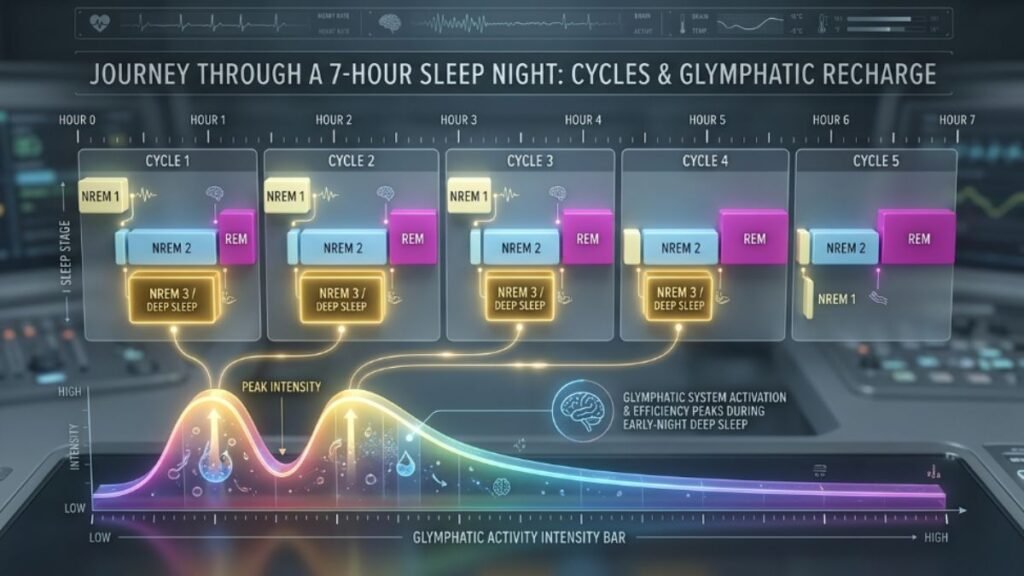
A standard night of sleep consists of 4–6 cycles, each lasting approximately 90 minutes. Each cycle moves through the following stages:
| Sleep Stage | Classification | Typical Duration | Glymphatic Activity |
|---|---|---|---|
| Stage 1 (NREM) | Light sleep | 1–7 minutes | Minimal |
| Stage 2 (NREM) | Sleep spindles | 10–25 minutes | Low |
| Stage 3 (NREM) | Slow-wave sleep (deep sleep) | 20–40 min (longer early in night) | Peak |
| REM | Dream sleep | 10–60 min (longer later in night) | Moderate |
Slow-wave sleep (SWS) — also called N3, Stage 3, or deep sleep — is where the glymphatic system operates at maximum capacity. Three things happen simultaneously during SWS that make this possible:
- Large, synchronized electrical waves slow neuronal activity
- Growth hormone surges
- Brain cells physically shrink by up to 60%, expanding interstitial space
The last point is the structural key. Without that cell-volume reduction, CSF cannot flow in adequate volumes.
The Norepinephrine Factor
Research has identified one specific chemical mechanism that drives this cell shrinkage: the suppression of norepinephrine.
Norepinephrine is a neurotransmitter tightly associated with alertness. During waking hours, it keeps neurons in a contracted, high-alert state. As you transition into deep sleep, norepinephrine levels drop sharply — and brain cells physically expand their extracellular space in response.
This is one reason chronic stress is so damaging to glymphatic function. Sustained elevated cortisol and norepinephrine bleed into sleep architecture, reducing the depth and duration of slow-wave sleep and keeping the brain in a low-grade alert state — even at night, even when you are technically asleep.
The Toxic Protein Your Brain Produces Every Day
Neurons are the most metabolically expensive cells in the body. They fire electrical signals continuously, synthesize neurotransmitters, and maintain electrochemical gradients across their membranes every second of every day. That activity generates waste. The two metabolic byproducts most relevant to long-term brain health are amyloid-beta and tau.
Amyloid-Beta: Normal Byproduct, Abnormal Accumulation
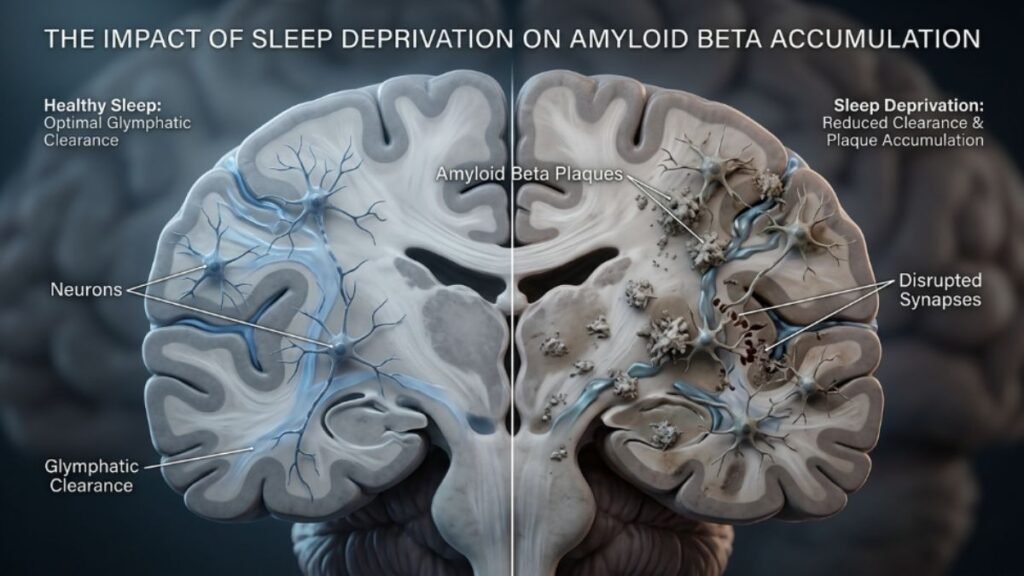
Amyloid-beta is produced as a normal, unavoidable byproduct of neuronal activity. In a healthy brain with sufficient deep sleep, it is continuously cleared by the glymphatic system before it has time to aggregate.
The problem starts when clearance is chronically insufficient.
A 2017 study published in PNAS by Shokri-Kojori et al. found that just one night of sleep deprivation in healthy young adults was sufficient to increase amyloid-beta accumulation by approximately 5% in the hippocampus and thalamus — two regions critical to memory formation and sensory processing, respectively.
That is after a single night.
Current evidence suggests amyloid accumulation begins 15 to 20 years before any clinical symptoms appear — which connects directly to why your memory gets worse after 35 and what that window actually means. The neurological damage precedes the cognitive symptoms by nearly two decades. What happens — or does not happen — in your brain every night during those years is not a trivial variable.
Tau: The Spreading Problem
Tau proteins normally stabilize the internal scaffolding of neurons — the microtubules that give neurons their structure and allow them to transport molecules internally. Under conditions of chronic sleep loss, oxidative stress, or traumatic brain injury, tau becomes hyperphosphorylated. It detaches from microtubules, misfolds, and forms toxic tangles.
A 2019 study published in Science by Holth et al. demonstrated that acute sleep deprivation significantly elevated tau levels in the cerebrospinal fluid of both mice and humans. More concerning, the research showed that sleep loss accelerates tau spreading — the propagation of abnormal tau from one brain region to another, which is closely correlated with the clinical progression of neurodegeneration.
| Protein | Normal Function | Consequence of Insufficient Clearance |
|---|---|---|
| Amyloid-beta (Aβ) | Normal byproduct of neuronal activity | Aggregates into plaques — hallmark of Alzheimer’s pathology |
| Tau | Stabilizes neuron microtubule structure | Becomes hyperphosphorylated, forms neurofibrillary tangles |
| Lactate | Energy metabolism byproduct | Accumulates, disrupts neural signaling and pH balance |
⚠️ Important Context: These findings describe population-level risk accumulated over decades — not the result of a few nights of bad sleep. One disrupted night will not cause Alzheimer’s. However, the research strongly and consistently indicates that chronically poor sleep quality — particularly insufficient slow-wave sleep — is a modifiable risk factor for long-term cognitive decline. That distinction matters.
What Disrupts Glymphatic Clearance — And How Common It Is
The glymphatic system is sensitive to disruption in ways that map directly onto habits most Americans have normalized.
Sleep Fragmentation
Glymphatic clearance is not a process that accumulates a little benefit at a time. It depends on sustained, uninterrupted periods of deep sleep. Frequent awakenings — from sleep apnea, ambient noise, bladder urgency, anxiety, or a restless partner — interrupt slow-wave sleep and reset the cycle. The full clearance process cannot complete.
Sleep apnea is particularly damaging because it combines two compounding insults: intermittent hypoxia (repeated oxygen drops of 3–4% throughout the night) and sleep fragmentation that effectively prevents any sustained Stage 3 sleep. Research suggests individuals with untreated obstructive sleep apnea show accelerated amyloid accumulation compared to age-matched controls with normal sleep.
Alcohol: The Sleep Trap
Alcohol is the most widely used sleep aid in the United States — and one of the most counterproductive for brain health specifically.
Alcohol does help people fall asleep faster. What it does next is the problem: it suppresses REM sleep, distorts slow-wave sleep architecture, and increases nighttime awakenings in the second half of the night as blood alcohol drops. Studies consistently show that even moderate alcohol consumption close to bedtime reduces glymphatic activity — even when total sleep duration appears adequate on paper.
The mechanism is well-established: alcohol elevates sleep-inhibiting adenosine initially (which causes drowsiness) but creates a rebound effect that fragments sleep architecture for the remainder of the night.
Aging and Deep Sleep Decline
Slow-wave sleep decreases progressively and predictably with age. Adults over 60 typically spend significantly less time in Stage 3 than young adults — not because they sleep fewer hours, but because the architecture of their sleep has shifted. This reduction in slow-wave sleep may be one reason aging is the single strongest risk factor for Alzheimer’s disease.
✓ Best Practice: After age 40, sleep quality becomes a more critical variable than sleep quantity. Eight hours of fragmented or alcohol-disrupted sleep provides substantially less glymphatic clearance than six hours of deep, uninterrupted slow-wave sleep.
Additional Disruptors
- Chronic stress — sustained norepinephrine elevation suppresses the cell-shrinkage mechanism that enables CSF flow
- Irregular sleep timing — inconsistent bedtimes disrupt the circadian-driven window when deep sleep naturally peaks (early in the night)
- Blue light at night — delays melatonin onset, compresses the slow-wave sleep window
- Heavy meals close to bedtime — elevates core body temperature, interfering with the temperature drop required for deep sleep onset

Sleep Position and Glymphatic Efficiency
One of the more surprising findings to emerge from glymphatic research involves not how long you sleep, but how you position your body while doing it.
A 2015 study published in The Journal of Neuroscience by Lee et al. used dynamic contrast MRI in rodents to compare glymphatic transport across three sleeping positions: lateral (on your side), supine (on your back), and prone (on your stomach).
Lateral sleeping produced the most efficient glymphatic clearance of the three positions tested.
The researchers proposed that lateral positioning optimizes the biomechanical geometry of perivascular channels, allowing cerebrospinal fluid to flow through at higher volumes with less resistance. The findings are consistent with the observation that lateral sleeping is the dominant natural position for humans and most mammals — which may not be coincidental from an evolutionary standpoint.
Direct human confirmation using equivalent imaging protocols is still being developed, and the study’s authors appropriately caution against over-interpreting rodent data for clinical recommendations. That said, the finding is widely cited, biologically plausible, and low-risk to act on.
💡 Practical Note: If you naturally sleep on your back, experimenting with side sleeping carries no downside. Some researchers additionally suggest left-side sleeping may reduce acid reflux and improve lymphatic drainage in the body more broadly — though that research is separate from the glymphatic question.
How to Optimize Deep Sleep for Better Brain Cleaning
The key practical point of all the above research: slow-wave sleep is not fixed. The amount and quality of deep sleep you get is meaningfully responsive to behavioral and environmental conditions.
1. Anchor Your Sleep Schedule
The circadian rhythm dictates when slow-wave sleep peaks. Deep sleep concentrates in the first half of the night — typically between 10 PM and 2 AM for people with a standard chronotype. Pushing bedtime later does not shift this window; it compresses it. Sleeping from midnight to 8 AM does not produce the same slow-wave sleep as sleeping from 10 PM to 6 AM, even at identical total duration.
Consistency of timing may matter more than any other single variable.
2. Keep the Bedroom Temperature Low
Core body temperature must drop by 2–3°F to initiate and sustain deep sleep. Research consistently places the optimal bedroom temperature for sleep between 65 and 68°F (18–20°C). Sleeping in a warm room measurably suppresses slow-wave sleep depth and increases nighttime awakenings.
3. Observe a 3-Hour Alcohol Buffer
The sleep-disrupting effects of alcohol correlate directly with blood alcohol levels at sleep onset. A minimum 3-hour gap between the last drink and bedtime allows sufficient metabolism to protect sleep architecture for most people.
4. Reduce Blue Light Exposure in the 90 Minutes Before Bed
Light in the 450–490nm (blue) spectrum suppresses melatonin production. Delaying melatonin delays sleep onset, which in turn compresses the early-night slow-wave sleep window. Screen filters, app-based warmth shifting, or amber glasses in the pre-sleep window are low-cost interventions with solid supporting data.
5. Exercise — but Time It Correctly
Moderate aerobic exercise is one of the most consistently documented interventions for increasing slow-wave sleep duration. The caveat is timing: vigorous exercise within 2–3 hours of bedtime elevates core temperature and sympathetic nervous system activity, impairing sleep onset. Morning or early afternoon exercise captures the benefit without the tradeoff.
Affiliate Disclosure: This article contains affiliate links. If you click through and make a purchase, Cognitive Insight Lab may earn a small commission — at no extra cost to you. We only recommend products we have genuinely researched and believe may offer real value to our readers.
If you’ve addressed the behavioral factors above and want a supplement that directly supports deep sleep quality, Performance Lab Sleep is what I’d consider first. It uses low-dose melatonin, magnesium glycinate, and tart cherry extract — no stimulants, no next-day grogginess, and no ingredients that contradict the sleep architecture you’re trying to protect.
| Intervention | Mechanism | Evidence Level |
|---|---|---|
| Consistent sleep timing | Aligns deep sleep with circadian peak window | Strong |
| Cool bedroom (65–68°F) | Enables the core temperature drop required for SWS | Moderate–Strong |
| No alcohol within 3 hours | Protects slow-wave sleep architecture | Strong |
| Evening blue light reduction | Preserves melatonin for timely SWS onset | Moderate |
| Morning/afternoon aerobic exercise | Increases SWS duration | Strong |
| Lateral sleeping position | May optimize CSF flow biomechanics | Emerging |

What the Research Has Not Settled Yet
Glymphatic research is one of the most active areas in contemporary neuroscience. The field is less than fifteen years old. Being honest about its boundaries is not a reason to dismiss its findings — it is the minimum standard for credible coverage of this topic.
Most foundational studies were conducted in rodents. The basic mechanisms — glymphatic channels, AQP4 water channels, CSF flow patterns, cell shrinkage during sleep — have been confirmed in humans through MRI-based imaging. But quantifying exactly how much clearance occurs per sleep stage in living human brains, and how it varies across individuals, remains technically challenging.
Causality in Alzheimer’s risk is still being established. The correlation between sleep disruption and amyloid accumulation is robust. Whether consistently improving sleep quality over years can meaningfully reduce Alzheimer’s clinical risk in humans — not just slow it — is what current clinical trials are designed to determine. We do not yet have that data.
Individual variation is significant. Some people appear to achieve efficient glymphatic clearance in fewer sleep hours; others require more. Age, genetics, fitness level, metabolic health, and chronic conditions all modulate outcomes in ways the research has not fully characterized.
✓ Honest Assessment: The science strongly supports prioritizing deep sleep for long-term brain health. The precise clinical outcomes — exactly how much improved sleep reduces dementia risk by what percentage — are still being quantified. That uncertainty does not undermine the core finding: the glymphatic system exists, it clears neurotoxic proteins, and it depends on deep sleep to do it.
For those seeking additional support for cognitive clarity while building better sleep habits, the evidence around nootropics for brain fog offers a useful complement to what sleep alone can do.
⚠️ Medical Disclaimer: The information in this article is for educational purposes only and does not constitute medical advice, diagnosis, or treatment. Results vary by individual, age, lifestyle, and baseline health. If you are experiencing significant sleep disruption, persistent memory problems, or cognitive changes, consult a licensed healthcare professional. Do not modify medications or medical treatments based on this content.
Conclusion
The glymphatic system is one of the most compelling discoveries in modern neuroscience — and one of the most immediately actionable for anyone who takes long-term cognitive health seriously.
Three things to carry forward:
Deep sleep is when your brain runs its cleaning cycle. Amyloid-beta, tau, and other metabolic byproducts accumulate during the day and are cleared during slow-wave sleep. Chronic insufficiency tips the balance toward long-term accumulation.
Most of what disrupts this system is behavioral. Alcohol close to bedtime, irregular sleep timing, warm bedrooms, evening screen exposure, and chronic stress all compromise glymphatic function in ways that are directly addressable.
Consistency matters more than perfection. Occasional poor nights are not the problem. Chronic patterns are. Building sleep habits that protect slow-wave sleep is a long-game investment in the cognitive health of the person you will be in your 60s, 70s, and beyond.
The brain has a cleaning system. What you do each night determines whether it gets to do its job.
Frequently Asked Questions
What is the glymphatic system and why does it matter?
The glymphatic system is the brain’s waste-removal network. It uses cerebrospinal fluid flowing through channels around blood vessels to flush metabolic byproducts — including amyloid-beta and tau, proteins linked to Alzheimer’s disease — out of brain tissue. Unlike the rest of the body’s lymphatic system, it operates almost exclusively during sleep, and most efficiently during deep slow-wave sleep (Stage 3 NREM). Its discovery in 2012 fundamentally changed how neuroscientists understand the purpose of sleep.
How does poor sleep affect the glymphatic system?
Poor sleep — especially insufficient slow-wave sleep — reduces glymphatic clearance directly. Research has shown that even one night of missed sleep increases amyloid-beta accumulation in key brain regions by approximately 5%. Chronic sleep restriction, sleep fragmentation, and alcohol-disrupted sleep all impair the system’s ability to clear neurotoxic proteins, potentially contributing to their long-term accumulation.
What sleep stage is most important for glymphatic function?
Stage 3 NREM sleep — also called slow-wave sleep or deep sleep — is the most critical. During this stage, brain cells shrink by approximately 60%, expanding interstitial spaces and enabling cerebrospinal fluid to flow through at volumes up to ten times higher than during wakefulness. Deep sleep is concentrated in the first half of the night, making early-night sleep particularly valuable.
Does alcohol affect the glymphatic system?
Yes, significantly. Alcohol suppresses slow-wave sleep architecture and increases sleep fragmentation, even when total sleep duration appears adequate. The mechanism is well-documented: alcohol initially increases sedation by elevating adenosine, but creates a rebound effect in the second half of the night that fragments sleep and reduces deep-sleep quality — the stage most critical for glymphatic clearance.
Is there a connection between the glymphatic system and Alzheimer’s disease?
The evidence strongly suggests there is. Insufficient glymphatic clearance allows amyloid-beta and tau — the proteins that form plaques and tangles in Alzheimer’s brains — to accumulate. Research indicates amyloid accumulation may begin 15–20 years before any clinical symptoms appear. Clinical trials are currently investigating whether improving sleep quality can measurably reduce Alzheimer’s risk over time; the directional evidence is consistent but definitive human trials are still ongoing.
Can naps support glymphatic function?
Naps may offer partial benefit, particularly if they include a full 90-minute sleep cycle that reaches Stage 3. Brief 20-minute naps generally do not reach slow-wave sleep. Naps are unlikely to fully compensate for consistently poor nighttime sleep quality, since deep sleep is biologically anchored to the circadian rhythm and peaks in the early night hours.
Is sleeping on your side better for brain health?
A 2015 animal study found that lateral (side) sleeping produced the most efficient glymphatic clearance compared to back or stomach sleeping, likely due to optimized CSF flow biomechanics. Direct human confirmation is still developing. However, side sleeping is the dominant natural human sleep position, carries no downside, and is consistent with the biological plausibility of the finding. Left-side sleeping may offer additional benefits related to acid reflux and lymphatic drainage.

Daniel Mercer é um escritor de ciências da saúde especializado em desempenho cognitivo, nootrópicos e pesquisas sobre saúde cerebral. Com formação em ciências biomédicas e mais de uma década de experiência revisando literatura clínica sobre desempenho mental e suplementação, ele fundou o Cognitive Insight Lab para simplificar informações irrelevantes e fornecer análises baseadas em evidências para pessoas que levam a sério sua saúde cognitiva. Daniel não aceita conteúdo patrocinado e não possui vínculos financeiros com as marcas analisadas neste site.