
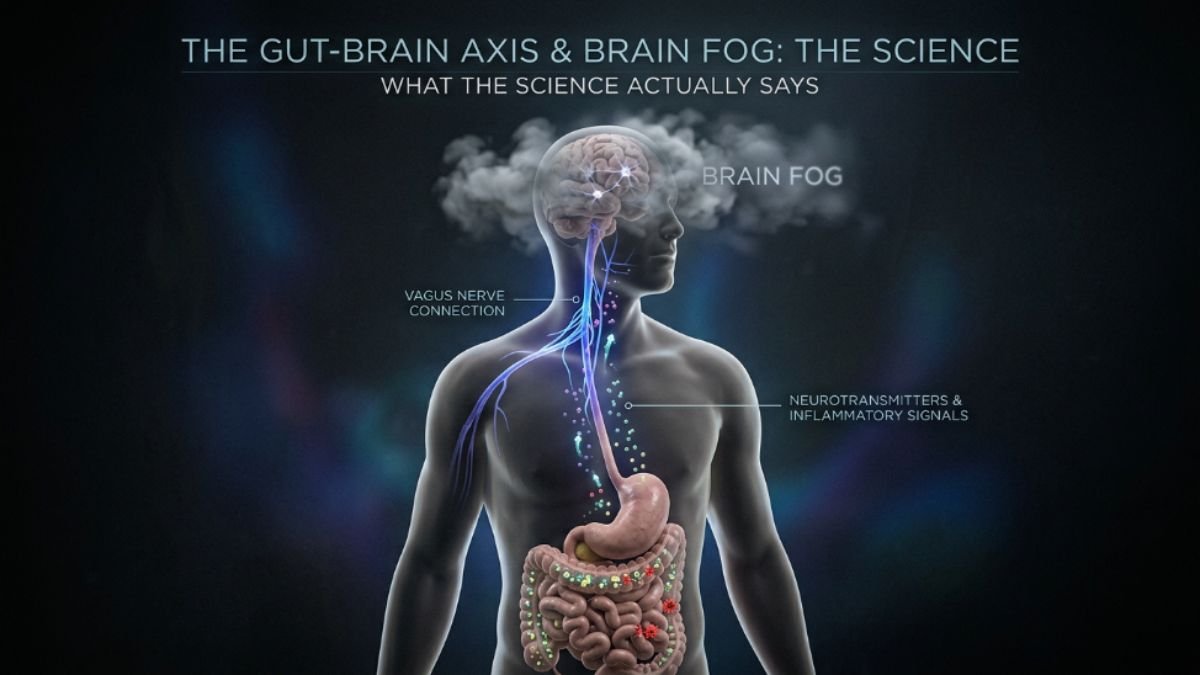
The Gut-Brain Axis and Brain Fog: What the Science Actually Says
The Gut-brain axis and brain fog is not a trend or a wellness buzzword — it is one of the most actively researched areas in neuroscience right now, and the findings are reshaping how scientists understand why so many adults feel mentally sluggish, unfocused, and cognitively dull despite getting enough sleep and eating reasonably well.
If you have ever wondered why your brain seems to work against you after certain meals, or why your mental clarity varies wildly day to day without an obvious explanation, this article is for you.
This content is for informational and educational purposes only. It does not constitute medical advice. Please consult your healthcare provider before making changes to your diet, supplements, or cognitive health routine.
Watch the video version of this article — then keep reading for the full research breakdown and sources.
What follows is a plain-language breakdown of the gut-brain connection, how disruptions in your gut directly generate brain fog, and what the emerging science suggests you can do about it.
What Is the Gut-Brain Axis?
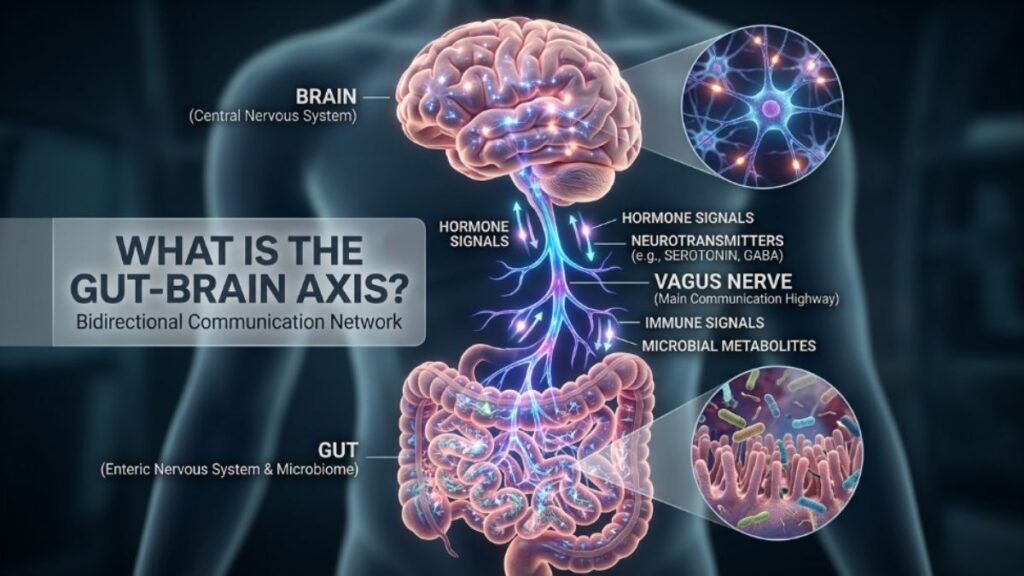
The gut-brain axis is a bidirectional communication network connecting your central nervous system — your brain and spinal cord — with your enteric nervous system, the complex neural network embedded in the walls of your digestive tract.
The enteric nervous system contains over 500 million neurons. That is more than your spinal cord. It regulates digestion, immune response, and inflammation largely autonomously, without waiting for instructions from the brain. Researchers sometimes call it “the second brain” — not as a metaphor, but as an anatomical description.
The primary communication highway between the two systems is the vagus nerve, which runs from the brainstem down through the chest and abdomen. What is often surprising to people learning about this for the first time is the direction of information flow: roughly 80–90% of vagal fibers carry signals upward, from gut to brain, not the other way around.
Your gut is sending more information to your brain than your brain sends down to your gut.
That communication includes:
- Neurotransmitter precursors — the raw materials your brain uses to manufacture serotonin, dopamine, and GABA
- Short-chain fatty acids (SCFAs) — metabolic byproducts of bacterial fermentation that influence brain function and inflammation
- Immune signals — including cytokines that can cross into the brain and directly affect cognition
- Hormonal signals — including GLP-1, ghrelin, and peptide YY, which influence mood and executive function
When this communication is functioning well, the system is self-regulating. When it breaks down, the consequences reach well beyond digestion.
How the Gut Microbiome Shapes Brain Function
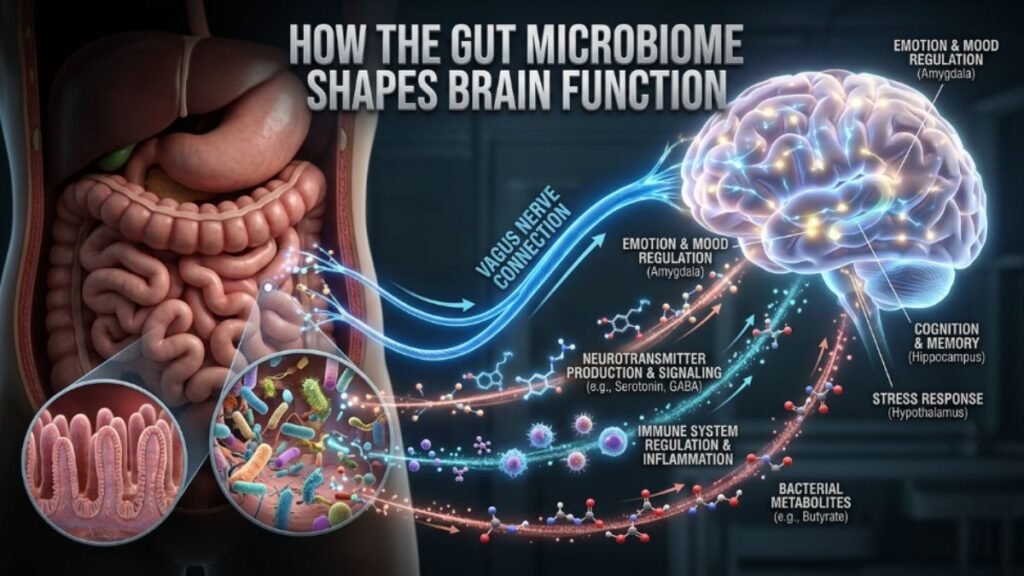
Inside your gut lives a community of roughly 38 trillion microorganisms — bacteria, fungi, viruses, and archaea — collectively called the gut microbiome. These organisms are not passive passengers. They are active participants in your metabolism, immune function, and increasingly, your cognition.
Here is what the research shows they do:
Serotonin Production
Approximately 90% of the body’s serotonin is produced in the gut, not the brain. Enterochromaffin cells in the gut lining synthesize serotonin in response to signals from gut bacteria. While this peripheral serotonin does not cross the blood-brain barrier directly, it regulates gut motility, communicates via the vagus nerve, and influences central serotonergic tone indirectly.
A disrupted microbiome disrupts this production chain.
Short-Chain Fatty Acids and the Blood-Brain Barrier
When gut bacteria ferment dietary fiber, they produce short-chain fatty acids — primarily butyrate, propionate, and acetate. These molecules do several things relevant to brain function:
- They maintain the integrity of the blood-brain barrier — the protective filter between your bloodstream and your brain tissue
- They have direct anti-inflammatory effects in the central nervous system
- Butyrate in particular supports microglia health — these are the brain’s resident immune cells, which play a key role in neural maintenance and cognitive clarity
When fiber intake drops and beneficial bacteria decline, SCFA production drops. Blood-brain barrier integrity weakens. Neuroinflammation increases. The result is measurable cognitive impairment — what most people simply call brain fog.
GABA and Anxiety-Linked Brain Fog
Certain species of Lactobacillus and Bifidobacterium produce GABA — the primary inhibitory neurotransmitter in the brain, responsible for reducing neural overactivity. Low GABA is associated with anxiety, racing thoughts, and difficulty concentrating.
A 2019 study published in Nature Microbiology identified gut bacteria capable of producing GABA and found that their abundance was inversely correlated with depression scores in a population cohort. While causation is complex, the mechanism is plausible and replicable.
What Causes Gut-Brain Axis Dysfunction?
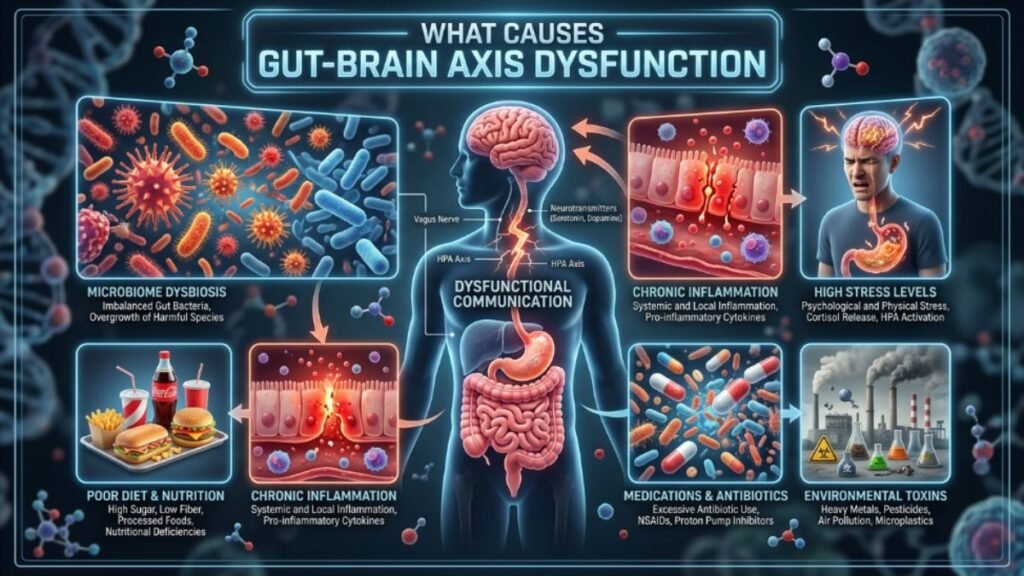
Understanding the connection matters — but understanding what disrupts it is what makes this actionable.
1. Dysbiosis: Microbial Imbalance
Dysbiosis refers to a significant imbalance in the composition of the gut microbiome — too much of certain species, too little of others, or a collapse in overall diversity. It is the single most common gut-related driver of brain fog.
Causes include:
- Repeated antibiotic use (even a single course can suppress beneficial species for months)
- High-sugar, low-fiber diets (selectively deprive beneficial bacteria while feeding inflammatory species)
- Chronic psychological stress (alters gut motility and microbial composition via the HPA axis)
- Disrupted circadian rhythm (the microbiome has its own circadian biology)
2. Intestinal Permeability (“Leaky Gut”)
The intestinal lining is a single cell layer thick — a remarkably thin barrier between your gut contents and your bloodstream. Tight junctions between cells normally prevent large molecules from passing through.
When those tight junctions are compromised — by dysbiosis, chronic stress, NSAIDs, alcohol, or high-fat processed food — lipopolysaccharides (LPS), the structural components of gram-negative bacterial cell walls, can enter systemic circulation.
LPS triggers a powerful inflammatory response. When this reaches the brain, it activates microglia, increases neuroinflammatory cytokine production, and directly impairs neurotransmitter synthesis. This mechanism — sometimes called metabolic endotoxemia — has been identified as a contributor to cognitive dysfunction in multiple studies.
3. Nutrient Malabsorption
A compromised gut impairs absorption of nutrients critical to brain function:
| Nutrient | Cognitive role | Deficiency symptom |
|---|---|---|
| Vitamin B12 | Myelin synthesis, nerve function | Memory lapses, brain fog |
| Magnesium | NMDA receptor function, sleep quality | Poor focus, fatigue |
| Iron | Dopamine synthesis, oxygen transport | Mental fatigue, slow processing |
| Zinc | Neurotransmitter regulation | Low motivation, word-finding difficulty |
| Omega-3 (EPA/DHA) | Neuronal membrane integrity | Brain fog, mood instability |
SIBO (small intestinal bacterial overgrowth), in particular, significantly disrupts absorption of B12, iron, and fat-soluble vitamins.
4. Chronic Stress and the HPA-Gut Loop
The relationship between stress and gut function is bidirectional and self-reinforcing. Chronic psychological stress activates the hypothalamic-pituitary-adrenal (HPA) axis, which elevates cortisol and alters gut motility, permeability, and microbial composition.
A disrupted gut then sends inflammatory signals back up to the brain, increasing stress reactivity and further elevating cortisol. The loop feeds itself.
This is why people under sustained cognitive or emotional stress often report simultaneous gut symptoms and worsening brain fog — the two are not separate problems.
The Research Landscape: What Is Proven, What Is Promising
It is worth being precise here, because this field attracts both legitimate excitement and significant overclaiming.
Well-established:
- The gut-brain axis exists and is anatomically well-documented
- Gut microbiome diversity correlates with better cognitive outcomes in multiple population studies
- LPS-mediated neuroinflammation is a documented pathway
- SCFA depletion is associated with increased neuroinflammation
Promising but early-stage:
- Whether probiotic supplementation produces measurable cognitive improvement in healthy adults (results are mixed; effects are likely modest)
- The specific bacterial strains most relevant to cognitive outcomes in humans
- The timeline for microbiome-driven cognitive recovery following dietary changes
Still largely theoretical or poorly replicated:
- Most claims about specific probiotic products producing dramatic cognitive enhancement
- The role of fecal microbiota transplantation as a cognitive intervention
- Direct causation vs. correlation in most observational human studies
The honest summary: the gut-brain connection is real, the mechanisms are real, but the idea that you can take a probiotic supplement and reverse brain fog in two weeks is not supported by current evidence. Meaningful changes to the microbiome take weeks to months and require consistent dietary shifts, not just supplementation.
What to Do About It: Evidence-Based Starting Points
This is not a treatment protocol. If you are experiencing persistent brain fog, memory changes, or cognitive symptoms, please consult a healthcare provider. What follows is based on the dietary and lifestyle factors with the strongest mechanistic and epidemiological support.
Prioritize Dietary Fiber Diversity
The single most robust finding in microbiome research is this: microbial diversity correlates with fiber diversity. A microbiome fed on 35+ different plant foods per week shows significantly greater species diversity than one fed on a narrow diet, even one that is technically “healthy.”
This does not mean exotic foods. It means rotating through different vegetables, legumes, fruits, whole grains, nuts, and seeds — systematically introducing variety.
Reduce Highly Processed Foods and Added Sugar
Processed foods high in added sugar, refined grains, and industrial seed oils deplete short-chain fatty acid-producing bacteria and selectively feed inflammatory species. This shift in microbial composition happens within days of dietary changes — in either direction.
Manage Sleep Quality as a Gut Variable
The microbiome has its own circadian rhythm, synchronized with your sleep-wake cycle. Disrupted sleep — whether from poor sleep hygiene, shift work, or irregular schedules — alters microbial composition and increases intestinal permeability. Treating sleep as a gut health variable, not just a cognitive one, changes the priority calculus considerably.
We cover this mechanism in detail in our article on How Deep Sleep Cleans Your Brain — The Glymphatic System
Consider Fermented Foods Before Supplements
A 2021 randomized controlled trial published in Cell found that a 10-week high-fermented food diet (yogurt, kefir, fermented vegetables, kimchi, kombucha) increased microbiome diversity and reduced inflammatory markers significantly more than a high-fiber diet alone in the same period. The effect on microbiome diversity from fermented foods was faster and more consistent than from fiber supplementation.
Fermented foods are not a cure. But they represent a cost-effective, well-tolerated dietary intervention with a plausible mechanistic basis.
For a practical breakdown of what else you can do today, see our guide on How to Reduce Brain Fog Naturally: 9 Evidence-Based Strategies That Work.
On Probiotics: Temper Expectations
Probiotic supplements may be helpful in specific contexts — post-antibiotic recovery, irritable bowel syndrome, certain types of anxiety. As a cognitive intervention in otherwise healthy adults, the evidence is weaker than the marketing suggests.
If you are going to use a probiotic, look for:
- Clinically studied strains (not just genus/species — the strain level matters: Lactobacillus rhamnosus JB-1, for example, has human trial data on anxiety and cognitive outcomes)
- CFU counts backed by research (typically 1–10 billion for gut health)
- Enteric coating or confirmed survivability through gastric acid
This article contains affiliate links. If you click through and make a purchase, Cognitive Insight Lab may earn a small commission — at no extra cost to you. We only recommend products we have genuinely researched and believe may offer real value to our readers. Our editorial opinions are always our own.
If you’re addressing the gut side of this equation through diet and lifestyle changes, it’s worth also supporting the brain side directly. Of the nootropic stacks I’ve researched, the formula I’d reach for first in this context works not because it fixes a disrupted microbiome, but because it targets the neurochemical environment your gut is compromising: dopamine and serotonin precursor support, neuroinflammation reduction via Lion’s Mane and Maritime Pine Bark, and citicoline for acetylcholine synthesis. It won’t replace dietary change. But it’s a legitimate parallel strategy while your microbiome recovers.
When Gut-Related Brain Fog Requires Medical Attention
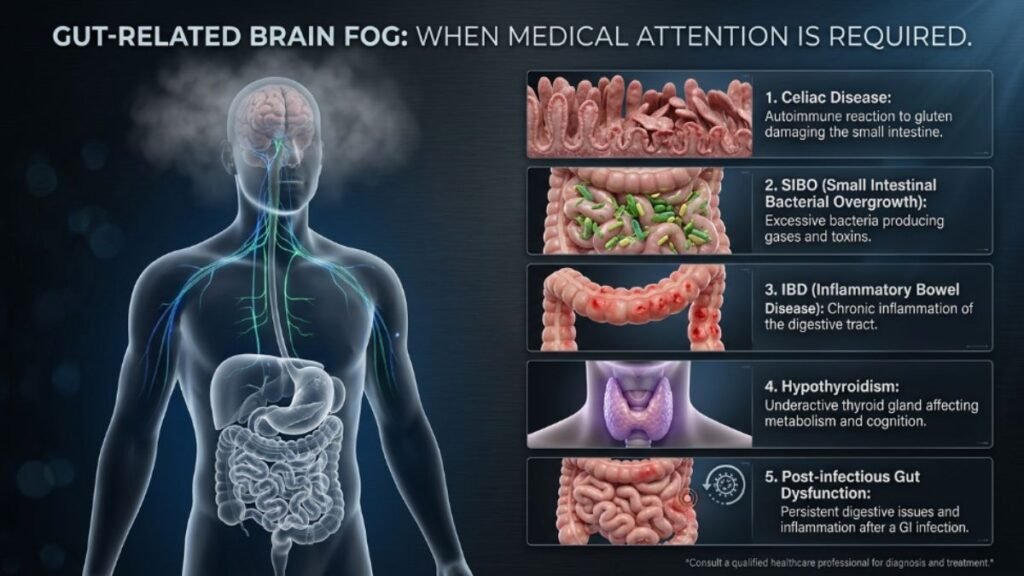
Not all brain fog with gut symptoms is simply a matter of dietary optimization. There are clinical conditions that produce both gut and cognitive symptoms and require diagnosis:
- Celiac disease — autoimmune gluten sensitivity with documented neurological manifestations (“gluten ataxia,” cognitive impairment)
- SIBO — small intestinal bacterial overgrowth with documented effects on B12 absorption and cognition
- IBD (Crohn’s, Ulcerative Colitis) — associated with elevated neuroinflammatory markers
- Hypothyroidism — produces both gut dysmotility and significant cognitive symptoms; commonly missed in standard panels
- Post-infectious gut dysfunction — documented post-COVID and post-gastrointestinal infection microbiome disruption
If your cognitive symptoms are persistent, severe, or accompanied by significant GI changes, please seek medical evaluation before treating this as a lifestyle problem.
Key Takeaways
The gut-brain axis is not a metaphor. It is a functional, anatomically documented communication system that directly influences your neurotransmitter production, inflammatory load, blood-brain barrier integrity, and ultimately, your cognitive clarity.
The core mechanism is this: a disrupted gut microbiome sends dysregulated signals upward via the vagus nerve, reduces the production of SCFA and serotonin precursors, and triggers neuroinflammation that the brain experiences as foggy, slow thinking.
The practical implications:
- Dietary fiber diversity is the most consistent driver of microbiome health
- Reducing ultra-processed food shifts the microbial environment within days
- Sleep quality is a gut variable, not just a brain variable
- Fermented foods have stronger evidence for microbiome diversity than most probiotic supplements
- Persistent symptoms deserve medical evaluation — not just lifestyle optimization
This content is for informational and educational purposes only. It does not constitute medical advice. Please consult your healthcare provider before making changes to your diet, supplements, or cognitive health routine.
Frequently Asked Questions about The Gut-Brain Axis and Brain Fog
Can a bad gut really cause brain fog?
Yes — through several documented mechanisms. A disrupted microbiome reduces short-chain fatty acid production, which weakens the blood-brain barrier and increases neuroinflammation. It also impairs synthesis of neurotransmitter precursors like serotonin and GABA. The result is cognitive sluggishness that many people describe as brain fog. The relationship is not metaphorical — it is mechanistic.
How long does it take for gut changes to affect brain fog?
There is no universal timeline, but microbiome composition can shift measurably within days of significant dietary changes. However, meaningful improvements in neuroinflammation and neurotransmitter balance likely take weeks to months of consistent change. Expecting dramatic cognitive results in a week from any single intervention is not realistic.
Is leaky gut a real medical condition?
Intestinal hyperpermeability is a documented physiological phenomenon studied in peer-reviewed literature. The mechanisms — disrupted tight junctions, LPS translocation, systemic inflammation — are real and measurable. However, it is not a standardized diagnosis in conventional medicine, and many clinical claims made in wellness marketing go well beyond current evidence.
Do I need probiotics to fix gut-brain axis problems?
Not necessarily. The evidence for probiotic supplementation improving cognition in healthy adults is modest. Dietary changes — specifically increasing fiber diversity and incorporating fermented foods — have stronger and more consistent mechanistic support. Probiotics may be useful in specific contexts (post-antibiotic recovery, specific clinical conditions), but they are not a shortcut to microbiome health.
What foods are most damaging to the gut-brain axis?
Highly processed foods high in added sugar, refined grains, and industrial seed oils consistently deplete beneficial bacterial species and promote inflammatory microbial populations. Alcohol, even in moderate amounts, increases intestinal permeability. Frequent NSAID use (ibuprofen, aspirin) is also associated with gut lining disruption.
Can stress alone cause gut-brain axis dysfunction?
Yes. Chronic psychological stress activates the HPA axis and elevates cortisol, which alters gut motility, increases intestinal permeability, and changes microbial composition. The disrupted gut then sends inflammatory signals back to the brain, increasing stress reactivity further. It is a self-reinforcing loop — which is why stress management is not separate from gut health management.
Should I see a doctor if I have brain fog and digestive symptoms together?
Yes — especially if symptoms are persistent, severe, or worsening. Conditions like celiac disease, SIBO, hypothyroidism, and IBD can produce both cognitive and gut symptoms and require diagnosis. Don’t assume it is a lifestyle problem that dietary changes alone will fix.

Daniel Mercer é um escritor de ciências da saúde especializado em desempenho cognitivo, nootrópicos e pesquisas sobre saúde cerebral. Com formação em ciências biomédicas e mais de uma década de experiência revisando literatura clínica sobre desempenho mental e suplementação, ele fundou o Cognitive Insight Lab para simplificar informações irrelevantes e fornecer análises baseadas em evidências para pessoas que levam a sério sua saúde cognitiva. Daniel não aceita conteúdo patrocinado e não possui vínculos financeiros com as marcas analisadas neste site.