

Omega-3 Deficiency Brain Effects: What Happens After 30 Days Without It
Omega-3 deficiency brain effects are more measurable — and more immediate — than most people expect. If you have been eating a typical Western diet, relying on ultra-processed foods, or simply ignoring fish and seeds for the past month, there is a reasonable chance your brain is already running below its functional baseline. Not dramatically. Not in a way that makes headlines. But in the quiet, grinding way that shows up as slower recall, thinner focus, and a general sense that your mental edge has gone somewhere you cannot quite locate.
This is not a scare tactic. It is what the neuroscience consistently shows when dietary omega-3 intake drops below adequate levels — and what it shows about what happens when it drops for an extended period.
This article breaks down what actually occurs in the brain when omega-3s are insufficient, why deficiency is far more common than official estimates suggest, and what the 30-day threshold means from a biological standpoint.
What Omega-3 Fatty Acids Actually Do in the Brain
Before examining deficiency, it helps to understand why omega-3s occupy an irreplaceable structural role in neural tissue.
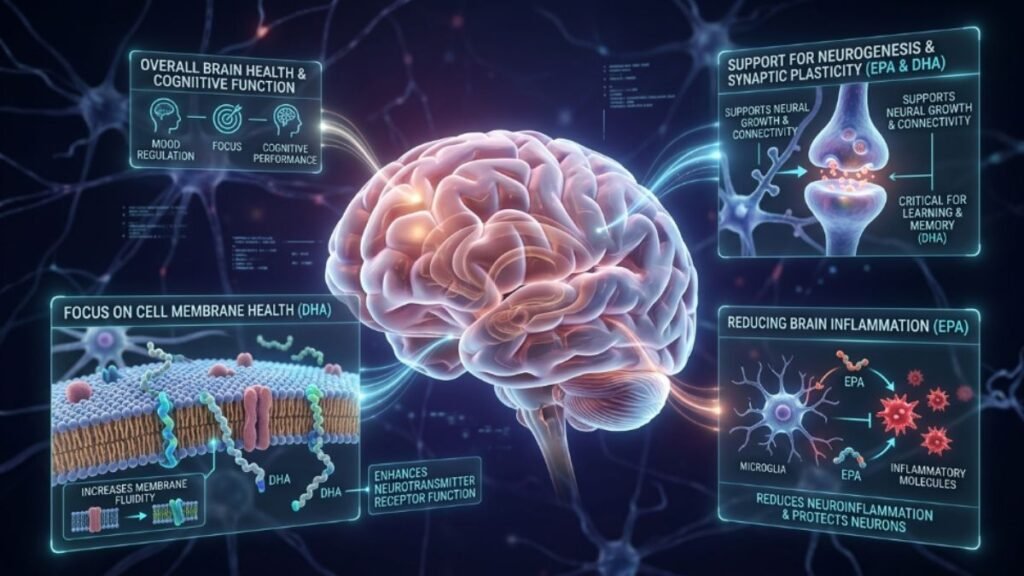
The brain is roughly 60% fat by dry weight. A significant portion of that fat is docosahexaenoic acid, or DHA — one of the two primary long-chain omega-3 fatty acids alongside eicosapentaenoic acid (EPA). DHA is embedded in the phospholipid bilayer of every neuron. It is not a passenger. It is part of the architecture.
DHA and Membrane Fluidity
Neuronal membranes need to remain fluid — selectively permeable and responsive — to allow ion channels, neurotransmitter receptors, and signal proteins to move and function correctly. DHA’s molecular structure, with its multiple double bonds, creates the flexibility that makes this possible. When DHA is replaced by saturated or omega-6 fatty acids — which happens when dietary omega-3 intake drops — membranes become more rigid. Receptor function slows. Signal transmission becomes less efficient.
This is not theoretical. Research published in Frontiers in Aging Neuroscience has demonstrated measurable changes in membrane composition within weeks of dietary fat shifts, with corresponding changes in cognitive performance markers.
EPA and Neuroinflammation
While DHA is the structural component, EPA functions primarily as an anti-inflammatory signaling molecule. It competes with arachidonic acid (an omega-6 fatty acid) for enzymatic pathways that produce either pro-inflammatory or anti-inflammatory eicosanoids. When omega-3 intake is low and omega-6 intake is high — which is the default state of most Western diets — the balance tips toward chronic low-grade neuroinflammation.
Neuroinflammation at subclinical levels does not cause obvious symptoms. What it does is raise the cognitive cost of everything: maintaining attention, retrieving memories, regulating mood, and managing stress all become slightly harder than they should be.
Why Most People Are Already Deficient

The word “deficiency” implies a dramatic shortage. In reality, omega-3 inadequacy operates on a spectrum, and most Western adults fall into a range that is technically sufficient to prevent acute symptoms but meaningfully suboptimal for cognitive function.
Several factors drive this:
The omega-6 to omega-3 ratio problem. The ideal dietary ratio of omega-6 to omega-3 fatty acids is estimated between 1:1 and 4:1. The average American diet delivers somewhere between 15:1 and 20:1. This imbalance is not merely about eating less omega-6 — it actively displaces omega-3 in metabolic pathways and promotes the inflammatory signaling EPA is meant to counterbalance.
Conversion from ALA is unreliable. The plant-based omega-3 found in flaxseeds, chia seeds, and walnuts is alpha-linolenic acid (ALA). The human body can theoretically convert ALA into EPA and DHA, but conversion rates are poor — typically below 10% for EPA and below 1% for DHA. Relying on plant sources alone does not meaningfully raise DHA levels in most people.
Seafood consumption has declined. Fatty cold-water fish — salmon, sardines, mackerel, herring — are the most reliable dietary sources of preformed EPA and DHA. Consumption of these fish has dropped substantially across Western populations over the past several decades, replaced by leaner fish, processed meats, and plant-based proteins.
According to the National Institutes of Health Office of Dietary Supplements, adequate intake estimates for omega-3s remain difficult to define precisely, but surveys consistently find that most Americans fall well below even conservative recommendations.
The 30-Day Window: What Changes in the Brain
Thirty days is not a magic number. It is, however, the approximate time frame in which research on dietary fat changes begins to show measurable neurological effects — specifically in membrane composition, inflammatory markers, and certain cognitive performance metrics.
Week 1–2: Membrane Composition Begins to Shift
The brain does not immediately notice a sudden drop in dietary omega-3s because it draws on existing tissue stores. But the replacement process begins relatively quickly. As DHA-rich phospholipids are recycled and not replenished at the same rate, less flexible fatty acids begin occupying membrane positions. By the end of the second week, the composition of synaptic membranes has already begun to change in animal models, with human studies suggesting similar dynamics.
At this stage, changes are unlikely to be perceptible. They are happening at a cellular level that has not yet crossed the threshold into noticeable cognitive symptoms.
Week 2–4: Neuroinflammatory Tone Rises
As EPA levels drop and the omega-6 to omega-3 ratio worsens, the balance of eicosanoid production shifts. Prostaglandins and cytokines with pro-inflammatory profiles increase in relative proportion. This does not cause sudden mental decline. What it tends to produce is a subtle but cumulative change in how the brain handles stress, recovers from cognitive exertion, and regulates emotional tone.
People in this phase often describe it as feeling “off” without being able to say why. Concentration feels slightly effortful. Mood is flatter than usual. Sleep feels less restorative despite adequate hours. These are not dramatic symptoms. They are the cognitive equivalent of running on slightly underinflated tires — everything still works, but with more friction and less responsiveness.
Beyond 30 Days: Compounding Effects
When low omega-3 status persists past a month, the compounding effects become more significant. Research from the Harvard T.H. Chan School of Public Health has highlighted associations between chronically low omega-3 status and increased risk of mood disorders, cognitive aging, and reduced stress resilience — effects that are most clearly observable over months and years, but that have measurable short-term correlates.
Brain-derived neurotrophic factor (BDNF) — a protein essential for neuroplasticity, learning, and memory formation — has been shown to decline in conditions of omega-3 deficiency. BDNF is sometimes called “fertilizer for the brain” because it supports the growth and maintenance of neural connections. Reduced BDNF levels are associated with slower learning, difficulty forming new memories, and reduced capacity for the brain to adapt to new demands.
Cognitive Symptoms That Suggest Low Omega-3 Status

None of the following symptoms are exclusive to omega-3 deficiency. All of them can have multiple causes. But they form a recognizable cluster that appears repeatedly in research on populations with low omega-3 intake:
Difficulty sustaining attention. The kind of focus that used to come automatically now requires deliberate effort. Distractions feel harder to filter. Long tasks feel longer.
Slower verbal recall. Words and names that should be immediately available take a beat longer to surface. The tip-of-the-tongue experience becomes more frequent.
Mood instability or emotional flatness. Either increased irritability and reactivity, or a blunted sense of engagement and motivation — sometimes alternating between the two.
Impaired stress recovery. Cognitive tasks feel more demanding after stress than they used to. The mental recovery window after difficult periods stretches longer.
Disrupted sleep quality. Difficulty reaching and maintaining deep sleep, despite no obvious change in habits.
Dry skin, brittle nails, increased thirst. These peripheral symptoms are less diagnostically useful but are consistent with systemic omega-3 depletion.
It is worth noting clearly: if you are experiencing significant cognitive changes, memory problems, or mood shifts, these symptoms warrant medical evaluation. Omega-3 status is one variable among many, and a qualified healthcare provider is the appropriate person to assess what is driving the symptoms.
The Brain-Specific Demand for DHA: Why No Other Fat Substitutes
A common misconception is that the brain’s fat requirements are interchangeable — that any dietary fat will support neural function. This is not accurate.
DHA is selectively concentrated in the brain and retina to a degree that does not occur with other fatty acids. The brain contains specific DHA transport mechanisms that preferentially uptake and retain it from the bloodstream. When DHA is abundant, these mechanisms maintain the structural richness of synaptic membranes. When it is scarce, those membranes become progressively less DHA-rich — and the molecular machinery embedded in them becomes less efficient.
Saturated fats and monounsaturated fats can substitute structurally in membranes, but they do not replicate the biophysical properties DHA provides. The result is membranes that are physically stable but functionally compromised in the specific ways that matter for signal speed, receptor sensitivity, and synaptic plasticity.
Research published in Prostaglandins, Leukotrienes and Essential Fatty Acids has documented that dietary DHA depletion leads to compensatory incorporation of docosapentaenoic acid (DPA n-6), an omega-6 fatty acid structurally similar to DHA but functionally inferior for many neural processes. The brain attempts to maintain membrane composition but cannot fully replicate what DHA provides.
Omega-3 and Neuroprotection: The Long-Term Stakes
Beyond immediate cognitive effects, chronic omega-3 inadequacy is associated with accelerated cognitive aging and increased vulnerability to neurodegenerative processes.
DHA and EPA contribute to neuroprotection through several overlapping mechanisms:
Reduction of amyloid-beta accumulation. Animal studies and some human observational data suggest higher omega-3 status is associated with reduced accumulation of amyloid plaques — the protein deposits associated with Alzheimer’s pathology. The mechanisms are not fully characterized, but reduced neuroinflammation and improved membrane health appear to be contributing factors.
Mitochondrial function support. Neurons are energetically demanding cells. Omega-3 fatty acids support mitochondrial membrane integrity and efficiency, which directly affects the energy available for cognitive processes.
Synaptic density maintenance. BDNF, which omega-3s help support, is essential for maintaining the number and quality of synaptic connections. Chronic low omega-3 status is associated with reduced synaptic density in animal models — changes that correlate with measurable declines in learning and memory performance.
None of this means omega-3 supplementation is a guaranteed neuroprotective intervention. The research on supplementation in healthy adults is more mixed than popular coverage suggests. What is clearer is that deficiency accelerates the neural aging processes that omega-3s help slow — and that correction of deficiency does produce measurable improvement in those who were genuinely depleted.
How to Assess Your Omega-3 Status

Dietary surveys are an imperfect proxy for omega-3 status. The most direct assessment is an omega-3 index blood test, which measures EPA and DHA as a percentage of total fatty acids in red blood cell membranes. This reflects tissue incorporation rather than recent dietary intake, providing a more accurate picture of long-term status.
An omega-3 index below 4% is considered deficient. Between 4–8% is adequate. Above 8% is associated with optimal cardiovascular and emerging cognitive health outcomes. Most Americans fall in the 4–5% range — technically above deficiency but well below optimal.
If a blood test is not immediately accessible, dietary analysis provides a useful estimate. The key question is frequency of fatty fish consumption. Eating two or more servings per week of fatty cold-water fish — salmon, sardines, mackerel, anchovies, herring — is generally sufficient to maintain adequate omega-3 index levels in most adults. Fewer than one serving per week, combined with a typical Western diet, is a reliable indicator of suboptimal status.
For those looking to address a nutritional gap without restructuring their diet, supplementation is a practical option. High-quality fish oil or algae-based omega-3 supplements (which provide preformed EPA and DHA without the conversion problem of ALA) can meaningfully raise omega-3 index levels within 8–12 weeks of consistent use. When evaluating any supplement, look for products that clearly state EPA and DHA content per serving, use triglyceride or re-esterified triglyceride form for better absorption, and have been third-party tested for oxidation and contaminant levels. For a plant-based option with preformed EPA and DHA, Nordic Naturals Algae Omega is one of the more reliable algae-derived formulations available — relevant particularly for those avoiding fish-based products entirely.
Affiliate Disclosure: This article contains affiliate links. If you click through and make a purchase, Cognitive Insight Lab may earn a small commission — at no extra cost to you. We only recommend products we have genuinely researched and believe may offer real value to our readers. Our editorial opinions are always our own.
What Recovery Looks Like
Restoring omega-3 status is not instantaneous, but it is measurable. Studies on repletion — bringing depleted individuals back to adequate intake — show improvements in cognitive performance markers within 8–16 weeks. The sequence typically follows the biology:
Weeks 1–4: Anti-inflammatory EPA levels rise first. Neuroinflammatory tone begins to decrease. Mood stability and stress resilience tend to be the earliest reported improvements.
Weeks 4–8: DHA incorporation into membrane phospholipids increases. Membrane fluidity improves. Focus, attention stability, and processing speed begin to reflect this.
Weeks 8–16: BDNF levels rise with sustained DHA availability. Memory formation and verbal recall show the most improvement in this window.
Individual results vary considerably depending on baseline deficiency, overall diet quality, age, and whether other factors contributing to cognitive symptoms are addressed simultaneously.
Medical Disclaimer: The information in this article is for educational purposes only and is not intended as medical advice, diagnosis, or treatment. Individual results may vary. If you have a medical condition, are taking medications, or are experiencing significant cognitive changes, consult a licensed healthcare professional before making dietary or supplementation changes.
Conclusion
Omega-3 deficiency brain effects do not announce themselves dramatically. They accumulate quietly — in the slight resistance that attention now requires, the half-second delay before a word surfaces, the mood that sits a register lower than it should. Within 30 days of inadequate intake, measurable changes in membrane composition, inflammatory tone, and BDNF availability begin to accumulate.
The practical takeaway is not complicated: the brain has a specific, documented need for EPA and DHA that no other dietary fat meets in the same way. Meeting that need — whether through fatty fish, high-quality supplementation, or both — removes a friction that most people have stopped noticing because it has been present for so long.
If your cognitive sharpness has quietly declined and diet is a variable you have not examined, omega-3 status is worth investigating. It is one of the few genuinely modifiable factors with solid mechanistic backing. If you want a ready-made solution that addresses both DHA and EPA from a clean, tested source, Performance Lab Omega-3 is what I would try first — algae-derived, high-potency, and formulated specifically for cognitive and neural health.
If you are still trying to identify what is behind your mental fatigue, our guide to brain fog causes in adults covers the full spectrum of contributing factors.
Frequently Asked Questions
How quickly do omega-3 deficiency brain effects appear?
Measurable changes in membrane composition begin within 1–2 weeks of reduced intake, though noticeable cognitive symptoms typically emerge after 3–4 weeks of consistent deficiency. Individual variability is significant — people with already low baseline status will notice effects sooner.
Can I get enough omega-3 from plant sources to support brain health?
Plant sources such as flaxseed, chia, and walnuts provide ALA, which converts to EPA and DHA at very low efficiency — typically below 1% for DHA. For cognitive support specifically, preformed EPA and DHA from fatty fish or algae-based supplements are substantially more reliable.
What is a realistic timeline to see cognitive improvement after correcting omega-3 deficiency?
Most studies on repletion show initial mood and stress improvements within 4–6 weeks, with more substantial cognitive benefits — in focus, recall, and processing speed — appearing at 8–12 weeks of consistent intake.
Is omega-3 supplementation safe for long-term use?
High-quality fish oil and algae-based omega-3 supplements have a well-established safety profile at standard doses (1–3g EPA+DHA per day) for most healthy adults. Higher doses or use alongside blood-thinning medications warrant medical supervision.
How do I know if I am omega-3 deficient without a blood test?
Dietary frequency is the most accessible proxy: fewer than one serving of fatty fish per week, combined with a typical Western diet high in processed foods, is associated with suboptimal omega-3 index levels in the majority of adults. Symptoms such as difficulty concentrating, mood instability, poor sleep quality, and dry skin can indicate deficiency but are not diagnostic on their own.
Does cooking fish reduce its omega-3 content?
Some degradation occurs with high-heat cooking methods, but most of the EPA and DHA in fish survives typical cooking temperatures. Baking, poaching, or gentle pan-cooking preserves more omega-3 content than deep-frying, but well-cooked fatty fish remains a meaningful source.
Can children and teenagers also experience omega-3 deficiency brain effects?
Yes. DHA is critical during brain development and remains important throughout adolescence. Low omega-3 status in younger populations is associated with attention difficulties, slower learning, and emotional dysregulation. The mechanisms are the same as in adults, with the additional consideration that developing brains have higher relative demands for DHA.

Daniel Mercer é um escritor de ciências da saúde especializado em desempenho cognitivo, nootrópicos e pesquisas sobre saúde cerebral. Com formação em ciências biomédicas e mais de uma década de experiência revisando literatura clínica sobre desempenho mental e suplementação, ele fundou o Cognitive Insight Lab para simplificar informações irrelevantes e fornecer análises baseadas em evidências para pessoas que levam a sério sua saúde cognitiva. Daniel não aceita conteúdo patrocinado e não possui vínculos financeiros com as marcas analisadas neste site.