Vitrafoxin Review: Does This Mushroom-Based Brain Supplement Actually Work?
┌─────────────────────────────────────────────────────────┐
│  OUR VERDICT
│  ⭐⭐⭐⭐  Vitrafoxin
│
│  Best for: Adults 45+ experiencing memory lapses,
│  brain fog, and declining mental clarity
│  Price: $49–$69/bottle  |  Guarantee: 365-day
│
│  ✅ 4 research-backed medicinal mushroom ingredients
│  ✅ 43 peer-reviewed scientific references on page
│  ✅ Made in FDA-registered, GMP-certified US facility
│  ✅ Industry-leading 365-day money-back guarantee
│  ⚠️  Individual ingredient dosages not disclosed
│
│  → Check Current Price on Official Site
└─────────────────────────────────────────────────────────┘Vitrafoxin Review…. If you’ve been researching brain supplements for memory and focus, Vitrafoxin is likely a name you’ve come across more than once. It positions itself as a medicinal mushroom-based cognitive support formula — and in a market flooded with synthetic stimulants and under-dosed proprietary blends, that angle is worth examining carefully.
This review does exactly that. We analyzed the ingredient profile, cross-referenced the published scientific literature cited on the official website, and examined the manufacturing claims against third-party standards. The goal is simple: give you an honest, research-grounded assessment so you can decide whether Vitrafoxin is worth your money.
⚠️ Important Notice: This content is for informational and educational purposes only. It does not constitute medical advice and does not replace the guidance of a qualified healthcare professional. Please consult your doctor before making any changes to your supplementation routine — especially if you take medications or have an existing medical condition.
What you’ll find here: a full breakdown of what Vitrafoxin is, how each of its four ingredients works neurologically, who is most likely to benefit, realistic expectations based on actual clinical research timelines, and a clear-eyed look at where the product’s marketing overshoots what the science supports.
What Is Vitrafoxin?
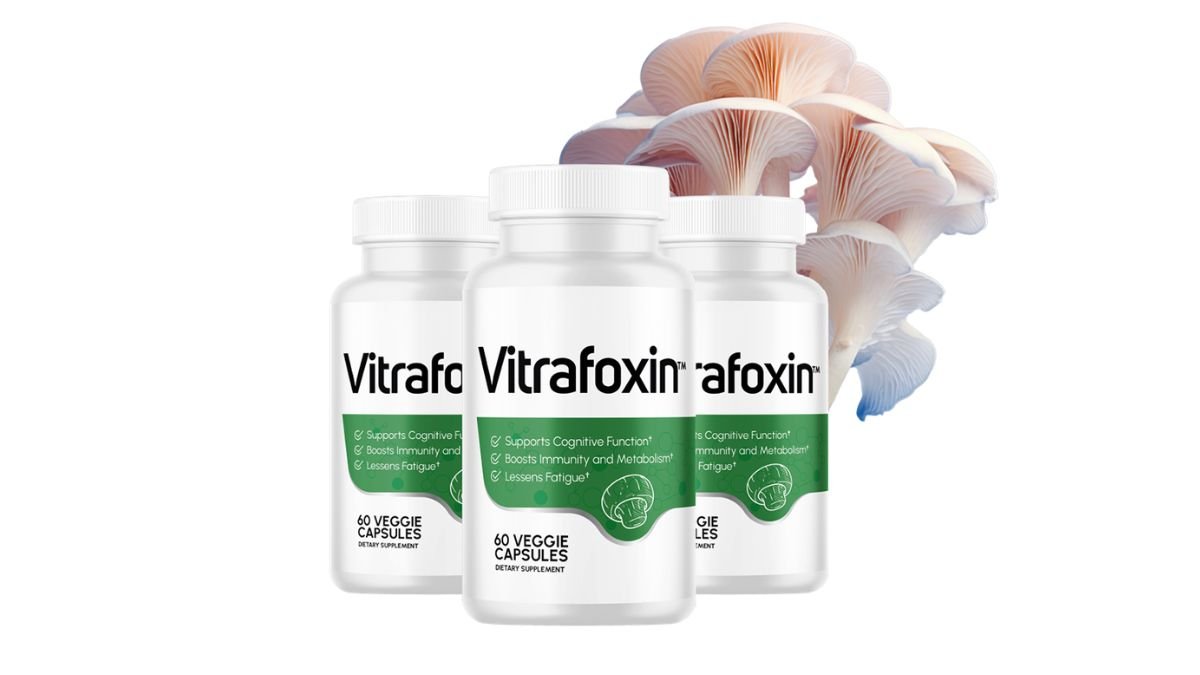
Vitrafoxin is a dietary supplement formulated around four medicinal mushrooms: Ganoderma (Reishi), Yamabushitake (Lion’s Mane), Lentinula (Shiitake), and Cordyceps. It is designed for adults — particularly those over 45 — who are experiencing age-related cognitive drag: slower recall, difficulty maintaining focus, occasional brain fog, or a general sense that mental sharpness is not what it used to be.
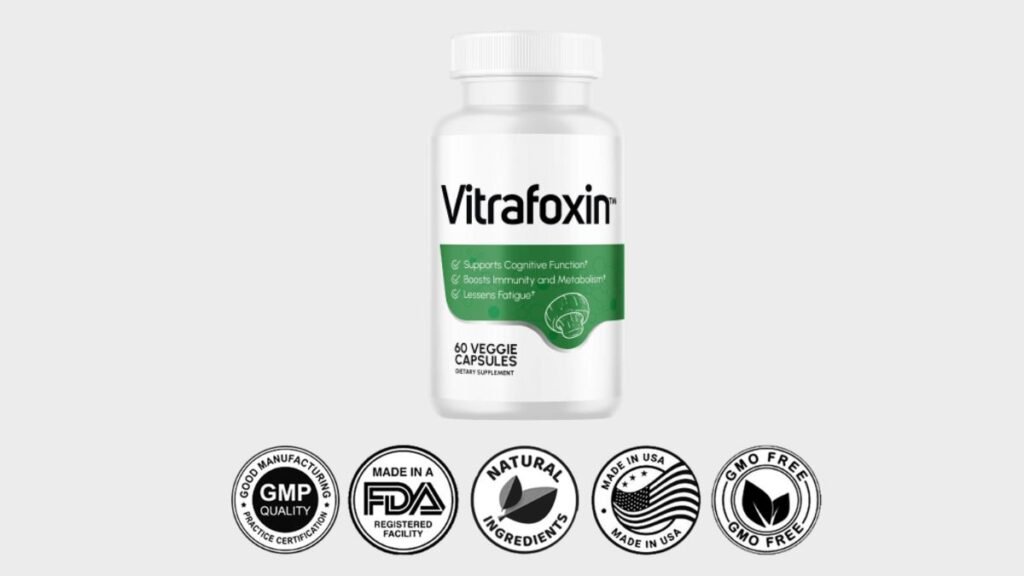
The product is manufactured in the United States in an FDA-registered, GMP-certified facility and sold through a ClickBank-backed platform with a 365-day money-back guarantee — one of the most generous return windows in the supplement category.
Unlike many nootropic formulas that rely on synthetic compounds, stimulants, or poorly studied herbal blends, Vitrafoxin draws on a category with genuine scientific depth: medicinal mushrooms. All four ingredients in its formula have been studied in peer-reviewed research for their neurological effects, and the official product page lists 43 scientific references — including several PubMed-indexed clinical studies.
👉 WHAT ARE NOOTROPICS AND HOW DO THEY WORK:
What Are Nootropics? A Clear, Evidence-Based Guide
The differentiation claim is a mushroom-centric, whole-food approach to brain health rather than isolated synthetic compounds. Whether that differentiation translates to measurable results depends, as always, on the quality and dosage of the extracts — which we will address directly.

How Does Vitrafoxin Work?
Vitrafoxin’s four-ingredient formula targets brain health through complementary but distinct mechanisms. Understanding how each one works helps set accurate expectations — and separates what the research actually supports from what marketing language implies.
Ganoderma (Reishi Mushroom)
Ganoderma lucidum — commonly known as Reishi — has a documented history in traditional East Asian medicine and a growing body of Western research behind it. Its primary neurological relevance comes from its anti-inflammatory and neuroprotective properties.
Chronic neuroinflammation — driven by activated microglia, the brain’s immune cells — is increasingly recognized as a significant driver of age-related cognitive decline. Ganoderma polysaccharides and triterpenes have shown immunomodulatory activity in multiple studies, helping regulate the inflammatory response in neural tissue.
A randomized, double-blind, placebo-controlled study published in the Journal of Medicinal Food found that Ganoderma extract produced significant improvements in neurasthenia symptoms — a condition associated with mental fatigue and cognitive fog — over 8 weeks of supplementation.
Yamabushitake (Lion’s Mane / Hericium erinaceus)
Yamabushitake is the Japanese name for Hericium erinaceus — more widely known as Lion’s Mane mushroom. It is arguably the most well-researched ingredient in Vitrafoxin’s formula when it comes to direct cognitive benefit.
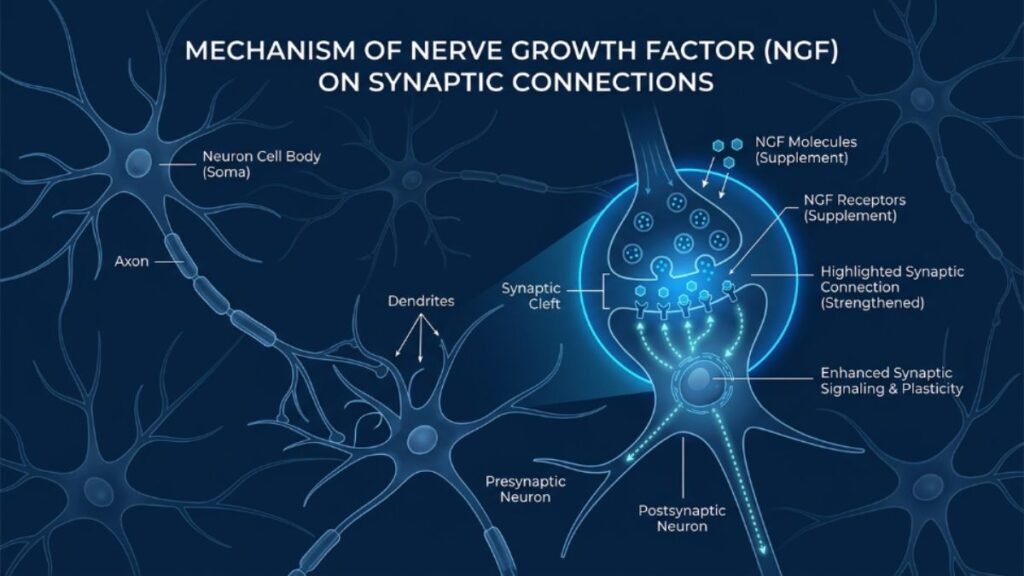
Its active compounds — hericenones (from the fruiting body) and erinacines (from the mycelium) — have been shown in multiple studies to stimulate the synthesis of Nerve Growth Factor (NGF), a protein critical for the maintenance, survival, and plasticity of neurons. The landmark 2009 double-blind, placebo-controlled clinical trial by Mori et al., published in Phytotherapy Research, demonstrated statistically significant improvements in cognitive function scores among adults with mild cognitive impairment after 16 weeks of supplementation.
It is worth noting: the clinical evidence for Lion’s Mane shows meaningful benefits over 8–16 weeks of consistent use — not one week, as some supplement marketing suggests. Setting realistic expectations here matters for user adherence and trust.
Lentinula (Shiitake Mushroom)
Lentinula edodes — shiitake — is primarily valued in the context of Vitrafoxin for its choline content and acetylcholine precursor activity. Acetylcholine is the neurotransmitter most directly implicated in memory formation and retrieval; its depletion is a hallmark of Alzheimer’s disease pathology.
Shiitake is also one of few edible mushrooms with documented eritadenine content, which supports healthy cardiovascular circulation — relevant to brain health given that cognitive performance depends heavily on adequate cerebral blood flow.
The “Einstein mushroom” marketing descriptor used on the official page is colorful but not a scientific term. The actual evidence is more modest and more specific: shiitake contributes nutritional co-factors that support acetylcholine synthesis and healthy circulation rather than acting as a direct cognitive enhancer.
Cordyceps
Cordyceps sinensis is an adaptogenic fungus with the strongest evidence base in the context of energy metabolism, oxygen utilization, and mental endurance — particularly relevant for adults who experience cognitive fatigue rather than acute memory impairment.
Research published in BioMed Research International found that Cordyceps supplementation improved markers of antifatigue and energy metabolism. Animal studies have also demonstrated improvements in learning and memory performance in scopolamine-induced amnesia models, though direct human clinical data for cognitive outcomes specifically remains more limited than for Lion’s Mane.
Key Benefits of Vitrafoxin
Based on the ingredient profile and supporting research, here is what consistent Vitrafoxin use may realistically support:
- Memory support and recall: Lion’s Mane and Ganoderma both have clinical evidence for memory-related benefits in aging adults, particularly in populations with mild cognitive impairment
- Reduced brain fog: Ganoderma’s anti-inflammatory properties may help clear the neuroinflammatory haze that contributes to cognitive fog
- Sustained mental energy: Cordyceps supports energy metabolism and reduces cognitive fatigue without stimulants, avoiding the crash cycle of caffeine-based formulas
- Neuroprotection over time: All four ingredients have antioxidant and anti-inflammatory properties that may help slow age-related neurological changes
- Acetylcholine pathway support: Lentinula (Shiitake) contributes choline-pathway support relevant to learning and memory consolidation
- No stimulant dependency: Vitrafoxin contains no caffeine or synthetic stimulants — benefits, if experienced, reflect underlying biological support rather than temporary alertness spikes
👉SUPPLEMENTS THAT ADDRESS BRAIN FOG AT THE SOURCE:
Best Supplements for Brain Fog in 2026: Ranked, Reviewed and Compared
Main Ingredients: What the Research Shows
| Ingredient | Primary Mechanism | Key Evidence |
|---|---|---|
| Ganoderma (Reishi) | Anti-inflammatory; neuroprotective; fatigue reduction | Tang et al. 2005 RCT (neurasthenia); multiple polysaccharide studies |
| Yamabushitake (Lion’s Mane) | NGF stimulation; neuroplasticity; hippocampal support | Mori et al. 2009 RCT (mild cognitive impairment) |
| Lentinula (Shiitake) | Choline precursor support; circulation | Wallace & Blusztajn 2019 (choline essentiality) |
| Cordyceps | Energy metabolism; oxygen utilization; antifatigue | Geng et al. 2017; Peng et al. 2018 (memory in animal models) |
One important transparency note: Vitrafoxin does not disclose the specific dosage of each mushroom on its sales page. This is a common limitation in the supplement industry and not unique to this product. However, it does make it impossible to compare the ingredient doses directly against the amounts used in the clinical trials cited. For consumers who prioritize full ingredient transparency, this is a meaningful consideration.
⚠️ Attention: The absence of disclosed individual ingredient dosages is a limitation worth acknowledging. Most of the clinical studies on Lion’s Mane used 3,000 mg of dried mushroom powder or 500–1,000 mg of concentrated extract daily. Without knowing Vitrafoxin’s specific doses, you cannot verify that the formula matches those amounts.

Pros and Cons
Pros
- All four ingredients are backed by legitimate peer-reviewed research
- The official page lists 43 scientific references — unusually thorough for the supplement category
- No synthetic stimulants, artificial fillers, or GMO ingredients declared
- Made in FDA-registered, GMP-certified US facility
- Industry-leading 365-day money-back guarantee — significantly longer than the 60–90 day standard
- Formula targets multiple neurological pathways simultaneously (inflammation, NGF, acetylcholine, energy)
- Medicinal mushroom ingredients have strong traditional use records spanning centuries
Cons
- Individual ingredient dosages not disclosed — makes clinical dose comparison impossible
- “Results within the first week” claim on the official page conflicts with clinical research timelines of 8–16 weeks
- The false scarcity language (“extreme scarcity of rare mushrooms”) is a standard marketing tactic without scientific basis
- Relatively higher price point at $69/bottle for a 30-day supply
- Limited independent third-party testing certification disclosed (NSF, USP, or Informed Sport not mentioned)
Who Should Use Vitrafoxin?
Vitrafoxin is best suited for:
- Adults 45 and older experiencing gradual memory slippage, slower recall, or increased mental fatigue
- Cognitively active adults who want a stimulant-free daily support formula they can maintain consistently
- People recovering from chronic stress or burnout where neuroinflammation may be contributing to brain fog
- Adults already addressing lifestyle fundamentals (sleep, exercise, diet) who want supplementation to add additional support
- Those who prefer whole-food, mushroom-based formulas over synthetic nootropic compounds
💡 Practical Tip: Vitrafoxin is most likely to produce meaningful results when paired with consistent sleep (7–8 hours), regular aerobic exercise, and a diet with adequate choline and omega-3 DHA. The mushroom compounds in this formula support the neurological environment — the lifestyle factors determine the baseline health of that environment.
Who Should Not Use Vitrafoxin?
- Individuals with known mushroom allergies — consult your physician before use
- People taking blood-thinning medications — Reishi and Cordyceps may have mild anticoagulant properties
- Those with autoimmune conditions — the immunomodulatory activity of beta-glucans in medicinal mushrooms warrants medical clearance first
- Pregnant or breastfeeding women — insufficient clinical safety data for this population
- Anyone expecting immediate results — if your goal is same-day cognitive enhancement, this product is not designed for that; it operates through cumulative neurobiological support over weeks
Realistic Results and Expectations
This is where honest review work matters most — because the gap between what supplement marketing promises and what the science supports is often wide.
Based on the clinical research cited on Vitrafoxin’s own page:
- Weeks 1–4: Most users should not expect dramatic changes. The medicinal mushroom compounds require time to accumulate and influence neurobiological processes. Some users may notice slight improvements in mental energy (Cordyceps) or reduced cognitive fatigue.
- Weeks 4–8: Research on Ganoderma for neurasthenia showed measurable improvements at 8 weeks. Some users in this window may notice clearer thinking and reduced brain fog frequency.
- Weeks 8–16: The Mori et al. 2009 clinical trial on Lion’s Mane (the ingredient with the strongest direct cognitive evidence) used a 16-week protocol and showed statistically significant improvements in cognitive function scales at this timeframe.
- Months 3–6: The strongest cumulative effects are expected here, consistent with the traditional use model and the longer-term studies on medicinal mushrooms.
The official website’s claim that “most users report noticeable improvements in memory, focus, and mental clarity within the first week” is more optimistic than the underlying clinical data supports. It is not impossible for some users to notice early benefits — but it should not be the benchmark against which you judge whether the product is working.
✓ Best Practice: Commit to a minimum 90-day trial before evaluating results. Keep a simple weekly cognitive log — note your subjective focus rating, memory confidence, and energy level. Supplementation outcomes are easier to evaluate when you have a baseline to compare against.
How to Use Vitrafoxin Correctly
The official instructions are straightforward: take two capsules each morning, preferably with breakfast or a morning beverage.
For best results:
- Take consistently at the same time each day — circadian rhythm alignment supports supplement absorption and helps build the habit that makes long-term compliance possible
- Take with food — fat-soluble mushroom compounds may benefit from co-ingestion with a small amount of dietary fat
- Avoid skipping days — the cumulative neurological effects of NGF-stimulating compounds depend on consistent signaling; irregular use undermines the mechanism
- Give it the full trial window — based on the research, 90–120 days is the minimum meaningful evaluation period
Is Vitrafoxin Safe?
The safety profile of Vitrafoxin’s ingredient category is well-documented. Medicinal mushrooms — Reishi, Lion’s Mane, Shiitake, and Cordyceps — have been consumed as foods and medicinal preparations across Asian cultures for centuries, and no serious adverse effects have been documented in clinical trials at standard supplementation doses.
The manufacturing context is also favorable: the product is made in an FDA-registered, GMP-certified facility in the United States, which means the production environment is regulated for cleanliness, accuracy, and consistency, even though the FDA does not evaluate supplements for efficacy before sale.
The main safety considerations to flag:
- Potential mild anticoagulant effects from Reishi and Cordyceps — relevant if you take blood-thinning medications
- Beta-glucan immunomodulation — relevant for autoimmune conditions or immunosuppressive therapy
- Mushroom allergies — rare but present in some individuals
- No reported drug interactions specific to Vitrafoxin’s ingredients at standard doses, though this should be confirmed with your physician if you take any prescription medications
👉 The Lion’s Mane component is the strongest individual ingredient in the formula — our detailed guide on lion’s mane mushroom benefits for brain covers the full NGF mechanism and clinical timeline.
Lion’s Mane Mushroom Benefits for Brain
Pricing, Guarantee, and Where to Buy
Affiliate Disclosure: This review may contain affiliate links. If you purchase through these links, we may earn a commission at no additional cost to you. This helps support our research and content creation.
Vitrafoxin is available through the official website in three package options:
| Package | Per Bottle | Total | Best For |
|---|---|---|---|
| 1 Bottle (30-day supply) | $69 | $69 + shipping | First-time trial |
| 3 Bottles (90-day supply) | $59 | $177 | Recommended minimum |
| 6 Bottles (180-day supply) | $49 | $294, free shipping + 2 bonuses | Best value; full protocol |
The 365-day money-back guarantee is one of the most significant trust signals this product offers. Most supplement guarantees run 60–90 days — Vitrafoxin’s 365-day window means you have a full year to evaluate results before requesting a refund, which meaningfully reduces the purchase risk.
Important: Purchase only through the official Vitrafoxin website. Multiple counterfeit listings and unauthorized resellers have been identified across third-party platforms. Purchasing outside the official channel voids the guarantee and carries product authenticity risk.
Content Transparency Statement – We strive to provide accurate, up-to-date, and research-based information. This review is based on publicly available data, the manufacturer’s official website, and peer-reviewed scientific literature. Always verify current pricing, availability, and guarantee terms on the official product website before purchasing.
Final Verdict
Vitrafoxin is a legitimate, research-backed medicinal mushroom supplement with a coherent neurological rationale. Its four ingredients — Ganoderma, Lion’s Mane, Shiitake, and Cordyceps — are all supported by peer-reviewed research for cognitive and neurological benefit, and the product is manufactured to credible US quality standards.
The strongest argument for Vitrafoxin is the Lion’s Mane component: no other ingredient in the natural cognitive supplement space has a more consistent clinical evidence base for NGF stimulation and memory support in aging adults. The Ganoderma and Cordyceps components add complementary anti-inflammatory and energy-metabolism support that broadens the formula’s utility.
The honest limitations are equally worth naming: dosage transparency is missing, the “first week results” marketing claim should be disregarded in favor of a realistic 8–16 week timeline, and independent third-party certification is not highlighted on the official page.
For adults 45 and older who are experiencing genuine cognitive drag and are willing to commit to a consistent 90–120 day protocol, Vitrafoxin offers a scientifically grounded, stimulant-free option backed by a genuinely exceptional guarantee. It is not a quick fix — but for those who understand that meaningful neurobiological change happens over months rather than days, it is a credible investment.
Medical Disclaimer – The information provided in this review is for educational purposes only and is not intended to serve as medical advice, diagnosis, or treatment. Results may vary from person to person. If you have any medical conditions, are taking medications, or have specific health concerns, consult a licensed healthcare professional before using Vitrafoxin or any dietary supplement.
Frequently Asked Questions about Vitrafoxin Review
How long does Vitrafoxin take to work?
Based on the clinical research cited on Vitrafoxin’s official page, meaningful cognitive improvements typically require 8–16 weeks of consistent daily use. The Lion’s Mane clinical trial that forms the strongest evidence base for the formula ran for 16 weeks. Some users may notice earlier improvements in mental energy or reduced fatigue within 4–6 weeks, particularly from the Cordyceps and Ganoderma components. The official sales page claim of “results within the first week” is more optimistic than the underlying research supports.
Is Vitrafoxin safe to take with other supplements or medications?
Vitrafoxin’s mushroom ingredients have a strong general safety profile, but two specific interactions warrant attention. Ganoderma and Cordyceps have mild anticoagulant properties, which may be additive with blood-thinning medications including aspirin, warfarin, or NSAIDs. The immunomodulatory beta-glucans in the formula may also interact with immunosuppressive medications. As with any dietary supplement, disclose use to your healthcare provider — particularly if you take prescription medications.
What makes Vitrafoxin different from other brain supplements?
Vitrafoxin’s primary differentiation is its exclusive focus on medicinal mushrooms — a category with centuries of traditional use and a growing modern evidence base — rather than the synthetic nootropics, racetams, or high-dose stimulants found in many competing products. The formula specifically targets neuroinflammation (Ganoderma), NGF stimulation (Lion’s Mane), acetylcholine precursor support (Shiitake), and cognitive energy metabolism (Cordyceps) — four complementary mechanisms that address different aspects of cognitive aging simultaneously.
Can Vitrafoxin help with diagnosed cognitive conditions like Alzheimer’s or dementia?
No dietary supplement — including Vitrafoxin — is approved to treat, cure, or prevent any diagnosed medical condition. The research cited by Vitrafoxin includes studies on adults with mild cognitive impairment, not diagnosed Alzheimer’s disease. If you or a family member have a diagnosed cognitive condition, treatment decisions should be made with a qualified neurologist or physician. Vitrafoxin is a supportive supplement for adults experiencing normal age-related cognitive changes, not a medical intervention.

Daniel Mercer é um escritor de ciências da saúde especializado em desempenho cognitivo, nootrópicos e pesquisas sobre saúde cerebral. Com formação em ciências biomédicas e mais de uma década de experiência revisando literatura clínica sobre desempenho mental e suplementação, ele fundou o Cognitive Insight Lab para simplificar informações irrelevantes e fornecer análises baseadas em evidências para pessoas que levam a sério sua saúde cognitiva. Daniel não aceita conteúdo patrocinado e não possui vínculos financeiros com as marcas analisadas neste site.