
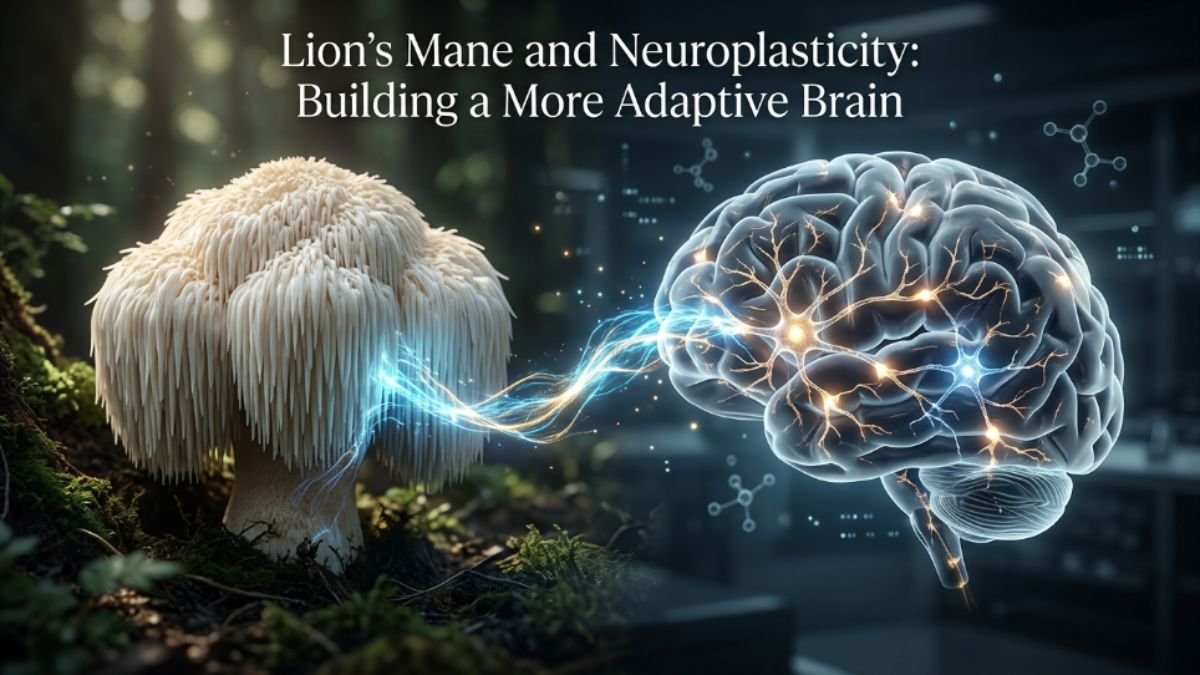
Lion’s Mane Mushroom Benefits for Brain
The lion’s mane mushroom benefits for brain health have become one of the most actively researched topics in functional nutrition — and for good reason. This unusual, shaggy fungus has been used in traditional East Asian medicine for centuries, but it wasn’t until the late 20th century that Western neuroscience started catching up with what practitioners had observed for generations.
If you’ve been following the nootropics conversation, lion’s mane (Hericium erinaceus) probably appears on every serious list. And unlike many supplements that ride on hype alone, the scientific case for lion’s mane is surprisingly robust — though still evolving.
According to the National Institutes of Health, neurological conditions affect more than 100 million Americans, and the interest in evidence-based, natural interventions for cognitive support has surged significantly over the past decade. For adults who are managing mental fatigue, early memory concerns, or simply looking to sustain sharpness into their 40s and 50s, understanding what lion’s mane actually does — and doesn’t do — matters.
In this article, you’ll find a thorough breakdown of the current science: how lion’s mane works at the neurological level, what the clinical research shows, realistic expectations for cognitive benefit, how to choose a quality product, and what precautions to keep in mind.
⚠️ Important Notice: This content is for informational and educational purposes only. It does not constitute medical advice and does not replace the guidance of a qualified healthcare professional. Please consult your doctor before making any changes to your diet, supplementation routine, or cognitive health protocol — especially if you take medications or have an existing medical condition.
What Is Lion’s Mane Mushroom?
Lion’s mane is a medicinal mushroom in the Hericiniaceae family. Unlike the button mushrooms you find in a grocery store, it grows in large, white, cascading clusters that visually resemble — as the name suggests — a lion’s mane. It grows on hardwood trees, particularly in North America, Europe, and Asia.
Its traditional uses span Japanese, Chinese, Korean, and Indian medicine, where it was consumed as food and tea for its reputed benefits on the stomach, nerves, and mind. Buddhist monks reportedly used it to sharpen focus during meditation.
The biologically active compounds that make lion’s mane relevant to modern neuroscience are primarily two groups:
- Hericenones — found in the fruiting body of the mushroom
- Erinacines — found in the mycelium (the root-like structure)
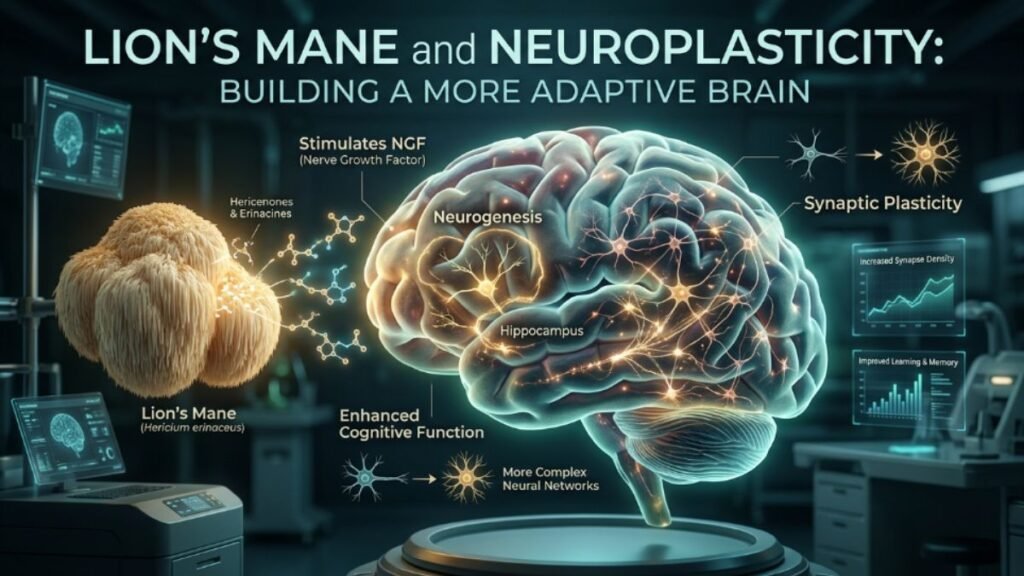
Both compound classes have demonstrated the ability to stimulate the synthesis of Nerve Growth Factor (NGF) in preclinical studies — and that single mechanism is at the core of why researchers have become so interested in this mushroom for brain health.

How Lion’s Mane Affects the Brain: The NGF Connection
To understand why lion’s mane is considered neurologically significant, you need to understand Nerve Growth Factor.
What Is NGF and Why Does It Matter?
NGF is a protein that plays a critical role in the growth, maintenance, and survival of neurons — the cells that form your brain and nervous system. It belongs to a family of proteins called neurotrophins, which essentially act as biological support signals for neural tissue.
As we age, NGF activity tends to decline. This decline is associated with the gradual loss of cholinergic neurons — the nerve cells that rely on acetylcholine, a neurotransmitter central to memory formation and learning. Reduced cholinergic function is a hallmark of age-related cognitive decline and, at its most severe, is implicated in Alzheimer’s disease pathology.
This is why NGF stimulation is such an active area of neuropharmacological research. The challenge has been finding compounds that can cross the blood-brain barrier and stimulate NGF production without significant side effects.
Where Lion’s Mane Fits In
Several studies, beginning with foundational research by Japanese mycologist Hirokazu Kawagishi in the 1990s, demonstrated that hericenones extracted from Hericium erinaceus stimulate NGF synthesis in vitro (in cell cultures). Subsequent animal studies showed that erinacines from the mycelium could cross the blood-brain barrier — a property that makes them pharmacologically significant.
A 2009 double-blind, placebo-controlled clinical trial published in Phytotherapy Research studied 30 Japanese adults aged 50–80 with mild cognitive impairment. Participants who took 3 grams of lion’s mane powder daily for 16 weeks scored significantly higher on cognitive function scales than the placebo group. The cognitive scores decreased, however, when supplementation was discontinued — suggesting the benefits depend on continued use.
💡 Practical Tip: The NGF-stimulating effect of lion’s mane is not instantaneous. Most human studies using measurable cognitive outcomes run for 8–16 weeks. If you start taking lion’s mane and feel nothing in the first two weeks, that’s expected — not a sign that it isn’t working.
Lion’s Mane and Neuroplasticity: Building a More Adaptive Brain
Beyond NGF, lion’s mane has been studied for its influence on neuroplasticity — the brain’s ability to reorganize itself by forming new neural connections throughout life.
BDNF and the Broader Neurotrophic Picture
Some research suggests lion’s mane may also influence Brain-Derived Neurotrophic Factor (BDNF), another neurotrophin closely associated with learning, memory consolidation, and mood regulation. BDNF is sometimes called “Miracle-Gro for the brain” — it promotes the growth of new neurons (neurogenesis) and strengthens existing synaptic connections.
While the evidence for lion’s mane’s BDNF-related effects is less established than the NGF research, a 2020 study published in the Journal of Medicinal Food found that lion’s mane extract enhanced the expression of neurotrophic factors and improved spatial memory in aging mice, with effects linked to both NGF and BDNF pathways.
Myelination Support
Erinacines have also shown potential in supporting myelination — the formation of the myelin sheath that insulates nerve fibers and allows for faster, more efficient neural signal transmission. Degradation of myelin is associated with conditions such as multiple sclerosis, and its maintenance is important for sustained cognitive performance.
👉 Understanding where natural nootropics like lion’s mane fit within the broader category of cognitive supplements helps set realistic expectations. What Are Nootropics?
What Are Nootropics? A Clear, Evidence-Based Guide
Cognitive Benefits Supported by Human Research
Here is where it’s important to separate what is clearly supported by clinical evidence from what is still emerging or primarily animal-based.
What the Human Research Currently Supports
| Potential Benefit | Level of Evidence | Key Study |
|---|---|---|
| Mild cognitive impairment improvement | Moderate (RCT) | Mori et al., 2009 — Phytotherapy Research |
| Anxiety and depression reduction | Preliminary (small RCT) | Nagano et al., 2010 — Biomedical Research |
| Improved focus and mental clarity | Anecdotal + pilot data | Multiple small trials |
| Nerve regeneration support | Preclinical (animal/in vitro) | Kawagishi et al., 1990s–2000s |
| Sleep quality improvement | Preliminary | Unpublished pilot data, 2020 |
⚠️ Attention: Most human clinical trials for lion’s mane are small (under 50 participants) and of short duration. This does not mean the findings are invalid — it means they are promising and warrant larger-scale follow-up. Be cautious about sources that present lion’s mane as a definitive cognitive treatment. It is not.
The Memory and Focus Angle
For adults experiencing what many describe as “cognitive drag” — that slight but persistent sense that focus isn’t as sharp, words don’t come as fast, and learning takes a bit more effort — the most relevant aspect of the lion’s mane research is its potential impact on hippocampal function.
The hippocampus is the brain region most associated with new memory formation. NGF is essential for hippocampal neuron maintenance. Animal studies have consistently shown that lion’s mane supplementation supports hippocampal structure and function in aged subjects. Whether this translates proportionally to humans is still being studied, but the mechanistic rationale is sound.
👉 The same criteria that apply to choosing the right cognitive supplement — potency, third-party testing, extract quality — are what separate effective lion’s mane products from ineffective ones.
SEE MORE ABOUT: Best Supplements for Brain Fog
Lion’s Mane for Mood, Anxiety, and Mental Fatigue
One of the less-publicized but increasingly studied areas of lion’s mane research is its potential effect on mood and the nervous system more broadly.
The 2010 Anxiety and Menopause Study
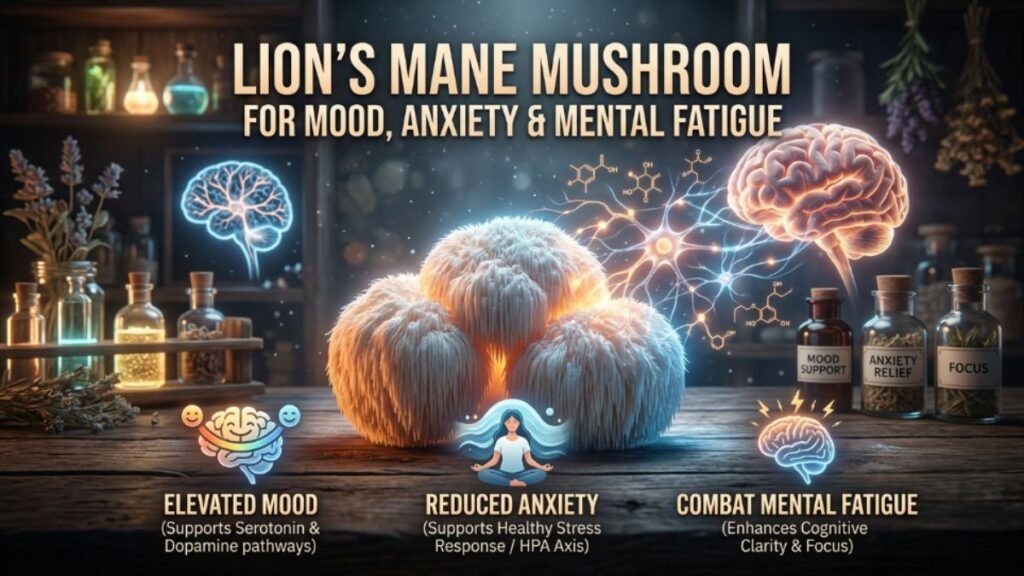
A small randomized controlled trial published in Biomedical Research (Nagano et al., 2010) assigned 30 women to receive either lion’s mane cookies or placebo cookies over four weeks. The lion’s mane group reported statistically significant reductions in anxiety and irritability, as well as improvements in concentration.
The mechanism proposed involved lion’s mane’s potential to modulate the HPA axis (the hypothalamic-pituitary-adrenal axis), which governs the body’s stress response. Chronic activation of this axis — as in sustained work stress, poor sleep, or ongoing anxiety — is associated with elevated cortisol levels, which can directly impair hippocampal function over time.
Inflammation and the Gut-Brain Axis
Lion’s mane also contains beta-glucans, which are soluble fibers with documented immunomodulatory and anti-inflammatory effects. Emerging research on the gut-brain axis — the bidirectional communication network between the gut microbiome and the central nervous system — suggests that reducing gut inflammation may have measurable downstream effects on mood and cognitive clarity.
This is still an early area of research, but it provides a plausible secondary pathway through which lion’s mane may benefit cognitive and emotional health, beyond its direct neurotrophin effects.
✓ Best Practice: If you’re taking lion’s mane primarily for mood and stress resilience, pair it with sleep hygiene improvements and consistent aerobic exercise. No supplement works well against a backdrop of chronic sleep deprivation and sedentary stress.
How to Choose a Quality Lion’s Mane Supplement
The lion’s mane market has grown rapidly, and quality varies considerably. Understanding what separates an effective product from a low-grade one is essential.
Fruiting Body vs. Mycelium: Why It Matters
This is one of the most important distinctions in lion’s mane supplementation.
- Fruiting body extracts contain hericenones, the compound most associated with NGF stimulation in human research. This is the visible mushroom.
- Mycelium products (often grown on grain substrates) contain erinacines, which also stimulate NGF and can cross the blood-brain barrier — but many mass-market mycelium products contain significant amounts of starch from the grain substrate, diluting the active compound concentration.
Products labeled “whole mushroom” or “full spectrum” that don’t specify extract ratios may include both, but without clarity on substrate content, their potency can vary widely.
What to Look for on the Label
- Beta-glucan content — look for ≥30% beta-glucans as a marker of potency
- Extract ratio — 8:1 or 10:1 indicates concentrated extraction (preferred over raw powder)
- Third-party testing — look for certifications from NSF, USP, or Informed Sport
- No fillers or grain substrate — the label should specify “fruiting body” or state what proportion is mycelium vs. fruiting body
- Standardized hericenones/erinacines — the gold standard, though less common due to cost
Dosage Considerations
Human clinical trials have used daily doses ranging from 500 mg to 3,000 mg of lion’s mane powder or extract. Most practitioners working with lion’s mane for cognitive support suggest:
- Entry dose: 500–750 mg/day of a standardized extract
- Therapeutic range: 1,000–2,000 mg/day
- Duration for measurable effect: 8–12 weeks minimum
Individual responses vary significantly based on age, baseline cognitive health, metabolic rate, and product quality.
👉 Addressing the root causes that reduce cognitive clarity — from chronic stress to nutrient deficiencies — is always the foundation before supplementation adds any real value.
Brain Fog Causes in Adults: 8 Science-Backed Triggers You Need to Know

🛒 Top Lion’s Mane Supplements on Amazon
Based on the criteria outlined above — fruiting body extraction, verified beta-glucan content, and third-party testing — these are among the most consistently rated options currently available on Amazon.
Fruiting body only · ≥30% beta-glucans · No grain fillers · Third-party tested
View on Amazon →
By mycologist Paul Stamets · Certified organic · Widely researched brand
View on Amazon →
1000mg per serving · Fruiting body · Budget-friendly · Strong review history
View on Amazon →
⚠️ Disclosure: This page contains affiliate links. If you purchase through these links, we may earn a small commission at no extra cost to you. This does not influence our recommendations.
Potential Side Effects and Who Should Exercise Caution
Lion’s mane has a strong safety profile in the research literature, with no serious adverse effects reported in clinical trials at standard doses. However, several precautions are worth noting.
Known and Potential Risks
- Allergic reactions: Cases of contact dermatitis and respiratory reactions have been reported, primarily in individuals who handle fresh lion’s mane mushrooms occupationally. People with known mushroom allergies should exercise caution.
- Digestive discomfort: Some users report mild gastrointestinal symptoms — nausea, bloating, or stomach upset — particularly at higher doses or when starting supplementation. Starting with a lower dose and taking with food typically resolves this.
- Drug interactions: Lion’s mane may have mild anticoagulant properties based on preclinical data. If you take blood thinners (e.g., warfarin, aspirin therapy), consult your physician before adding lion’s mane.
- Autoimmune conditions: Because lion’s mane has immune-modulating properties via beta-glucans, individuals with autoimmune conditions or those taking immunosuppressive therapy should consult a physician before use.
- Pregnancy and breastfeeding: There is insufficient clinical data. Avoidance is the conservative recommendation.
⚠️ Attention: The appearance of cognitive symptoms — persistent memory lapses, significant difficulty concentrating, or noticeable changes in mental sharpness — may warrant a medical evaluation before pursuing supplementation. Lion’s mane is a supportive tool, not a diagnostic substitute.
Lion’s Mane in a Broader Cognitive Health Stack
Lion’s mane is rarely discussed in isolation among practitioners who work with functional nutrition and cognitive performance. Its most common pairings in evidence-informed stacks include:
| Compound | Complementary Mechanism | Rationale for Pairing |
|---|---|---|
| Bacopa monnieri | Memory consolidation, anti-anxiety | Synergistic effect on hippocampal support |
| Phosphatidylserine | Cell membrane integrity, cortisol modulation | Supports the neuronal environment lion’s mane acts on |
| Rhodiola rosea | Adaptogenic, stress resilience | Addresses HPA axis dysregulation |
| Omega-3 (DHA) | Anti-inflammatory, membrane fluidity | Provides structural support for NGF-induced neuronal growth |
| Vitamin D3 | Neuroprotective, BDNF upregulation | Deficiency is common and impairs cognitive function independently |
None of these combinations have been tested in RCTs as combined stacks. Each has individual evidence. Combining them is a reasonable approach based on mechanistic rationale, but not a clinically validated protocol.

Conclusion
The lion’s mane mushroom benefits for brain health represent one of the most credible areas of emerging nutritional neuroscience. The evidence is not complete — no honest assessment of this field could claim otherwise — but it is more substantial than most of what populates the supplement industry.
What we know with reasonable confidence: lion’s mane stimulates NGF production through hericenones and erinacines, supports neuronal maintenance and potentially neuroplasticity, shows measurable cognitive improvement in clinical populations with mild impairment, and has a favorable safety profile at therapeutic doses.
What requires realistic expectation-setting: effects take weeks to months to manifest, product quality varies dramatically, and lion’s mane is not a treatment for diagnosed neurological conditions.
For adults who are serious about maintaining cognitive performance as they age — and who want a compound with genuine biological mechanism and a clinical track record — lion’s mane is one of the most defensible choices available.
The best next step: choose a standardized fruiting body extract with verified beta-glucan content, commit to a consistent 12-week trial, and evaluate the results honestly.
Medical Disclaimer - The information provided in this article is for educational purposes only and is not intended to serve as medical advice, diagnosis, or treatment. Results may vary from person to person. If you have any medical conditions, are taking medications, or have specific health concerns, consult a licensed healthcare professional before starting any supplementation protocol.
Frequently Asked Questions
How long does it take for lion’s mane to work for brain health?
Most human studies showing measurable cognitive effects used supplementation periods of 8–16 weeks. Many users report subtle improvements in mental clarity and focus within 4–6 weeks, but significant cognitive changes — particularly in memory or nerve-related symptoms — typically require consistent use over several months. Discontinuing supplementation appears to reverse some of the gains, based on available clinical data.
What is the best form of lion’s mane for brain benefits — capsule, powder, or extract?
Standardized extracts (typically 8:1 or 10:1 concentration ratios) from the fruiting body are generally preferred for cognitive benefits, as they provide consistent concentrations of hericenones and beta-glucans. Powders from whole dried mushroom are less potent per gram but can be effective at higher doses. Tinctures are available but have less clinical backing for brain-specific applications.
Can lion’s mane reverse cognitive decline?
Current research does not support the claim that lion’s mane reverses established cognitive decline or treats neurodegenerative diseases. What the evidence suggests is that it may slow age-related decline in specific populations, support mild cognitive impairment, and maintain neuronal health. These are meaningful benefits, but they are not the same as reversal. Anyone experiencing progressive cognitive symptoms should seek medical evaluation.
Is it safe to take lion’s mane every day?
Based on available clinical data, daily use at standard doses (500–2,000 mg of a quality extract) appears safe for healthy adults over periods up to 16 weeks, which is the longest duration studied in controlled trials. There are no documented serious adverse effects in the literature at these doses. Long-term safety beyond 16 weeks has not been formally studied, though traditional use suggests broad tolerability.
Does lion’s mane help with anxiety and depression?
A small but well-designed study from 2010 found significant reductions in anxiety and irritability in women who consumed lion’s mane for four weeks compared to a placebo group. The proposed mechanism involves modulation of the stress-response axis and potential anti-inflammatory effects. The evidence is preliminary and based on small samples, but it is directionally consistent and biologically plausible. Lion’s mane is not a treatment for clinical anxiety or depression.
Can I take lion’s mane with other nootropics?
Lion’s mane is commonly combined with other evidence-supported compounds such as bacopa monnieri, phosphatidylserine, and omega-3 DHA. No direct drug interactions have been documented at standard doses. The main precaution involves potential mild anticoagulant effects, which may be additive when combined with other blood-thinning agents. Always disclose all supplements to your physician.
What should I look for when buying a lion’s mane supplement?
Prioritize products that specify fruiting body extraction, list beta-glucan content (ideally ≥30%), provide an extraction ratio (8:1 or higher), and carry third-party testing certification (NSF, USP, or Informed Sport). Avoid products that use vague terms like “full spectrum” without clarifying the substrate content, as many mycelium-on-grain products have substantially diluted active compound concentrations.

Daniel Mercer é um escritor de ciências da saúde especializado em desempenho cognitivo, nootrópicos e pesquisas sobre saúde cerebral. Com formação em ciências biomédicas e mais de uma década de experiência revisando literatura clínica sobre desempenho mental e suplementação, ele fundou o Cognitive Insight Lab para simplificar informações irrelevantes e fornecer análises baseadas em evidências para pessoas que levam a sério sua saúde cognitiva. Daniel não aceita conteúdo patrocinado e não possui vínculos financeiros com as marcas analisadas neste site.