

Why Nootropics Don’t Work for Most People (And How to Fix That)
Why nootropics don’t work is a question that comes up constantly — and usually after someone has already spent $50 to $100 on a bottle that did nothing. The frustration is legitimate. The cognitive supplement market is enormous, the marketing is confident, and the results for most buyers are underwhelming at best. What rarely gets explained is why — not in a vague “supplements don’t work” dismissal, but in specific, mechanistic terms that actually help you make a better decision next time.
This article breaks down the three most common reasons nootropics fail to deliver, what the science says about what actually separates effective formulations from ineffective ones, and how to evaluate any product before you buy it.
Disclaimer: This content is for informational purposes only and does not substitute professional medical advice. Consult a qualified healthcare provider before making changes to your supplement routine.
The Nootropic Market Has a Quality Problem

Before examining why individual products fail, it helps to understand the structural problem with the industry itself.
The dietary supplement market in the United States operates under regulations that are fundamentally different from those governing pharmaceuticals. Under the Dietary Supplement Health and Education Act (DSHEA), manufacturers are not required to prove efficacy or safety before bringing a product to market. The burden of proof is effectively reversed — the FDA must demonstrate harm to remove a product, rather than the manufacturer demonstrating benefit to sell it.
This creates a predictable outcome: the market fills with products that are inexpensive to produce, easy to market, and difficult to distinguish from genuinely effective formulations without detailed knowledge of the research.
According to the National Center for Complementary and Integrative Health, a significant percentage of dietary supplements on the market do not contain the ingredients listed on their labels at the stated quantities — a problem that is particularly prevalent in the nootropic category, where ingredient costs vary enormously and proprietary blends obscure actual dosages.
Understanding this context matters because it reframes the question. The issue is not whether nootropic compounds work — for several of them, the evidence is solid. The issue is whether the specific product you are buying contains those compounds at doses that match the research.
Reason 1: Underdosed Ingredients Hidden Behind Proprietary Blends
This is the most common reason nootropics don’t work, and it is entirely invisible to most buyers.
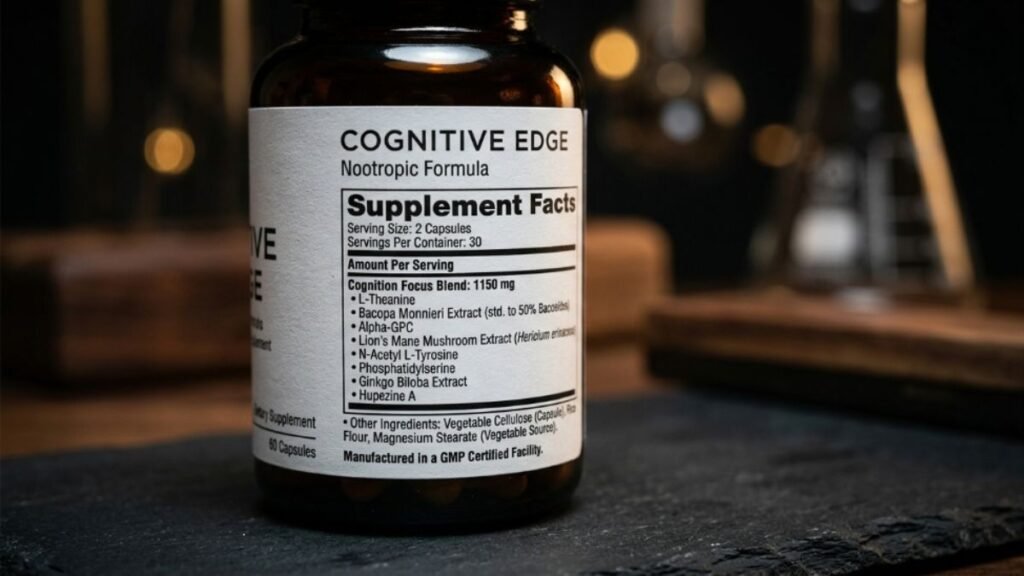
A proprietary blend is a mixture of ingredients listed collectively under a single name — “Cognitive Matrix,” “NeuroFuel Complex,” or similar — with only the total weight of the blend disclosed, not the individual amounts of each ingredient. This practice is legal and widespread.
The problem is straightforward: if a blend contains 500mg total across eight ingredients, and the research-supported dose for the primary active compound is 300mg on its own, basic arithmetic tells you the product cannot be delivering an effective dose. The remaining 200mg is distributed across seven other ingredients — all of which appear impressively on the label but none of which are present in meaningful quantities.
How to Identify Underdosed Products
The check is simple once you know what to look for:
Step 1: Identify the primary active ingredients the product is promoting. For a focus supplement, this might be citicoline, bacopa monnieri, or phosphatidylserine. For a stress and cognitive support product, it might be ashwagandha or rhodiola rosea.
Step 2: Look up the dose used in positive clinical trials for each compound. Citicoline: 250–500mg. Bacopa monnieri: 300–450mg of a standardized extract. Phosphatidylserine: 300mg. Ashwagandha: 300–600mg of a root extract standardized to withanolides.
Step 3: Check whether the label discloses individual ingredient amounts. If it uses a proprietary blend, the doses are hidden. If individual amounts are listed, verify them against the research-supported ranges.
A product that discloses every ingredient amount and matches those amounts to clinically studied doses is doing something most of its competitors are not. That transparency is itself a signal worth paying attention to.
For those specifically looking for citicoline as a standalone supplement, Zazzee Extra Strength Citicoline 500mg is one of the few options that clearly states 500mg of CDP-choline per serving — matching the upper range of doses used in clinical research — without hiding it inside a blend.
Affiliate Disclosure: This article contains affiliate links. If you click through and make a purchase, Cognitive Insight Lab may earn a small commission — at no extra cost to you. We only recommend products we have genuinely researched and believe may offer real value to our readers. Our editorial opinions are always our own.
Reason 2: Ingredients With No Human Evidence at Effective Doses
The second reason nootropics don’t work is subtler than underdosing, and it catches even informed buyers.
Not all ingredients with plausible mechanisms have been validated in human clinical trials at the doses used in supplements. The nootropic market relies heavily on a category of evidence that sounds impressive but is weaker than it appears: in vitro studies (cells in a dish), animal models, and theoretical mechanisms derived from biochemistry.
These are not worthless — they form the basis for hypotheses and guide human research. But they are not the same as controlled human trials showing measurable cognitive improvement. A compound can have a fascinating mechanism of action, strong animal data, and multiple in vitro studies demonstrating neuroprotective effects, and still show no benefit in healthy human adults at supplement-level doses.
The Compounds With Solid Human Evidence
The list of nootropic compounds with genuinely robust human trial data is shorter than the supplement market suggests. The ones that consistently appear in well-designed controlled trials with positive outcomes include:
Citicoline (CDP-choline). Multiple randomized controlled trials demonstrate improvements in attention, memory, and cognitive recovery. The mechanism — supporting phosphatidylcholine synthesis and acetylcholine signaling — is well-characterized. Research reviewed by the National Institutes of Health shows consistent benefits across different populations.
Bacopa monnieri. One of the most replicated adaptogens in cognitive research. A meta-analysis of nine studies found significant improvements in cognitive processing speed and memory acquisition. The caveat: effects are cumulative and typically require 8–12 weeks of consistent use. Products that contain bacopa but are marketed for immediate effects are misrepresenting how the compound works.
Phosphatidylserine. The only dietary supplement with an FDA qualified health claim related to cognitive function. Documented effects on memory recall, cortisol modulation, and neuronal membrane health. Effective at 300mg daily.
Lion’s mane mushroom (Hericium erinaceus). The most promising mushroom-derived nootropic, with evidence for nerve growth factor (NGF) stimulation. Human trials are more limited than the animal data, but the direction of evidence is consistent for older adults with mild cognitive impairment.
Rhodiola rosea. Well-documented adaptogen with strong evidence for reducing mental fatigue under stress and improving sustained attention. Particularly relevant for stress-driven cognitive impairment.
Compounds that appear frequently in nootropic products but have weaker or more inconsistent human evidence include: huperzine A at typical supplement doses, vinpocetine, most nootropic mushroom blends beyond lion’s mane, and many branded “cognitive matrix” ingredients with no peer-reviewed trials behind them.
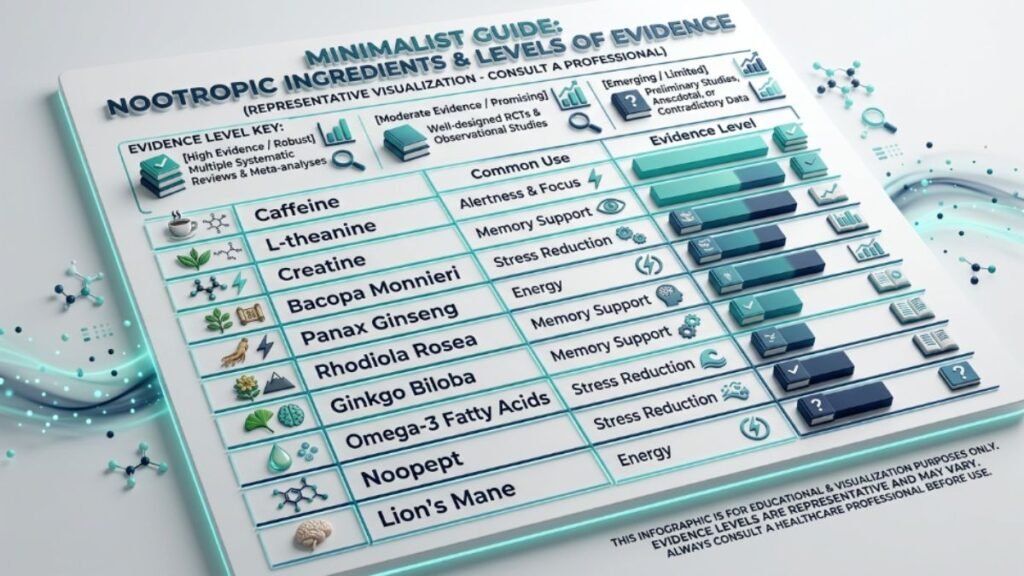
For a foundational overview of how these compounds are defined and classified, our article on what are nootropics covers the full landscape before you start evaluating specific products.
Reason 3: The Wrong Expectations for the Wrong Person
The third reason nootropics don’t work is the one most supplement companies have no interest in discussing: many buyers are not the right candidate for cognitive supplementation, or they have the wrong expectations about what supplements can and cannot do.
The Deficiency Correction Problem
Several of the most effective nootropic compounds work primarily by correcting deficiencies or suboptimal states — not by enhancing a brain that is already functioning well.
Omega-3 DHA supplementation produces the strongest cognitive effects in people with low baseline DHA levels. Phosphatidylserine shows the most consistent benefits in adults over 40 with existing memory complaints. Ashwagandha’s stress-buffering effects are most pronounced in people with chronically elevated cortisol. Bacopa’s memory benefits are clearest in older adults and in individuals under significant cognitive load.
A healthy 28-year-old with good sleep, a nutrient-dense diet, regular exercise, and low chronic stress is unlikely to notice significant cognitive changes from most nootropic supplements. Not because the compounds don’t work, but because there is limited deficit to correct. The cognitive “ceiling” created by lifestyle is already close to that person’s biological potential.
The buyer who is most likely to notice genuine improvement is the one who is sleep-deprived, chronically stressed, nutritionally insufficient, and experiencing the early cognitive drag of aging. That is, ironically, a description of a large portion of the target market — which is why the compounds with deficiency-correction mechanisms tend to produce more consistent real-world results than acute cognitive enhancers.
The Stimulant Expectation Problem
A significant portion of nootropic buyers are implicitly expecting something that feels like caffeine — a perceptible, immediate shift in mental state. Most evidence-based nootropics do not work this way. Their effects are cumulative, subtle, and best appreciated in retrospect: tasks that used to feel effortful become less so, recall that was slowing down stabilizes, stress responses that were interfering with concentration become less disruptive.
If the expectation is “I take this and feel noticeably sharper within an hour,” most evidence-based nootropics will disappoint — not because they are not working, but because they are working on a timescale and in a way that does not match that expectation.
If your primary symptom is brain fog rather than general cognitive decline, our breakdown of the best supplements for brain fog applies these same criteria to that specific target.
The 3 Things That Separate Effective Nootropics From Ineffective Ones
Given everything above, the criteria for evaluating a nootropic formulation are not complicated — they are just rarely applied.
Criterion 1: Full Ingredient Transparency
Every ingredient must be listed with its individual dose. No proprietary blends. No “matrix” hiding amounts. If a company will not tell you how much of each ingredient is in the product, there is a reason for that.
Full transparency also means specifying the form and standardization of each ingredient. “Bacopa monnieri extract” is less informative than “Bacopa monnieri extract standardized to 45% bacosides.” The standardization determines potency. Products that list generic ingredient names without specifying extract ratios or standardization are providing incomplete information.
Criterion 2: Clinically Validated Doses
Each primary active ingredient should be present at a dose that corresponds to positive outcomes in human clinical trials. This is not a high bar — the research doses for most well-studied nootropics are well-established. It is, however, a bar that a significant majority of products on the market do not clear.
The practical implication: a shorter list of well-dosed, research-supported ingredients is consistently more effective than a longer list of underdosed, marginally-evidenced ones. Twelve ingredients at 20mg each is worse than four ingredients at 200mg each, assuming those four have solid clinical backing.
Criterion 3: Matching the Formulation to Your Specific Need
An effective nootropic for chronic stress and cortisol-driven cognitive impairment looks different from one optimized for age-related memory decline, which looks different from one designed for acute focus and processing speed.
The best formulations are built around a coherent cognitive target, with ingredients selected for their complementary mechanisms rather than their marketing appeal. A stack that combines citicoline (acetylcholine support) with phosphatidylserine (membrane health and cortisol modulation) and bacopa (memory consolidation and stress adaptation) addresses multiple overlapping pathways relevant to sustained cognitive performance. A stack that combines twelve trending ingredients at sub-threshold doses addresses nothing reliably.
Putting the Criteria Into Practice
Applying these three criteria narrows the field considerably. Most products marketed as nootropics fail on at least one — usually Criterion 1 or 2, and sometimes both.
The products that consistently meet all three tend to share certain characteristics: they are formulated by companies with a research orientation rather than a marketing orientation, they cost more than the average supplement (because effective doses of quality ingredients are expensive), and they do not promise immediate dramatic results.
For those who want a multi-ingredient formulation that meets all three criteria — full transparency, clinically validated doses, and a coherent cognitive target — Mind Lab Pro discloses every ingredient and dose, uses research-supported compounds including citicoline, phosphatidylserine, bacopa monnieri, lion’s mane, and rhodiola rosea, and is formulated around a specific cognitive model rather than a trend list.
Another formulation worth considering is NooCube — a caffeine-free nootropic stack combining herbs and amino acids with backing from multiple clinical studies. It is particularly relevant for those who want to avoid stimulants entirely while still addressing focus, memory, and mental clarity. Both products represent the transparent, research-oriented end of the market that the criteria above are designed to identify.
Medical Disclaimer: The information provided in this article is for educational purposes only and is not intended as medical advice, diagnosis, or treatment. Individual results may vary. If you have a medical condition, are taking medications, or have concerns about cognitive symptoms, consult a licensed healthcare professional before making any supplementation changes.
Conclusion
Why nootropics don’t work usually comes down to one of three things: ingredients dosed below clinical thresholds and hidden behind proprietary blends, compounds with no meaningful human trial data at the doses used, or expectations misaligned with how evidence-based cognitive compounds actually work.
The fix is not complicated. Read labels with the research in mind. Prioritize transparency over ingredient count. Match the formulation to the specific cognitive problem you are trying to address. And give compounds that work cumulatively — bacopa, phosphatidylserine, lion’s mane — the 8–12 weeks they need to show what they can do.
The market is full of products that look impressive and deliver nothing. A smaller number of formulations do exactly what the research suggests they should. The difference between the two is findable — if you know what to look for.
Frequently Asked Questions
Why don’t nootropics work even when they contain well-known ingredients?
The most common reason is underdosing. Many products list impressive ingredients but hide the actual amounts inside proprietary blends — making it impossible to verify whether clinically effective doses are present. A supplement can contain bacopa monnieri and still deliver 10mg when the research-supported dose is 300mg.
How long do nootropics take to work?
It depends on the compound. Adaptogens like bacopa monnieri and rhodiola rosea require 4–12 weeks of consistent use for cumulative effects. Citicoline and phosphatidylserine show benefits in controlled trials at 8–12 weeks. Compounds with acute mechanisms — like caffeine or L-theanine — work within hours. Products promising immediate dramatic results from cumulative compounds are misrepresenting the research.
Do nootropics work better for some people than others?
Yes, significantly. People with existing deficiencies, chronic stress, age-related cognitive decline, or poor baseline nutrition tend to see stronger effects than healthy young adults with optimal lifestyle habits. The most effective nootropic compounds often work by correcting a suboptimal state — which means those further from optimal have more to gain.
What is the difference between a nootropic and a stimulant?
Stimulants produce immediate, perceptible changes in mental state — caffeine is the most common example — by increasing arousal and neurotransmitter activity. True nootropics work more subtly, typically by supporting neuronal health, reducing neuroinflammation, improving membrane function, or modulating stress responses over time. Most evidence-based nootropics do not produce a felt “boost” in the way stimulants do.
Are proprietary blends always a red flag?
They are always a transparency problem. Whether that rises to a red flag depends on the company’s track record and the total blend size relative to the number of ingredients. A small proprietary blend with many ingredients is almost certainly underdosed. A company that uses proprietary blends but has third-party testing and a strong research foundation is less concerning — but the lack of transparency remains a legitimate objection.
Can nootropics replace lifestyle factors like sleep and exercise?
No. The most effective nootropic compounds support cognitive function — they do not substitute for the biological processes that depend on adequate sleep, movement, and nutrition. Several nootropics show their strongest effects specifically in populations with poor sleep or high stress, which suggests they are partially compensating for lifestyle deficits rather than independently enhancing a healthy brain.
What should I look for on a nootropic label?
Three things: individual ingredient doses listed explicitly (no proprietary blends), doses that correspond to amounts used in positive clinical trials, and third-party testing for purity and potency. A shorter list of well-dosed, research-supported ingredients is more valuable than a longer list of underdosed trending compounds.

Daniel Mercer é um escritor de ciências da saúde especializado em desempenho cognitivo, nootrópicos e pesquisas sobre saúde cerebral. Com formação em ciências biomédicas e mais de uma década de experiência revisando literatura clínica sobre desempenho mental e suplementação, ele fundou o Cognitive Insight Lab para simplificar informações irrelevantes e fornecer análises baseadas em evidências para pessoas que levam a sério sua saúde cognitiva. Daniel não aceita conteúdo patrocinado e não possui vínculos financeiros com as marcas analisadas neste site.