
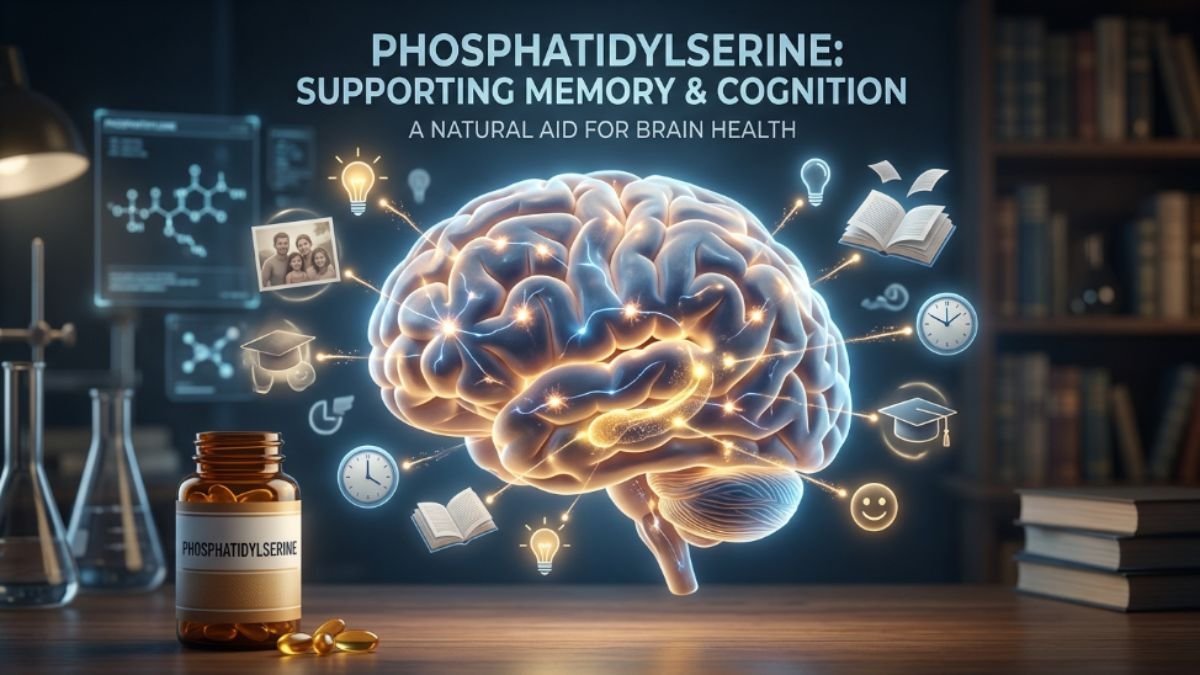
Phosphatidylserine Memory Benefits: What Studies Say and What to Expect
Phosphatidylserine memory benefits are among the most clinically documented of any nootropic compound — which makes it all the more surprising that most people have never heard of it. If you have been researching cognitive supplements with actual human trial data behind them, phosphatidylserine is one of the few that holds up under scrutiny. Not because the research is perfect, but because it is consistent enough, and old enough, to mean something.
This article covers what phosphatidylserine actually does in the brain, what the clinical trials show specifically about memory, what the realistic expectations are for someone starting supplementation, and where the evidence genuinely ends and the marketing begins.
Medical Disclaimer: This content is for informational and educational purposes only. It does not constitute medical advice. Please consult your healthcare provider before making changes to your diet, supplements, or cognitive health routine.
What Phosphatidylserine Is and Why the Brain Needs It
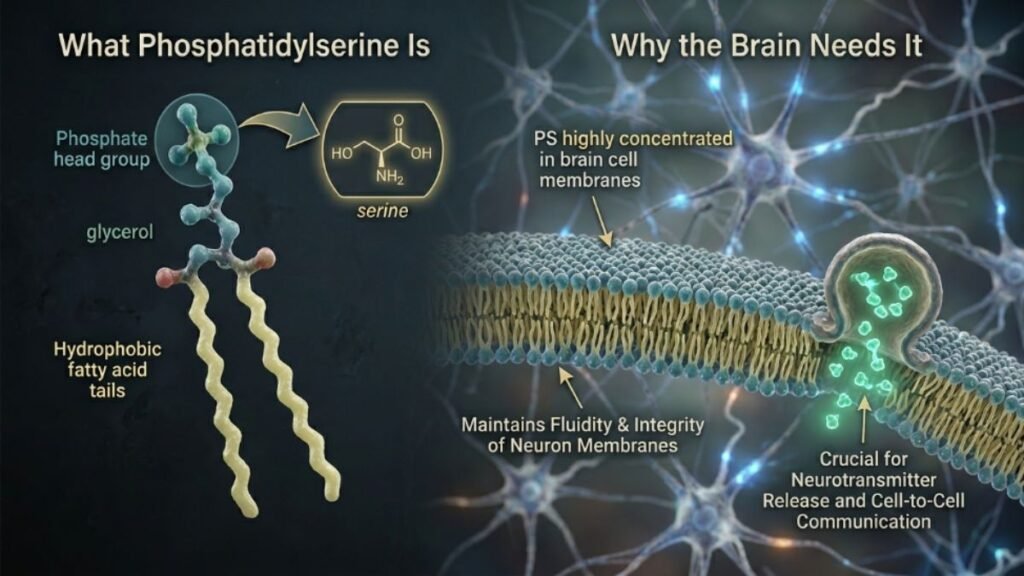
Phosphatidylserine — commonly abbreviated as PS — is a phospholipid. Specifically, it is a component of cell membranes throughout the body, but it is found in particularly high concentrations in neural tissue. The brain actively accumulates PS because it plays a direct structural and functional role in how neurons operate.
Every neuron is enclosed in a phospholipid bilayer — a flexible membrane that controls what enters and exits the cell and hosts the proteins responsible for signal transmission. PS is embedded in the inner leaflet of this membrane, where it participates in several processes that are directly relevant to cognitive function.
How PS Supports Neuronal Function
PS contributes to cognitive performance through at least three overlapping mechanisms:
Membrane fluidity and receptor function. Like DHA, PS affects how fluid and responsive neuronal membranes remain. Fluid membranes allow neurotransmitter receptors — particularly those for acetylcholine and dopamine — to move, cluster, and respond efficiently. As PS levels decline with age, membrane rigidity increases and receptor sensitivity decreases.
Glucose metabolism in the brain. The brain runs almost exclusively on glucose. PS has been shown in multiple studies to support cerebral glucose utilization — the efficiency with which neurons extract energy from available glucose. Reduced glucose metabolism in specific brain regions is one of the earliest measurable signs of cognitive aging and is prominent in Alzheimer’s pathology.
Cortisol modulation. PS has a well-replicated effect on the hypothalamic-pituitary-adrenal (HPA) axis, specifically in blunting cortisol release in response to physical and psychological stress. Chronic elevated cortisol directly damages hippocampal neurons — the cells most critical for memory formation and retrieval. This cortisol-buffering effect may be one of PS’s most underappreciated cognitive benefits.
The Clinical Evidence for Phosphatidylserine and Memory
The research base on PS is more substantial than most supplements can claim. The majority of controlled trials have focused on older adults with age-associated memory impairment (AAMI) — a category that captures the normal cognitive decline that begins in most people during their 40s and 50s.
The BC-PS Era: Early Trials
The earliest PS research used bovine cortex-derived phosphatidylserine (BC-PS) — extracted from cow brain tissue. A series of double-blind, placebo-controlled trials conducted in the 1980s and early 1990s produced consistently positive results for memory, learning, and concentration in older adults with cognitive decline.
A landmark multicenter trial published in Neurology in 1991 followed 149 patients with Alzheimer’s disease over 12 weeks. Those receiving 300mg of BC-PS daily showed statistically significant improvements in behavioral and cognitive parameters compared to placebo. The results were modest but consistent — and importantly, they were replicated across multiple independent research groups.
The BSE crisis of the 1990s ended the use of bovine-derived PS in supplements. The industry shifted to soy-derived PS (soy-PS), which has a slightly different fatty acid profile but broadly similar phospholipid structure.
Soy-Derived PS: The Modern Evidence Base
According to research reviewed by the National Institutes of Health, soy-PS trials have produced more variable results than the earlier BC-PS literature — but several well-designed studies still show meaningful benefits, particularly in populations with existing memory complaints.
A 2010 randomized controlled trial published in the Journal of Clinical Biochemistry and Nutrition followed 78 elderly Japanese subjects with mild cognitive impairment over 6 months. Those receiving 300mg of soy-PS daily showed significant improvements in memory recall compared to placebo, with the strongest effects seen in subjects with the lowest baseline PS levels.
A 2015 study in Journal of Human Nutrition and Dietetics examined PS combined with omega-3 fatty acids in older adults, finding that the combination produced stronger cognitive effects than either compound alone — a finding consistent with the known synergy between PS and DHA in membrane structure.
The FDA’s Qualified Health Claim
In 2003, the U.S. Food and Drug Administration issued a qualified health claim for phosphatidylserine — one of very few dietary supplements to receive this designation. The claim states that consumption of PS may reduce the risk of dementia and cognitive dysfunction in the elderly, while noting that the evidence is limited and not conclusive.
This is a meaningful signal. The FDA does not issue qualified health claims lightly, and the designation reflects that the research base, while not definitive, is substantive enough to warrant acknowledgment. For context, most nootropic compounds have no FDA qualified claim of any kind.
What to Realistically Expect From Phosphatidylserine Supplementation
This is where most supplement articles fail the reader — by either overstating the evidence or dismissing it entirely. The honest picture is more nuanced than either extreme.

Who Is Most Likely to Benefit
The research is clearest for two populations:
Adults over 40 with noticeable memory complaints. If you have been experiencing the kind of memory lapses that are common in age-associated cognitive decline — slower recall, difficulty retaining new information, reduced mental stamina — the evidence supports a reasonable expectation of improvement with consistent PS supplementation at 300mg daily.
Individuals under chronic stress. The cortisol-buffering effect of PS is well-documented and begins relatively quickly — within 2–3 weeks in some studies. If cognitive symptoms are stress-related (difficulty concentrating under pressure, mental fatigue after demanding periods, sleep disruption), PS addresses one of the root causes rather than masking the symptom.
Who Is Less Likely to See Dramatic Results
Healthy younger adults without significant cognitive complaints have less to gain, simply because there is less deficit to correct. PS supplementation in healthy young adults shows mild, inconsistent benefits in controlled trials — not zero, but not transformative.
If underlying issues are metabolic, thyroid-related, or driven by poor sleep and nutrition, PS will not compensate for those deficits. It works on a specific set of mechanisms and cannot substitute for foundational lifestyle factors.
Timeline and Dosage
Most clinical trials use 300mg per day, divided into three 100mg doses taken with meals. Some studies show benefits with 200mg, but the strongest and most consistent results are at 300mg.
Timeline for effects:
- Weeks 2–4: Cortisol blunting and stress resilience improvements — often the first noticed change
- Weeks 4–8: Attention and processing speed begin to improve
- Weeks 8–12: Memory recall and retention show the most measurable improvement in trials
Effects are generally not dramatic in the way stimulants are. PS does not produce a felt cognitive boost. What people typically notice is that things that were becoming effortful — finding words, following complex conversations, maintaining focus through a task — gradually require less effort. The absence of friction is the signal.
Phosphatidylserine in Multi-Ingredient Nootropic Stacks
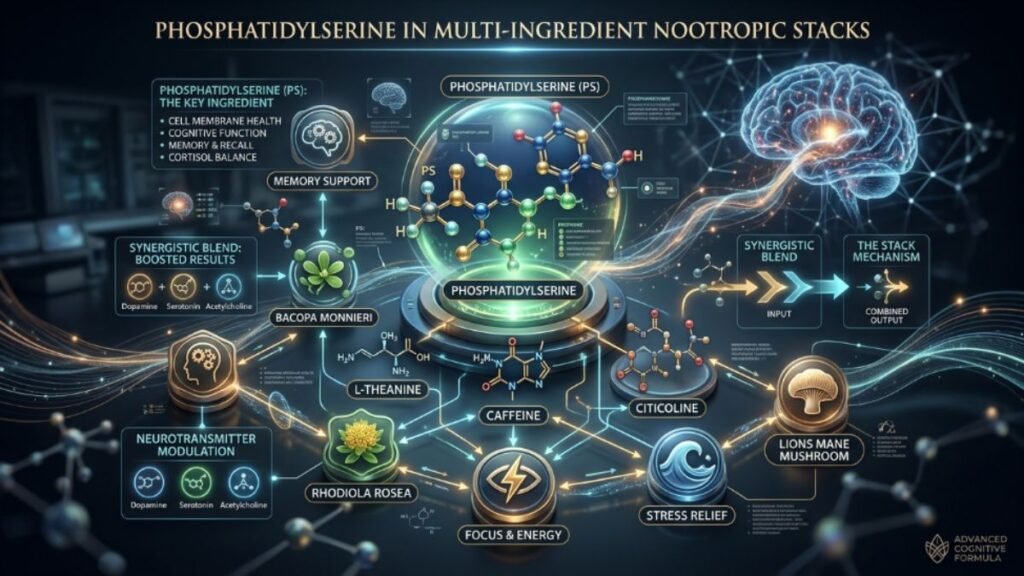
PS is increasingly used as a component in comprehensive nootropic formulations rather than as a standalone supplement. The rationale is sound: PS works on membrane structure and cortisol modulation, but cognitive performance depends on multiple overlapping systems. Combining PS with compounds that address acetylcholine signaling (such as citicoline), cerebral blood flow (such as bacopa monnieri), and mitochondrial energy production creates a more complete approach.
According to research reviewed by Frontiers in Aging Neuroscience, combinations of phospholipid compounds with other neuroprotective agents tend to produce stronger and more consistent cognitive outcomes than single-compound interventions — particularly for age-related cognitive decline.
For those who prefer a standalone PS supplement, NOW Foods Phosphatidyl Serine 100mg is one of the more reliable and accessible options available — soy-derived, well-dosed at 100mg per capsule (allowing flexibility in titrating to 300mg), and consistently well-reviewed for quality and tolerability.
Affiliate Disclosure: This article contains affiliate links. If you click through and make a purchase, Cognitive Insight Lab may earn a small commission — at no extra cost to you. We only recommend products we have genuinely researched and believe may offer real value to our readers. Our editorial opinions are always our own.
What the Research Does Not Support
Intellectual honesty requires naming the limits clearly.
PS is not a treatment for Alzheimer’s disease. The early trials in Alzheimer’s patients showed modest symptomatic improvements, but PS does not address the underlying pathology. It should not be used in place of medical evaluation and treatment for diagnosed dementia.
Results are not universal. A meaningful subset of trial participants show no significant response to PS supplementation. Individual variation in baseline PS levels, dietary fat intake, genetic factors, and gut absorption all influence outcomes.
Long-term data is limited. Most trials run for 3–6 months. The evidence for sustained benefit beyond that window is thinner, and it is not known whether effects plateau, continue, or diminish with long-term use.
Source matters. Sunflower-derived PS is increasingly common in supplements marketed to those avoiding soy. The research base on sunflower-PS is smaller than soy-PS, and direct comparisons are limited. It is plausible that it works similarly, but the evidence is less robust.
Phosphatidylserine and Cognitive Aging: The Broader Context
One reason PS research is taken seriously in clinical nutrition is that it addresses a biological process — membrane phospholipid depletion — that is measurable, age-dependent, and directly linked to cognitive outcomes.
Brain PS levels decline with age. This is not a supplement industry claim — it is a documented finding in post-mortem brain tissue analysis. By the time most people reach their 50s and 60s, PS concentrations in key brain regions are meaningfully lower than in younger adults. Whether dietary supplementation can meaningfully restore those levels is a more complex question, but the mechanistic rationale for attempting to do so is grounded in real biology.
The hippocampus — the brain region most critical for forming new memories — is particularly affected by PS decline and by the cortisol damage that low PS allows. Protecting hippocampal function through both mechanisms simultaneously is one of the more compelling arguments for PS in a cognitive health protocol.
Protecting hippocampal function through both mechanisms simultaneously is one of the more compelling arguments for PS — particularly for those already noticing early signs of cognitive decline in adults.
How PS Fits Into a Complete Cognitive Health Approach
PS is best understood as one component of a broader cognitive support strategy, not a standalone solution. The most consistent outcomes in the research occur when PS is part of an approach that also addresses:
Dietary omega-3 status. PS and DHA work synergistically in membrane structure. Low DHA undermines the membrane benefits of PS. The two compounds are more effective together than either is alone.
Sleep quality. Memory consolidation — the process by which short-term memories become long-term storage — happens primarily during sleep. PS can support the conditions for consolidation, but it cannot substitute for adequate sleep architecture.
Stress management. PS blunts cortisol, but it does not eliminate it. Chronic, unmanaged stress will continue to damage hippocampal tissue even with PS supplementation. Managing the sources of chronic stress remains essential.
For those looking for a formulation that combines PS with complementary cognitive support compounds in clinically relevant doses, Mind Lab Pro includes 100mg of Sharp-PS® Green (sunflower-derived phosphatidylserine) alongside citicoline, lion’s mane mushroom, bacopa monnieri, and several other evidence-supported nootropics — making it one of the more complete multi-ingredient approaches to cognitive support available without a prescription.
For a broader comparison of compounds with strong research support, our breakdown of the best nootropics for focus covers how PS fits alongside other evidence-based options.
Medical Disclaimer: The information provided in this article is for educational purposes only and is not intended as medical advice, diagnosis, or treatment. Individual results may vary. If you have a medical condition, are taking medications, or have concerns about cognitive health, consult a licensed healthcare professional before making any supplementation changes.
Conclusion
Phosphatidylserine memory benefits are real, documented, and mechanistically grounded in a way that most nootropic claims are not. The clinical evidence — particularly for adults over 40 with age-associated memory complaints — supports a reasonable expectation of improvement with consistent use at 300mg daily over 8–12 weeks.
The realistic picture is one of gradual, cumulative improvement rather than immediate cognitive enhancement. PS removes friction from processes that were becoming effortful. It does not accelerate a healthy brain — it helps restore one that has been running below its capacity.
If memory, recall, and stress resilience are your primary concerns, PS is one of the most defensible additions to a cognitive health protocol that the research supports.
PS is one piece of a larger puzzle — our guide on how to improve memory naturally covers the full set of levers worth addressing alongside supplementation.
Frequently Asked Questions
What are the main phosphatidylserine memory benefits supported by research?
The most consistently documented benefits are improved recall speed, better retention of new information, and reduced cognitive interference from stress — particularly in adults over 40 with age-associated memory impairment. The FDA has issued a qualified health claim acknowledging that PS may reduce the risk of cognitive dysfunction in the elderly.
How long does it take for phosphatidylserine to work for memory?
Most clinical trials show initial improvements in stress resilience and attention within 2–4 weeks. Memory-specific benefits — particularly recall and retention — are more consistently observed at 8–12 weeks of continuous supplementation at 300mg per day.
What is the recommended dose of phosphatidylserine for cognitive benefits?
The dose used in the majority of positive clinical trials is 300mg per day, typically divided into three 100mg doses taken with meals. Some studies show benefits at 200mg, but 300mg is the best-supported dose for cognitive outcomes.
Is soy-derived phosphatidylserine as effective as the original bovine-derived form?
The evidence is less extensive for soy-PS than for the original BC-PS studied in the 1980s and 1990s. However, multiple controlled trials have shown meaningful cognitive benefits with soy-PS, and it remains the most widely used and researched form currently available.
Can phosphatidylserine help with stress and anxiety as well as memory?
Yes. PS has a well-documented effect on the HPA axis, reducing cortisol output in response to psychological and physical stress. This mechanism is relevant to both mood and cognitive performance, since chronic cortisol elevation directly impairs hippocampal function and memory formation.
Are there any side effects or safety concerns with phosphatidylserine?
PS is generally well-tolerated at standard doses. The most commonly reported side effects are mild gastrointestinal discomfort, which typically resolves when taken with food. PS may have mild blood-thinning properties, so those on anticoagulant medications should consult a healthcare provider before use.
Does phosphatidylserine work better when combined with other nootropics?
Research suggests yes — particularly when combined with DHA/omega-3 fatty acids, which work synergistically with PS in membrane structure. Multi-ingredient formulations that include PS alongside compounds addressing acetylcholine signaling, cerebral blood flow, and energy metabolism tend to produce stronger outcomes than PS alone.

Daniel Mercer é um escritor de ciências da saúde especializado em desempenho cognitivo, nootrópicos e pesquisas sobre saúde cerebral. Com formação em ciências biomédicas e mais de uma década de experiência revisando literatura clínica sobre desempenho mental e suplementação, ele fundou o Cognitive Insight Lab para simplificar informações irrelevantes e fornecer análises baseadas em evidências para pessoas que levam a sério sua saúde cognitiva. Daniel não aceita conteúdo patrocinado e não possui vínculos financeiros com as marcas analisadas neste site.