

How to Choose a Nootropic That Actually Works?
Learning how to choose a nootropic is less about finding the “best” product and more about learning to read past the marketing — because most of what’s sold as a brain supplement is built to impress your eyes, not your neurons. If you’ve spent an evening comparing bottles, squinting at ingredient panels, and walking away more confused than when you started, that reaction is the correct one. The category is crowded, loosely regulated, and full of products designed to look scientific without behaving scientifically.
Here’s the frustrating reality most brands won’t tell you: an estimated majority of cognitive supplements on the market either underdose their active ingredients or hide the doses entirely inside “proprietary blends.” That single fact explains why so many people try a nootropic, feel nothing after a few weeks, and conclude the whole category is a scam. Usually it wasn’t the ingredient that failed — it was the formula.
This guide gives you a repeatable framework to evaluate any nootropic on its actual merits: which ingredients have real clinical support, what an effective dose looks like, how long results genuinely take, and the specific red flags that tell you to put the bottle back on the shelf. By the end, you’ll be able to judge a product in about ninety seconds — no hype, no guesswork.
Medical Disclaimer: This content is for informational and educational purposes only. It does not constitute medical advice and is not intended to diagnose, treat, cure, or prevent any condition. Please consult your healthcare provider before making changes to your diet, supplements, or cognitive health routine.
Why Most Nootropics Don’t Work (The Uncomfortable Truth)
Before we get to what to look for, it helps to understand what quietly sabotages the majority of products in this space. Two problems account for most disappointing results, and both are invisible unless you know to look for them.
The first is underdosing. A clinical trial might show that a specific ingredient improves memory at 500 mg per day. A supplement can legally put 50 mg of that same ingredient on its label, print the studied benefit in its marketing, and never mention the ten-fold gap. The ingredient is technically “in there.” It’s just present in a dose no study ever tested.
The second is the proprietary blend — a label trick where a brand lists several ingredients grouped under one total weight (“Focus Matrix: 800 mg”) without disclosing how much of each is inside. It looks generous. In practice, that 800 mg might be 780 mg of cheap filler and a pixie-dust sprinkle of the ingredient you actually came for. Proprietary blends exist almost entirely to hide dosing, and once you learn to spot them, you’ll see them everywhere.
Understanding these two failure modes reframes the entire question. The goal isn’t to find a magic ingredient. It’s to find a product honest and well-formulated enough to deliver ingredients that already have evidence behind them.
Start Here: What Are You Actually Trying to Fix?

The single most common mistake is buying a nootropic before deciding what problem it’s meant to solve. “Better brain” isn’t a target. Different ingredients act on different systems, and a product optimized for one goal may do almost nothing for another.
Roughly speaking, cognitive complaints sort into a few buckets:
- Focus and attention — trouble sustaining concentration, a wandering mind, the 2 p.m. drop-off.
- Memory and recall — blanking on names, walking into rooms and forgetting why, slower recall than you used to have.
- Mental energy and fatigue — brain fog, sluggishness, the feeling of thinking through fog.
- Stress and overload — a mind that won’t settle, pressure that erodes clarity.
Naming your primary goal narrows the field dramatically, because the ingredients with the strongest evidence differ by category. If your main issue is memory, for example, the criteria and ingredients you should prioritize are covered in more depth in our guide on what to look for in a memory supplement after 40. Match the tool to the job before you compare a single price tag.
How to Choose a Nootropic That Actually Works: The 5 Criteria
Once you know your goal, every product can be run through the same five-point filter. This is the core of the framework — memorize it and you’ll never be at the mercy of a marketing page again.
1. Clinically Studied Ingredients — In Humans

The first question for any ingredient is simple: has this been tested in people, and did it help healthy adults? Plenty of compounds show promise in a petri dish or in mice and then do nothing in a human trial.
A handful of ingredients have earned genuine, repeatable human evidence. Citicoline (a choline compound) improved memory in a randomized, double-blind, placebo-controlled trial of one hundred healthy older adults taking 500 mg daily for twelve weeks, published in The Journal of Nutrition.
L-theanine combined with caffeine has a large evidence base for attention — a systematic review pooling dozens of randomized trials found the pairing improved attention-switching accuracy and reaction time within the first couple of hours, summarized in this meta-analysis on PubMed Central. Bacopa monnieri has been shown across multiple controlled trials to improve memory and speed of attention when taken consistently, per a meta-analysis of randomized controlled trials indexed by the NIH.
Notice the pattern: real ingredients, real doses, real study durations. That’s your reference point.
2. Effective Doses — And They’re Disclosed
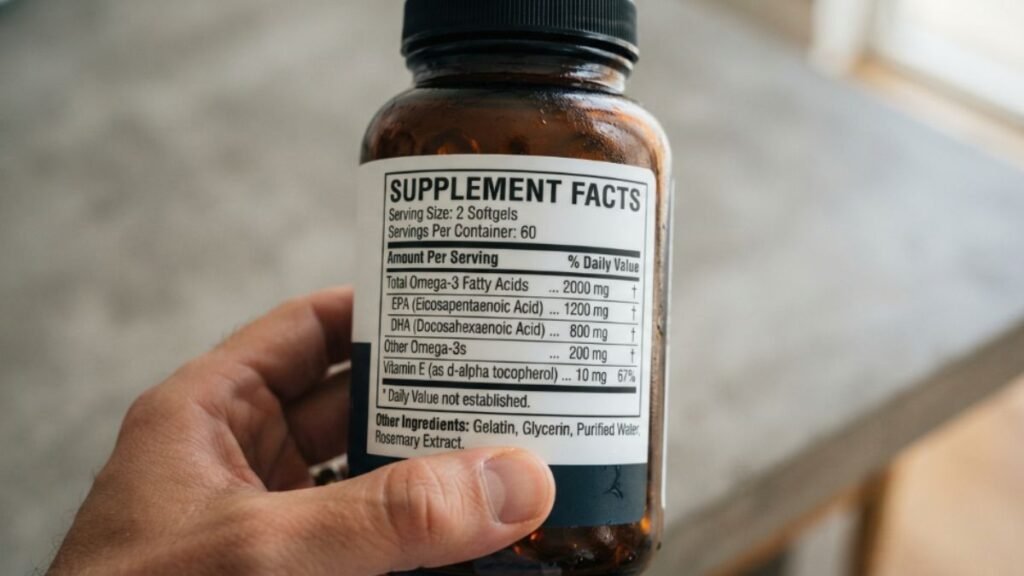
An ingredient with great evidence is worthless at the wrong dose. Once you’ve confirmed a product contains studied ingredients, check that the doses roughly match what the research used — and that the label actually tells you the amount per ingredient.
If you see a proprietary blend hiding the individual doses, treat that as a disqualifier, not a detail. A brand confident in its formula has no reason to hide the numbers. Full-dose transparency is one of the clearest signals that a company built its product for results rather than for margins.
3. The Right Form of Each Ingredient
Chemistry matters. The same nutrient can come in a form your body absorbs well or one it barely uses. Citicoline, for instance, is a well-absorbed, brain-available form of choline, whereas cheaper choline sources are more prone to being diverted into byproducts your body doesn’t want. When a product names the specific, studied form of an ingredient — rather than a vague umbrella term — it usually reflects a more careful formulation.
4. Realistic Timelines
This is where most people quit too early. Some nootropic effects are acute — the L-theanine-and-caffeine pairing can sharpen attention within an hour. But the ingredients that reshape memory and baseline cognition are slow builders. Bacopa, for example, consistently needs eight to twelve weeks of daily use before its benefits show up; two weeks of use and a shrug of “nothing happened” simply isn’t a fair test.
Knowing the timeline before you start protects you from abandoning a working product on week three. We break the science of these adaptation windows down further in our piece on how long Bacopa takes to work. Set the expectation up front, and judge the product on the correct schedule.
5. Clean Label and Third-Party Testing
Finally, look at what surrounds the actives. A short, legible ingredient list beats a wall of fillers, artificial dyes, and flow agents. Third-party testing — a seal or certificate from an independent lab — tells you the contents match the label, which in an under-regulated category is not something to take for granted. Clean formulation is the difference between a supplement made to be taken daily and one made to be sold once.
Single Ingredient vs. a Formulated Stack
Once you can evaluate individual ingredients, a practical question follows: should you buy them one at a time, or as a combined formula?
Buying single ingredients gives you control and is cheaper per bottle — but it stacks up fast, both in cost and in the number of things you have to remember to take. It also puts the burden of getting the doses and combinations right entirely on you. Combining nootropics carelessly can blunt their effects or cause interactions, which is why we wrote a full guide on how to stack nootropics safely before layering anything.
A well-built combined formula solves the coordination problem — if it respects the five criteria above. The catch is that most stacks fail exactly here: they cram a dozen trendy names onto the label at doses too small to matter, precisely so they can advertise a long ingredient list. A genuinely good stack does the opposite. It includes a short roster of clinically studied ingredients, each at a research-relevant dose, in an absorbable form, with the full amounts printed in plain sight and nothing hidden in a blend.
Affiliate Disclosure: This article contains affiliate links. If you click through and make a purchase, Cognitive Insight Lab may earn a small commission — at no extra cost to you. We only recommend products we have genuinely researched and believe may offer real value to our readers. Our editorial opinions are always our own.
Formulas that clear that bar are rare, but they exist. If you’d rather skip the trial-and-error of assembling your own regimen, one transparently dosed formula we’ve analyzed against every criterion in this guide is a reasonable place to see what “done right” looks like in practice — a short ingredient list, disclosed doses, and studied forms, with no proprietary blend to hide behind.
Red Flags: When to Walk Away
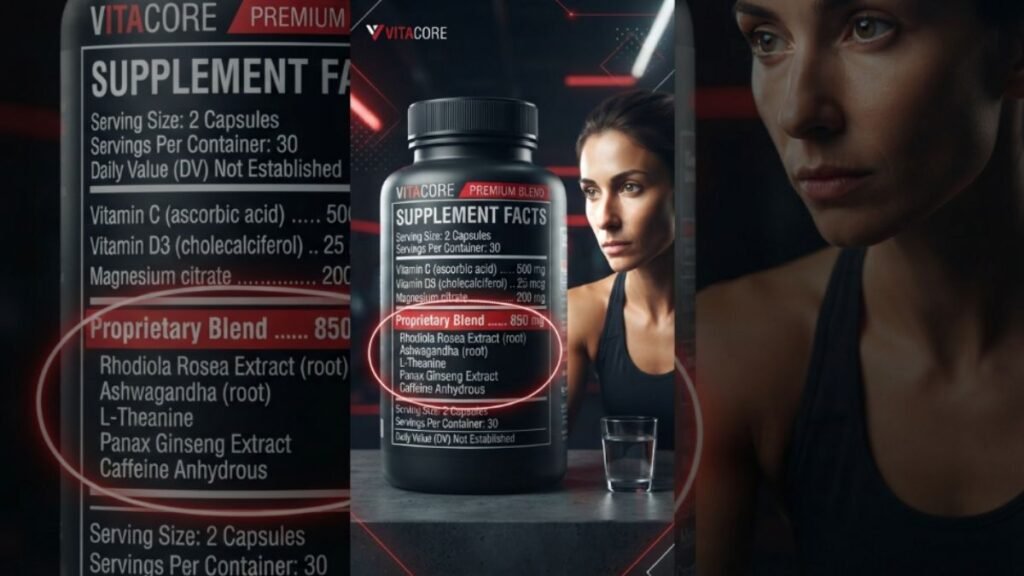
Some signals should end your evaluation immediately. If a product does any of the following, put it down:
- Proprietary blends that hide per-ingredient doses.
- Miracle claims — “instant genius,” guaranteed IQ gains, or promises to cure a diagnosed condition.
- No dosing information you can compare to the research.
- Fifteen-plus ingredients on the label, which almost always means each is underdosed.
- No third-party testing and no transparency about where the product is made.
A trustworthy brand doesn’t need hype, because the formula does the talking.
Realistic Expectations — and When to See a Doctor
Even the best-chosen nootropic is a support, not a cure. Results vary with age, sleep, baseline nutrition, stress, and individual biology, and the honest range of benefit is “a noticeable, useful edge,” not transformation. Anyone promising more than that is selling, not informing.
There’s also a line worth respecting. Persistent brain fog, a clear decline in memory, or concentration problems that interfere with daily life are not things to self-treat with a supplement. They can have underlying medical causes — thyroid issues, sleep disorders, nutrient deficiencies, medication side effects, and more — that a clinician should evaluate. A nootropic is a fine tool for optimizing a healthy brain. It is not a substitute for a diagnosis.
Conclusion
Choosing a nootropic that actually works comes down to three habits: define the specific problem you want solved, insist on clinically studied ingredients at disclosed, effective doses, and give the product a fair timeline before you judge it. Master those and the marketing loses its grip on you — you’ll evaluate any bottle in under two minutes.
The category isn’t a scam. It’s just noisy, and the signal is quiet. If you want a shortcut to seeing the framework applied, compare your current shortlist against a formula that meets all five criteria and use it as a benchmark for everything else you consider. Either way, you now know what “works” actually looks like — and that’s the part no label can fake.
A note on your health: Symptoms like ongoing brain fog, memory loss, or difficulty concentrating can occasionally signal an underlying medical condition. This article is educational and not a substitute for professional care. If cognitive changes are affecting your daily life, please speak with a qualified healthcare provider.
Frequently Asked Questions
How do I know if a nootropic actually works or if it’s a placebo?
Give it a fair trial at a research-relevant dose for the ingredient’s known timeline — often eight to twelve weeks for memory ingredients, and within hours for attention ingredients like the L-theanine-and-caffeine pairing. Track one or two concrete markers (afternoon focus, recall in meetings) rather than a vague “feeling.” If a properly dosed product shows nothing over its full window, it’s reasonable to move on.
Are nootropics safe, and do they have side effects?
The well-studied ingredients discussed here have strong safety records in trials at typical doses, but “natural” doesn’t mean risk-free. Side effects, though usually mild, can include headaches, digestive upset, or sleep disruption, and supplements can interact with medications. Always check with your healthcare provider before starting, especially if you take prescription drugs or have a health condition.
What’s the difference between a single-ingredient supplement and a stack?
A single-ingredient supplement gives you precise control and a lower per-bottle cost, but requires you to coordinate doses and combinations yourself. A stack combines several ingredients for convenience — valuable only if each ingredient is present at an effective, disclosed dose rather than as label decoration.
Why do proprietary blends matter so much?
Because they hide how much of each ingredient you’re actually getting. A blend can list impressive ingredients while containing them at doses far below what studies used. Without per-ingredient amounts, you can’t verify the formula is dosed to work — which is exactly why some brands use them.
How long before I notice results from a nootropic?
It depends on the ingredient. Attention-focused compounds can work acutely, within an hour or two. Memory and neuroadaptation ingredients like Bacopa typically need consistent daily use for eight to twelve weeks. Knowing the timeline before you start prevents you from quitting a working product too soon.
Can a nootropic fix my brain fog or memory problems on its own?
Not reliably, and not if there’s an underlying cause. Nootropics can support an already-healthy brain, but persistent brain fog or memory decline warrants a medical evaluation to rule out issues like sleep disorders, thyroid problems, or nutrient deficiencies. Treat supplements as optimization, not diagnosis.
Are more ingredients always better in a nootropic?
No — usually the opposite. Long ingredient lists are frequently a sign that each component is underdosed to keep costs down while the label looks impressive. A short roster of well-studied ingredients at full doses almost always outperforms a fifteen-ingredient blend.

Daniel Mercer é um escritor de ciências da saúde especializado em desempenho cognitivo, nootrópicos e pesquisas sobre saúde cerebral. Com formação em ciências biomédicas e mais de uma década de experiência revisando literatura clínica sobre desempenho mental e suplementação, ele fundou o Cognitive Insight Lab para simplificar informações irrelevantes e fornecer análises baseadas em evidências para pessoas que levam a sério sua saúde cognitiva. Daniel não aceita conteúdo patrocinado e não possui vínculos financeiros com as marcas analisadas neste site.