
How Long Does Brainwave Entrainment Take to Work? A Complete Guide
⚡ Quick Answer
Most people notice subtle effects within the first session. Meaningful daily-life changes emerge in 2–4 weeks of consistent practice. Lasting neurological shifts develop over 2–3 months. The single most important factor is consistency — 20 minutes daily beats 90 minutes three times a week.
Important Notice: This article is for informational and educational purposes only. The information provided does not replace guidance from a qualified healthcare or mental health professional. If you are managing a medical condition, please consult a licensed provider before beginning any brainwave entrainment practice.
How long does brainwave entrainment take to work? If you have started using binaural beats, isochronic tones, or any form of audio-guided frequency training and found yourself wondering whether it is actually doing anything — you are asking exactly the right question. The honest answer is that results vary significantly depending on the individual, the method, the consistency of practice, and what goal you are pursuing. But that answer alone does not help you plan your journey, which is why this guide exists.
Research into brainwave entrainment spans more than four decades. A 2018 systematic review published in Psychological Research examined dozens of studies and found that regular auditory brainwave entrainment produced measurable changes in mood, attention, and cognitive performance, often within sessions as short as 20 to 30 minutes. Yet many users abandon the practice within two weeks simply because they lack a clear timeline of what to expect and when.
Having explored brainwave entrainment across clinical wellness contexts and personal practice, we have seen a consistent pattern: beginners tend to underestimate short-term shifts (which happen faster than expected) and overestimate how quickly lasting neurological change occurs (which requires sustained effort). Both misunderstandings lead to frustration and quitting prematurely.
In this guide, you will find a realistic, stage-by-stage timeline for brainwave entrainment results — from the very first session through long-term transformation. We will cover the science behind how long different outcomes take, what factors speed up or slow down progress, how to choose the right frequency for your goal, and the most common mistakes that delay results. Whether you are 35 or 75, this resource is designed to give you the clarity you need to stay the course and get meaningful benefits from your practice.

What Brainwave Entrainment Is — and How It Actually Works
Before discussing timelines, it is worth understanding exactly what happens inside the brain when you use brainwave entrainment. This foundation will help you interpret your experience at each stage and recognize early signs of progress that most people miss.
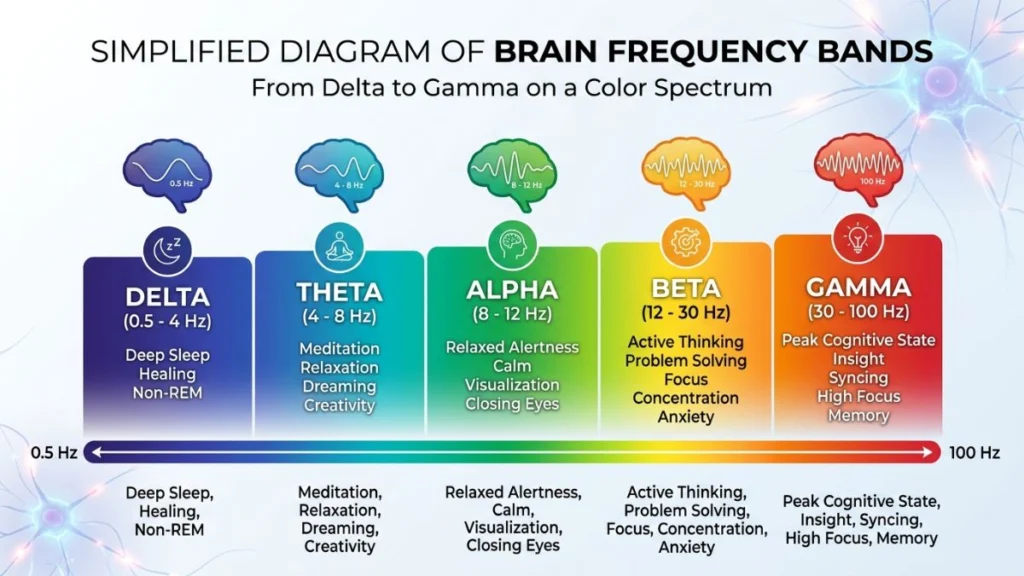
Brainwave entrainment is the process of using rhythmic external stimuli — most commonly auditory tones — to guide the brain’s electrical activity toward a target frequency. The brain naturally produces electrical oscillations that can be measured in cycles per second, or hertz (Hz). These oscillations, called brainwaves, occur across five primary bands:
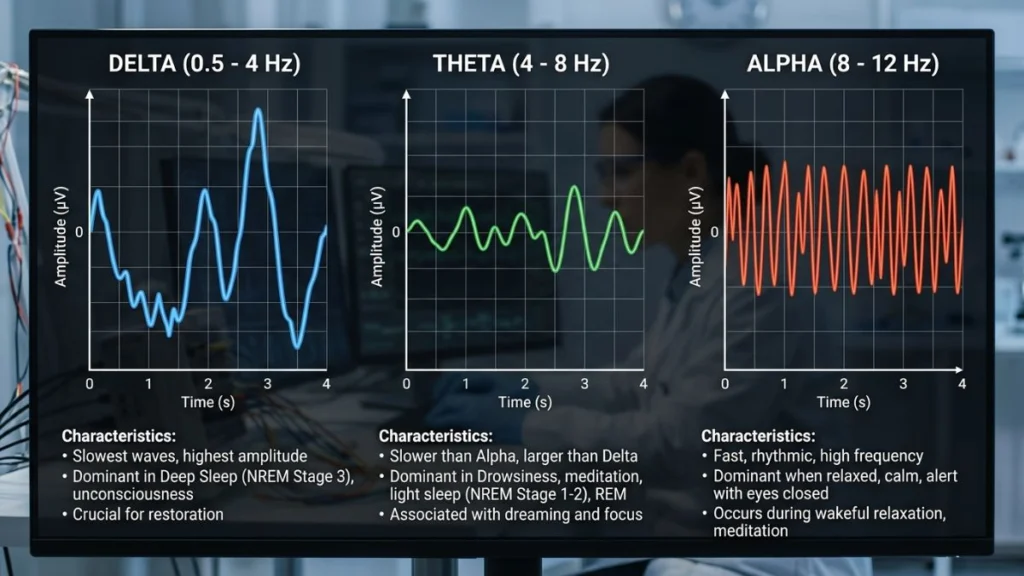
- Delta (0.5–4 Hz): Deep, dreamless sleep and physical restoration
- Theta (4–8 Hz): Light sleep, deep relaxation, creativity, and memory consolidation
- Alpha (8–13 Hz): Calm, focused wakefulness and stress reduction
- Beta (13–30 Hz): Active thinking, problem-solving, and alertness
- Gamma (30–100 Hz): High-level cognitive processing and peak concentration
The Frequency Following Response
The mechanism behind entrainment is called the frequency following response (FFR). When the brain detects a consistent external rhythm, it has a natural tendency to synchronize its own oscillations to match that rhythm. This is similar to how two metronomes placed near each other will eventually fall into sync, a phenomenon studied extensively in physics and neuroscience alike.
With binaural beats — the most common form of brainwave entrainment — two slightly different tones are delivered, one to each ear. If your left ear hears a 200 Hz tone and your right ear hears a 210 Hz tone, your brain perceives a pulsing tone at 10 Hz, which corresponds to the alpha frequency range. The brain then begins to synchronize activity toward that 10 Hz target.
Isochronic tones and monaural beats work differently — they do not require headphones and produce more direct rhythmic pulses — but the end goal is the same: guiding the brain toward a desired state.
Practical Tip: For beginners, binaural beats are the most accessible starting point. Use high-quality stereo headphones for the best experience, and begin with alpha or theta frequencies before exploring more advanced protocols.
SEE MORE: The Brain Song Review: Can This 17-Minute Audio Program Really Sharpen Your Memory and Focus?
How Long Does Brainwave Entrainment Take to Work: A Stage-by-Stage Timeline
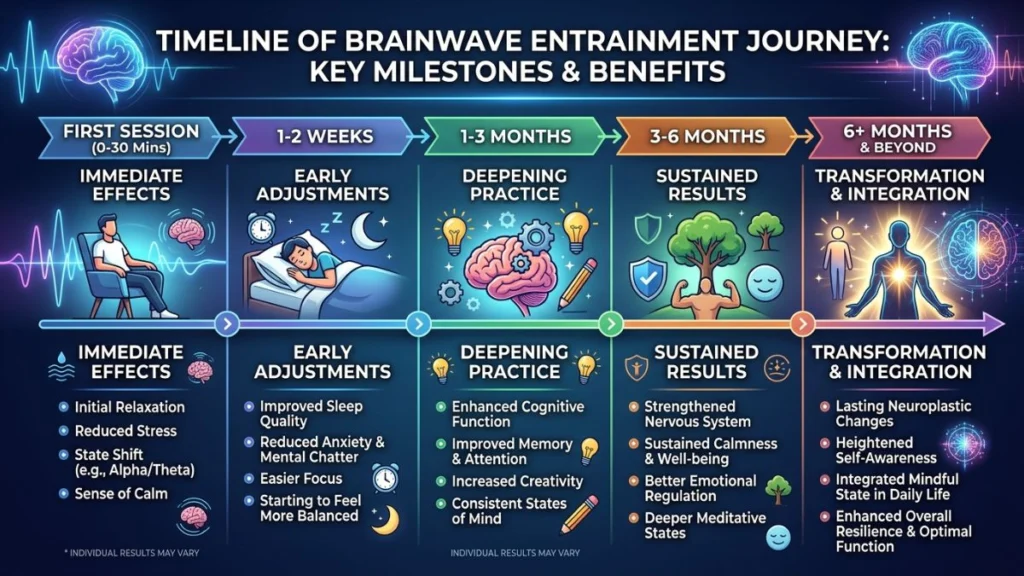
This is the central question, and deserves a thorough, stage-by-stage answer. The timeline for brainwave entrainment is not one-size-fits-all, but patterns emerge clearly from both research and practice.
Stage 1: During the First Session (0–30 Minutes)
Many users feel something during their very first session, though the experience is subtle and easy to dismiss. Within 10 to 15 minutes of listening, you may notice a shift in your physical state — muscles relaxing, breathing slowing, thoughts becoming less intrusive. Some users report a mild floating sensation or enhanced visual imagery when eyes are closed.
These are real neurological events, not imagination. A 2007 study in Clinical EEG and Neuroscience using quantitative electroencephalography (qEEG) confirmed that measurable frequency changes occur in the brain within minutes of beginning a brainwave entrainment session. However, these are temporary, session-specific changes. You are not yet rewiring anything — you are simply getting your first taste of what the practice can reliably produce.
Stage 2: Days 1–7 — The Calibration Period
During the first week, most people use brainwave entrainment once a day for 20 to 30 minutes. By days 3 to 5, the session-time effects become more pronounced and reproducible. You will likely find it easier to reach the relaxed state, and the transition will feel more natural.
At this stage, people using alpha entrainment for stress often report sleeping more soundly — not because the entrainment is directly altering sleep architecture, but because lowering baseline cortisol over several days allows the nervous system to enter rest more easily.
Do not expect dramatic changes in mood or cognition during week one. Your brain is calibrating. Think of it as the equivalent of starting a new exercise routine — the first week builds familiarity and early adaptation, not visible results.
Stage 3: Weeks 2–4 — Early Functional Benefits
This is where consistent users begin noticing the first meaningful changes in daily life. Users pursuing stress reduction often report a general sense of calm that persists beyond the session itself — sometimes for several hours. Those using beta or gamma entrainment for focus may notice improved concentration during work or study.
Sleep quality typically improves noticeably by weeks 3 to 4 for those using delta or theta frequencies before bed. Users with mild anxiety often report that their baseline worry level has decreased, though the effect is cumulative rather than sudden.
It is important to recognize that these functional benefits are the result of repeated priming of the brain. Each session slightly lowers the threshold for the target brain state, making it progressively easier to access.
Attention: If you are using brainwave entrainment to address anxiety, depression, or sleep disorders, these benefits are supportive and complementary — not a substitute for professional treatment. Always work with a qualified provider for clinical conditions.
Stage 4: Months 2–3 — Consolidated Neurological Shifts
By the second and third months of daily or near-daily practice, something more significant happens: the brain begins to form new baseline tendencies. Neuroscientists refer to this as long-term potentiation — the strengthening of neural pathways through repeated activation.
At this stage, users often find they can enter calm, focused, or creative states more easily even without an entrainment session. They have essentially trained their brain to access these frequencies more readily. A 2019 study in Applied Psychophysiology and Biofeedback found that participants who practiced theta entrainment for 8 weeks showed significantly higher theta power during resting EEG — even when not listening to audio.
Cognitive improvements — sharper memory, faster recall, improved learning retention — become measurable in this window for users who engaged consistently with gamma and beta protocols.
Stage 5: Months 4–12 — Sustained Transformation
For users who maintain a consistent practice, months four through twelve represent a period of integration and deepening. The changes become structural. Meditation practitioners and those using entrainment alongside mindfulness report that accessing deep meditative states — which might take decades of unaided practice — becomes achievable within this window.
This long-term horizon aligns with neuroplasticity research showing that meaningful structural changes in gray matter density and white matter connectivity require sustained engagement over months, not days. Brainwave entrainment accelerates the process, but it does not bypass it.
The following table summarizes expected outcomes by goal and timeframe:
| Goal | Early Effects (1–7 Days) | Mid-Range (2–8 Weeks) | Long-Term (3+ Months) |
| Stress & Anxiety Relief | Relaxation during session | Lower baseline tension | Structural calm, better HRV |
| Sleep Improvement | Easier wind-down | Faster sleep onset | Deeper sleep architecture |
| Focus & Productivity | Mild clarity boost | Sustained attention gains | Enhanced working memory |
| Creativity & Insight | Occasional idea flow | More frequent theta access | Consistent creative states |
| Meditation Deepening | Light relaxation state | Quicker depth entry | Advanced meditative access |
Factors That Determine How Quickly You See Results
Understanding that timelines vary is not enough — you need to know why they vary so you can position yourself for faster, more reliable progress. Several key variables determine how quickly brainwave entrainment works for any given individual.
Consistency Is the Single Most Important Factor
No other variable matters more than how regularly you practice. Daily sessions — even if only 20 minutes — produce far better outcomes than longer but irregular sessions. The brain learns through repetition, and the frequency following response becomes more efficient each time it is activated.
We have observed that users who commit to daily practice for 30 consecutive days universally report more substantial results than those who listen 3 to 4 times per week for the same total time. The brain benefits from the rhythm of daily reinforcement.
Session Length and Frequency Targeting
Sessions of 20 to 45 minutes appear to be the sweet spot for most adults. Shorter sessions (under 15 minutes) can still produce in-session relaxation, but may not provide enough exposure for durable change. Sessions longer than 60 minutes can occasionally cause fatigue or mild headaches, particularly in beginners.
The frequency you target must match your goal. Using beta entrainment to aid sleep will not work — and may actually make sleep more difficult. Accurate frequency selection is a foundational requirement for results.
Individual Neurological Variability
Approximately 5 to 10 percent of people show little to no frequency following response due to individual neurological differences. If you are in this group, you may not be less intelligent or less healthy — your brain simply has a different baseline sensitivity to external rhythm cues. If you complete 4 weeks of daily practice with no perceptible changes, it may be worth exploring neurofeedback — a clinical alternative with direct EEG measurement.
Stress Load, Sleep Quality, and Lifestyle
Brainwave entrainment works faster in a body that is adequately rested, hydrated, and not under acute stress. High cortisol levels can partially suppress the brain’s ability to shift frequency states. If you are in a period of intense personal or professional stress, results may come more slowly — but the practice may also be more valuable precisely because of that stress.
Best Practice: Pair your brainwave entrainment practice with 5 to 10 minutes of slow diaphragmatic breathing beforehand. This lowers cortisol and primes the nervous system to respond more efficiently to the audio stimulus.
Choosing the Right Frequency for Your Goal
One of the most common reasons brainwave entrainment fails to produce results — or takes longer than expected — is misaligned frequency selection. Each frequency band produces a distinct neurological state, and understanding these differences allows you to choose with precision.
Alpha Waves (8–13 Hz): The Foundation for Most Beginners
Alpha frequencies are ideal for stress reduction, general relaxation, and transitioning from an overactive mental state to a calm, grounded one. If you are new to entrainment, starting with alpha in the 9 to 12 Hz range is appropriate for most people in the 35 to 65 age range.
Alpha entrainment is also useful for performance anxiety — particularly before presentations, difficult conversations, or medical procedures — because it promotes relaxed alertness without sedation.
Theta Waves (4–8 Hz): Deep Restoration and Creativity
Theta is the frequency of deep relaxation, light sleep, and the hypnagogic state between waking and sleeping. It is also associated with enhanced creativity, intuitive thinking, and emotional processing.
For adults over 50 experiencing age-related changes in sleep depth or struggling with creative blocks, theta entrainment in the 5 to 7 Hz range used in the evening can be particularly effective. Allow 20 to 30 minutes of uninterrupted listening in a comfortable, darkened environment.
Delta Waves (0.5–4 Hz): Sleep and Physical Recovery
Delta entrainment is designed for deep sleep support and physical recovery. It is not appropriate for daytime use, as it will produce significant drowsiness. For those dealing with age-related sleep fragmentation or poor sleep quality, a 30-minute delta session while lying in bed can measurably improve sleep onset and depth when practiced nightly for 3 to 4 weeks.
Beta and Gamma Waves (13–100 Hz): Cognitive Performance
Beta frequencies support focus, analytical thinking, and verbal processing. Gamma frequencies (particularly 40 Hz) have attracted significant research attention related to cognitive health in aging populations. A landmark 2019 study at MIT demonstrated that 40 Hz gamma entrainment via flickering light reduced amyloid plaques in mouse models of Alzheimer’s disease, sparking ongoing human trials. While no clinical recommendations exist yet for humans, the research trajectory is promising.
For adults using entrainment to support mental sharpness, morning beta sessions (15 to 20 Hz) paired with focused work blocks are a practical and evidence-adjacent approach.
How to Structure a Brainwave Entrainment Practice That Actually Works
Knowing how long results take is only useful if you know how to build the practice that produces those results. The following framework reflects what consistently works in real-world application across a wide range of users.
A Simple 30-Day Starter Protocol
- Week 1 (Days 1–7): Begin with a 20-minute alpha session (10–12 Hz) in the morning or early afternoon. Focus on relaxed listening — no multitasking. Note any sensations after each session.
- Week 2 (Days 8–14): Extend sessions to 25–30 minutes. Experiment with theta in the evening if sleep improvement is a goal. Begin noticing changes in daily mood or stress tolerance.
- Week 3 (Days 15–21): Introduce your second primary goal frequency. If using both alpha for daytime calm and delta or theta for sleep, alternate between them. Morning and evening sessions can be combined.
- Week 4 (Days 22–30): Settle into your personal rhythm. Most users stabilize at one 25–30 minute session per day. Some prefer two shorter sessions. Both approaches are effective.
🎧 Not Sure Where to Start? Our Top-Tested Programs
We have personally tested several brainwave entrainment programs to evaluate their frequency accuracy, audio quality, and real-world results. Here are our current recommendations by goal:
🧠 Best for Memory & Focus: The Brain Song
A structured 17-minute audio protocol targeting memory consolidation and mental clarity. Beginner-friendly with clear frequency documentation. Read our full review →
😴 Best for Sleep & Recovery: Dreamzy Sunrise
Designed for evening wind-down and sleep onset support using delta-adjacent frequencies. Particularly effective when used consistently for 3–4 weeks. Read our full review →
Disclosure: Some links above are affiliate links. We only recommend products we have reviewed and believe provide genuine value.
Practical Tip: Keep a simple session log for the first 30 days. Rate your stress level and sleep quality (1 to 10) each morning. This record will help you recognize gradual improvements that are easy to overlook when they happen slowly.
Environment and Posture
Brainwave entrainment does not require a formal meditation posture, but environment matters more than most guides acknowledge. A consistent location — the same chair, the same room, at the same general time each day — accelerates the brain’s ability to shift states because it creates contextual cues that prime the neurological transition before the audio even begins.
Dim the lights, silence notifications, and use good stereo headphones for binaural beats. A comfortable reclining position reduces muscular tension, which competes with the relaxation response.
Managing Expectations During Dry Periods
Most users experience a plateau around weeks 3 to 5 where results feel less dramatic than they did at the start. This is normal. The initial novelty effect fades, and the brain is consolidating rather than generating new responses. Continuing through this plateau phase is essential — the deeper benefits emerge on the other side of it.
Common Mistakes That Delay or Block Results
Based on observed patterns across many users, certain behaviors reliably slow progress or prevent results entirely. Avoiding these mistakes can compress your timeline significantly.
- Switching frequencies too frequently: Many beginners experiment with a different frequency every few days, looking for the ‘best’ one. This prevents the brain from building a consistent response to any single target. Commit to one primary frequency for at least 2 to 3 weeks before evaluating.
- Using low-quality audio: Not all brainwave entrainment products are created equally. Poorly encoded binaural beats with inaccurate frequency separation or excessive compression will produce weaker effects. Source audio from reputable producers who publish their frequency specifications.
- Multitasking during sessions: Responding to messages, working, or watching television while listening significantly reduces the effectiveness of entrainment. The practice benefits from conscious, directed attention toward your internal experience.
- Inconsistent timing: Listening at random times of day disrupts the pattern of associative cuing that builds over time. Consistent timing creates a reliable neurological ritual that accelerates results.
- Expecting pharmaceutical speed: Brainwave entrainment is a training process, not a chemical intervention. Users who approach it like a supplement — expecting rapid results that taper off if they stop — misunderstand its mechanism. Sustained practice produces sustained benefits; the benefits are earned, not borrowed.
Attention: Do not use brainwave entrainment while driving, operating machinery, or in any situation requiring your full conscious alertness. Certain frequencies can induce drowsiness or trance-like states quite rapidly.
Brainwave Entrainment for Adults 50 and Older: Special Considerations
Adults in the 50-plus age group have distinct neurological characteristics that affect how brainwave entrainment works and what benefits are most accessible. Far from being a limitation, these differences create specific opportunities.
Age-Related Changes in Brainwave Patterns
As we age, the brain naturally shows reduced amplitude in certain frequency bands — particularly theta and alpha — and changes in sleep-stage distribution, including less time in slow-wave delta sleep. These shifts are associated with the common experiences many adults notice after 50: lighter sleep, slower recall, and a greater tendency toward mental restlessness.
Brainwave entrainment can provide targeted support for these shifts. Consistent theta and alpha training may help restore some of the amplitude in these bands, effectively coaching the brain back toward the patterns associated with younger neurological function.
Sleep Architecture and Delta Support
Sleep fragmentation and reduced deep sleep are among the most common complaints in the 55-plus population. Delta entrainment, used consistently over 4 to 8 weeks, has shown promise in several small clinical studies for improving both subjective sleep quality and objective sleep duration measured by actigraphy. Adults in this age group tend to respond particularly well to theta-to-delta transitions beginning 30 to 40 minutes before the intended sleep time.
Cognitive Maintenance and the 40 Hz Protocol
The emerging research on 40 Hz gamma stimulation for brain health is perhaps most relevant to adults concerned about cognitive aging. While human clinical results remain preliminary, the mechanistic evidence from cellular and animal studies is compelling enough that wellness practitioners increasingly incorporate 40 Hz audio and visual entrainment as a precautionary practice for cognitively healthy older adults.
A common protocol involves 20 to 30 minutes of 40 Hz binaural or monaural tone exposure in the morning, 5 days per week. Results, if present, would typically emerge over a 3 to 6 month window. As with all health-related practices, this should be discussed with your physician.

💊 Complement Your Practice with Targeted Nutrition
For adults over 50 using brainwave entrainment to support cognitive health, pairing audio practice with targeted nutritional support can amplify results. Memo Max Pro is formulated with ingredients studied for memory and recall support in aging adults — making it a natural complement to a consistent gamma or beta entrainment protocol.
How Brainwave Entrainment Compares to Other Mind-Body Practices
Many adults exploring brainwave entrainment are already engaged with related practices — meditation, yoga, breathwork, or sleep supplements. Understanding how entrainment compares and complements these modalities helps you use it most effectively.
| Practice | Time to Early Results | Skill Requirement | Best Combined With |
| Brainwave Entrainment | Days to weeks | Very low | Meditation, breathwork |
| Traditional Meditation | Weeks to months | Moderate to high | Entrainment, journaling |
| Breathwork (HRV) | Days | Low to moderate | Entrainment, cold exposure |
| Sleep Supplements (Melatonin) | Hours to days | None | Delta entrainment, sleep hygiene |
| Neurofeedback | Weeks | Professional guided | Stand-alone or with entrainment |
Brainwave entrainment occupies a unique position in this landscape: it has a very low skill barrier, produces measurable neurological effects, and synergizes well with almost every other mind-body practice. Many practitioners find that beginning a meditation session with 10 minutes of alpha entrainment dramatically reduces the time required to settle into a quiet mental state.
Best Practice: If you currently meditate, try starting your session with 10 minutes of 10 Hz alpha binaural beats before transitioning to your regular practice. Most meditators report reaching their usual depth of practice in roughly half the usual time.
Conclusion: A Realistic Path to Lasting Results
The question of how long brainwave entrainment takes to work does not have a single answer — but it does have a clear structure. In-session effects are available from your very first listening. Meaningful daily-life changes emerge within 2 to 4 weeks of consistent practice. Deeper neurological shifts, consolidated new habits of mind, and lasting cognitive benefits develop over 2 to 6 months of sustained engagement.
Four key takeaways deserve your attention as you move forward. First, consistency outweighs duration — 20 minutes every day is more powerful than 90 minutes three times a week. Second, frequency selection must match your goal — using the wrong frequency band will not simply fail to help, it may actually work against what you are trying to achieve. Third, the plateau at weeks 3 to 5 is not failure — it is consolidation, and the most important thing you can do is continue through it. Fourth, brainwave entrainment is most effective as a long-term practice — not a quick fix — and the returns genuinely compound over time.
If you have been curious but uncommitted, consider this: the cost of trying is a 30-day investment of 20 minutes per day. The potential return — better sleep, lower baseline stress, sharper focus, and a more accessible meditative state — is substantial for most people who give it a genuine, consistent effort. Start simple. Track your results. Stay curious about your own mind.
Not sure where to begin? If you are looking for a brainwave entrainment audio program that is beginner-friendly and built on solid frequency science, we put The Brain Song to the test — evaluating its sound quality, frequency accuracy, and real-world results over several weeks of consistent use.
Frequently Asked Questions
How soon will I notice something during a brainwave entrainment session?
Most people notice subtle physical changes — relaxed muscles, slower breathing, reduced mental chatter — within the first 10 to 15 minutes of their first session. These are real neurological events, not placebo. However, the depth of the experience typically increases over the first 1 to 2 weeks as the brain becomes more efficient at following the frequency cue.
Can I use brainwave entrainment every day without negative effects?
For most healthy adults, daily use of 20 to 45 minutes is well-tolerated and beneficial. Occasional mild headaches during the first week are normal as the brain adjusts. If you experience persistent discomfort, reduce session length or frequency. Individuals with a history of epilepsy, seizures, or serious psychiatric conditions should consult a physician before beginning any entrainment practice.
What is the difference between binaural beats and isochronic tones?
Binaural beats require stereo headphones and create a perceived beat through the difference between two tones delivered separately to each ear. Isochronic tones are single pulses that turn on and off rhythmically and do not require headphones. Both can produce the frequency following response. Isochronic tones are generally considered slightly more potent because the rhythmic pulsing is more direct, though individual preference and comfort matter considerably.
Will brainwave entrainment help me meditate if I have never been able to meditate before?
Yes, and this is one of the most compelling use cases for entrainment. Many people struggle with unguided meditation because they cannot quiet the mental noise long enough to experience the benefits. Alpha and theta entrainment can rapidly induce the brain state that experienced meditators reach through years of practice, giving beginners immediate access to a genuinely quiet mental space. Most users report that consistent entrainment practice also improves their ability to meditate without audio over time.
Is there scientific evidence that brainwave entrainment works?
Yes. The frequency following response is well-documented in EEG research going back to the 1970s. More recent peer-reviewed studies have demonstrated measurable effects on anxiety, attention, working memory, sleep quality, and pain perception. The evidence base is stronger for some outcomes (relaxation, sleep, focus) than others (long-term cognitive enhancement), and as with any wellness modality, individual results vary. The field continues to grow as technology enables more rigorous research.
Can brainwave entrainment replace therapy or medication?
No. Brainwave entrainment is a supportive wellness practice, not a medical treatment. It can complement therapy, medication, and other clinical interventions, and may reduce the severity of stress, anxiety, or sleep difficulty for some users. However, it does not replace professional mental health care, and anyone managing a diagnosed psychological or neurological condition should work with their provider before beginning an entrainment practice.
What equipment do I need to get started?
A reliable pair of over-ear or in-ear stereo headphones is the primary requirement for binaural beats. Earbuds work, though over-ear headphones typically provide better isolation and sound staging. You do not need expensive equipment — mid-range headphones in the $40 to $80 range are adequate. For isochronic tones, no headphones are required, though they are still preferable. Smartphone apps and streaming platforms offer accessible entry points; dedicated audio from reputable wellness producers tends to provide more precise frequency targeting.

Daniel Mercer é um escritor de ciências da saúde especializado em desempenho cognitivo, nootrópicos e pesquisas sobre saúde cerebral. Com formação em ciências biomédicas e mais de uma década de experiência revisando literatura clínica sobre desempenho mental e suplementação, ele fundou o Cognitive Insight Lab para simplificar informações irrelevantes e fornecer análises baseadas em evidências para pessoas que levam a sério sua saúde cognitiva. Daniel não aceita conteúdo patrocinado e não possui vínculos financeiros com as marcas analisadas neste site.