

Best Nootropics for Focus: Ranked by Real Evidence
If you’ve been searching for the best nootropics for focus, you already know the problem: the market is flooded with bold claims, proprietary blends, and ingredient lists that sound impressive until you try to trace a single dose back to an actual human trial.
You’re not imagining the cognitive drag. Research published in Frontiers in Neuroscience suggests that sustained attention capacity begins to measurably decline from the mid-30s onward — and modern life compounds that aggressively: screen saturation, disrupted sleep, chronic low-grade stress, and information overload are all documented enemies of focused cognition.
The afternoon slump that used to be a minor inconvenience now derails the second half of your workday. The word that should come instantly doesn’t. The meeting where you need to be sharpest is the exact one where nothing sticks. For adults 30–55 navigating demanding careers, complex decisions, and the constant pull of distraction, that isn’t just inconvenient — it’s costly.
This guide cuts through the noise. Over the next 3,000+ words, you’ll find a ranked breakdown of the most rigorously studied nootropics for focus, an honest assessment of what the research actually supports, practical guidance on safe combination strategies, and a clear framework for evaluating any supplement before you spend a dollar on it. No hype. No proprietary blend deflection. Just what works, what’s promising, and what’s mostly marketing.
This content is for informational and educational purposes only. It does not constitute medical advice. Please consult your healthcare provider before making changes to your diet, supplements, or cognitive health routine.
👉 Before diving into the research, watch this quick breakdown of how supplement science actually works — it’ll make the rest of this guide much easier to navigate.
What Are Nootropics, Really?
The term “nootropic” was coined in 1972 by Romanian chemist Corneliu Giurgea, who defined it narrowly: a substance that enhances learning and memory while protecting the brain from injury and producing minimal side effects. By that strict standard, very few compounds qualify.
Today the word is used far more loosely — and that’s part of the problem. Supplement companies label everything from caffeine to obscure plant extracts as nootropics, which makes evaluating any individual product genuinely difficult.
For the purposes of this guide, a nootropic is any compound — natural or synthetic — that has credible mechanistic evidence and at least one well-designed human trial supporting its role in attention, focus, working memory, or mental energy. That standard eliminates a lot of the noise immediately.
Synthetic vs. Natural Nootropics
Most of what adults 30–55 will realistically access falls into two categories:
- Natural nootropics — plant extracts, mushrooms, phospholipids, and amino acids with documented cognitive effects. These are widely available, generally well-tolerated, and have a growing (if still incomplete) body of human research behind them.
- Synthetic nootropics — compounds like racetams (piracetam, aniracetam), modafinil, and others that require prescriptions in many countries or exist in legal gray zones.
This guide focuses entirely on evidence-based natural compounds that are legally accessible in the US without a prescription.

How Focus Actually Works in the Brain
Before evaluating any nootropic, it helps to understand the neurobiology you’re trying to support.
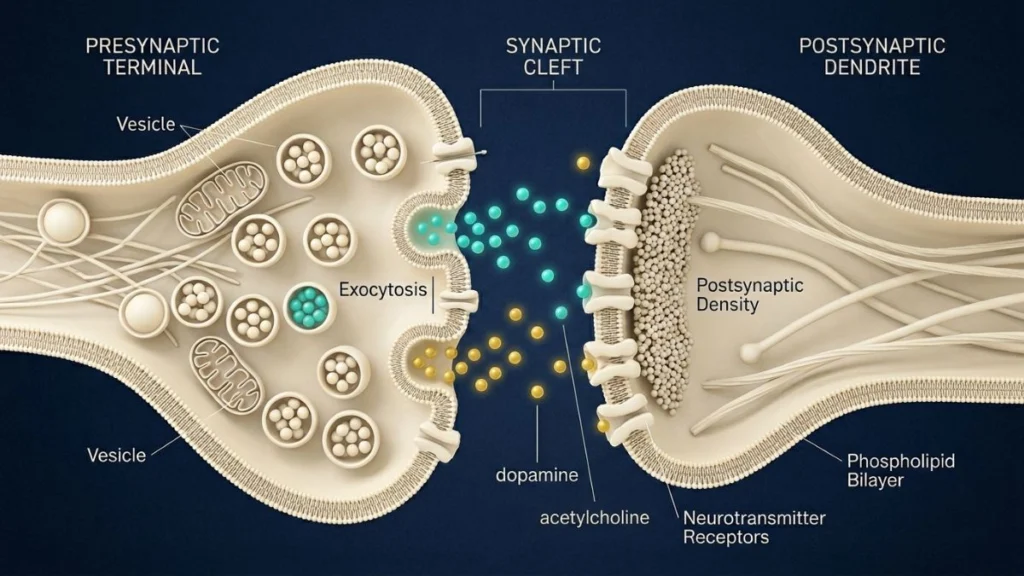
Focus — the capacity to direct and sustain attention on a task while filtering distractions — depends on the coordinated activity of several neurotransmitter systems:
- Dopamine is the brain’s primary motivation and reward chemical. It’s essential for initiating tasks, sustaining effort, and experiencing the satisfaction of progress. Low dopamine availability is closely linked to procrastination, distractibility, and motivation loss.
- Acetylcholine governs learning, memory encoding, and fine attentional control. It’s the neurotransmitter most closely associated with the precise, deliberate focus required for complex cognitive work.
- Norepinephrine regulates alertness and arousal — the neurochemical that sharpens your thinking when stakes are high, and depletes when chronic stress has burned through your reserves.
- GABA and glutamate maintain the balance between excitation and inhibition. Too much excitation produces anxious, scattered thinking; too much inhibition produces mental fog and sluggishness.
The most effective nootropics for focus tend to work by supporting one or more of these systems — not by overriding them, but by optimizing the conditions under which they function.
The Best Nootropics for Focus, Ranked by Evidence
The following nine compounds represent the strongest intersection of mechanistic plausibility and human clinical evidence for focus and attention. They are ranked loosely by the weight and consistency of that evidence, not by marketing spend.
1. Caffeine + L-Theanine
Evidence level: Strong (multiple RCTs)
This is the best-studied cognitive combination available to consumers — and arguably the most underappreciated precisely because it’s so accessible.
Caffeine blocks adenosine receptors, delaying the accumulation of the fatigue signal that tells your brain to slow down. The result is increased alertness, faster reaction time, and improved attention — effects documented in dozens of randomized controlled trials across healthy adult populations.
The problem: caffeine alone tends to produce arousal without precision. Many people experience jitteriness, elevated anxiety, and the kind of hyperactive, distractible attention that actually impairs deep, focused work.
L-Theanine, an amino acid found naturally in green tea, is where the combination gets interesting. A 2008 study published in Nutritional Neuroscience found that 100mg of L-Theanine combined with 50mg of caffeine produced significantly better accuracy on attention-switching tasks than caffeine alone — with reduced self-reported anxiety. Subsequent studies have replicated this synergy consistently.
The mechanism: L-Theanine promotes alpha-wave activity in the brain — the calm, alert mental state associated with flow states and focused creativity — while modulating some of caffeine’s excitatory effects.
Practical Tip: If you already drink coffee, you likely have the caffeine side covered. Adding an L-Theanine capsule (100–200mg) to your morning routine is one of the most cost-effective, evidence-backed focus interventions available.
2. Citicoline (CDP-Choline)
Evidence level: Strong (multiple human trials)
Citicoline is a choline-containing compound that does two things highly relevant to focus: it supplies choline for acetylcholine synthesis, and it donates cytidine — which converts to uridine, a compound involved in dopamine receptor function and neuronal membrane integrity.
A 2021 randomized double-blind trial published in Nutrients reported significant improvements in sustained attention and working memory with 500–1,000mg of citicoline daily over 12 weeks in healthy adults. A 2012 study in Food and Chemical Toxicology similarly found benefits in attention and psychomotor speed in healthy middle-aged participants.
What makes citicoline particularly relevant for adults 30–55 is its dual role: supporting the cholinergic system that governs deliberate focus while also contributing to the structural maintenance of neural membranes that naturally degrade with age.
3. Bacopa Monnieri
Evidence level: Moderate-to-strong (multiple RCTs, primarily on memory and processing speed)
Bacopa is an Ayurvedic herb with a growing body of Western clinical research behind it. Its active compounds — bacosides — appear to enhance synaptic communication and support neuroplasticity by modulating acetylcholine and serotonin systems, while also demonstrating antioxidant activity in neural tissue.
The research on Bacopa is nuanced and worth understanding. It’s consistently effective for memory consolidation and information processing speed, with focus benefits that tend to emerge more gradually — typically at the 6–12 week mark. A 2001 double-blind trial published in Psychopharmacology found significant improvement in spatial working memory and learning rate in healthy adults over 12 weeks of supplementation.
For anyone whose focus issues are connected to slow cognitive processing or poor information retention rather than simple alertness, Bacopa may be more relevant than faster-acting stimulant-adjacent compounds.
Important note: Bacopa’s effects are cumulative. Most trials showing significant results ran 8–12 weeks. Do not evaluate it after two weeks.
4. Lion’s Mane Mushroom (Hericium erinaceus
Evidence level: Moderate (promising, limited large-scale human RCTs)
Lion’s Mane is generating significant research interest for one specific reason: it appears to stimulate Nerve Growth Factor (NGF) synthesis — a protein essential for the growth, maintenance, and survival of neurons. NGF production naturally declines with age, which is one reason neuroplasticity diminishes in the fourth and fifth decades.
A 2009 double-blind placebo-controlled trial published in Phytotherapy Research found that adults with mild cognitive impairment taking 3g of Lion’s Mane daily for 16 weeks showed significantly improved cognitive function scores compared to placebo — with those improvements reversing after discontinuation.
The focus-specific evidence is more limited than the general cognitive data, but the neuroplasticity mechanism is compelling. If focus issues stem partly from cognitive aging and reduced neural adaptability, Lion’s Mane addresses underlying biology rather than masking a surface symptom.
Where the research stands: Most human trials use whole mushroom powder at relatively high doses. Many commercial products use extracted forms at lower doses — the clinical equivalence of these different preparations is not yet firmly established. Check for products specifying beta-glucan content.
5. Rhodiola Rosea
Evidence level: Moderate (several human trials, particularly on stress-induced cognitive fatigue)
Rhodiola is an adaptogen — a class of compounds that help the body and nervous system regulate responses to stress. What makes it specifically relevant to focus is the profile of people who struggle most with it: those whose cognitive performance has been degraded by chronic stress and mental fatigue rather than structural decline.
A 2000 study published in Phytomedicine found that medical students taking Rhodiola during a stressful exam period showed significantly better performance on mental fatigue tests. A 2009 review confirmed consistent benefits for stress-induced cognitive fatigue across multiple trials.
Rhodiola’s mechanism connects through the HPA axis (your stress-response system) and monoamine neurotransmitter modulation. It doesn’t sharpen focus in a stimulant sense — it restores the capacity for focus that chronic stress has eroded. That’s a meaningful distinction.
6. Phosphatidylserine
Evidence level: Moderate (FDA Qualified Health Claim)
Phosphatidylserine (PS) is a phospholipid that makes up roughly 15% of the total lipid content of the brain. It plays a critical structural role in neuronal membrane integrity and is involved in synaptic signaling, glucose metabolism, and the activation of neurotransmitter systems including acetylcholine and dopamine.
The FDA has issued a qualified health claim for phosphatidylserine, stating it “may reduce the risk of cognitive dysfunction in the elderly” — a designation that reflects meaningful, if not conclusive, evidence.
A 2010 randomized controlled trial in the Journal of Clinical Biochemistry and Nutrition found that PS supplementation improved attention, memory, and mental flexibility in adults with age-related memory complaints over six months of use.
7. Alpha-GPC
Evidence level: Moderate (strong mechanistic evidence, robust data in clinical populations)
Alpha-GPC is another choline precursor — and arguably the most bioavailable source for brain acetylcholine synthesis available without a prescription. What distinguishes it from citicoline is its particularly strong performance profile in clinical populations with established cholinergic deficits (Alzheimer’s disease, post-stroke cognitive impairment), which provides mechanistic validation for its use in healthy adults optimizing the same systems.
A multi-center Italian trial found Alpha-GPC significantly outperformed placebo on measures of attention, memory, and behavioral function in patients with dementia-related cognitive decline. While healthy adult data is more limited, Alpha-GPC is widely used in serious nootropic stacks precisely because of this mechanistic credibility and its favorable bioavailability profile.
8. Ashwagandha (Withania somnifera)
Evidence level: Moderate (growing human trial base for cognitive outcomes)
Ashwagandha is primarily studied as an adaptogen for stress and cortisol modulation — but the cognitive benefits are increasingly documented in well-designed trials. A 2017 double-blind placebo-controlled trial published in the Journal of Dietary Supplements found that 300mg of KSM-66 Ashwagandha extract twice daily for 8 weeks produced significant improvements in immediate and general memory, executive function, sustained attention, and processing speed.
The mechanism connects through the HPA axis: chronically elevated cortisol directly impairs the prefrontal cortex — the brain region most responsible for focused, goal-directed thinking. By dampening the cortisol response, Ashwagandha appears to restore prefrontal function rather than stimulate it directly.
9. Panax Ginseng
Evidence level: Moderate (extensive traditional use, growing clinical data in healthy adults)
Panax ginseng has one of the longest documented histories of use for cognitive performance in traditional medicine — and a reasonable body of modern clinical evidence to support it. A 2010 review in the Journal of Pharmacy and Pharmacology noted that multiple studies found ginseng improved working memory, attention, and subjective calmness in healthy adults.
The active compounds — ginsenosides — appear to modulate neurotransmitter systems and exert neuroprotective antioxidant effects. The key caution with ginseng is quality variation: root age, extraction method, and ginsenoside standardization vary enormously across products.

SEE ALSO – The effects of L-theanine, caffeine and their combination on cognition and mood
Nootropic Stacks: Combining for Sharper Results
A “stack” is a combination of nootropics taken together to produce synergistic effects. The logic is sound: different compounds work through different mechanisms, and combining them strategically can address multiple cognitive dimensions simultaneously without redundancy.
The Foundational Stack (Best Starting Point)
| Compound | Dose | Primary Effect |
|---|---|---|
| Caffeine | 100–150mg | Alertness, reaction speed |
| L-Theanine | 200mg | Calm focus, reduced jitteriness |
| Alpha-GPC or Citicoline | 300–500mg | Cholinergic support, memory encoding |
This stack covers three of the most validated focus mechanisms: adenosine blockade, alpha-wave optimization, and acetylcholine precursor loading. It’s an appropriate starting point for anyone new to nootropics.
The Stress-Focus Stack (For High-Load Periods)
| Compound | Dose | Primary Effect |
|---|---|---|
| Rhodiola Rosea | 400mg | Stress resilience, anti-fatigue |
| Ashwagandha (KSM-66) | 300mg | Cortisol modulation |
| Citicoline | 500mg | Cholinergic focus |
| L-Theanine | 200mg | Calm, directed attention |
This combination is particularly relevant for professionals going through high-demand periods where cognitive load and chronic stress are occurring simultaneously — the conditions where focus tends to deteriorate most rapidly.
The Long-Term Cognitive Investment Stack
| Compound | Dose | Primary Effect |
|---|---|---|
| Bacopa Monnieri | 300mg | Memory consolidation, processing speed |
| Lion’s Mane | 1,000mg | Neuroplasticity, NGF support |
| Phosphatidylserine | 200mg | Membrane integrity, attention |
| Alpha-GPC | 300mg | Cholinergic maintenance |
This stack is not designed for same-day effect. It targets the underlying cognitive architecture that supports focus over months and years, not minutes and hours. Think of it as maintenance for the hardware rather than a software patch.
Important: More is not better. Adding every compound on this list simultaneously is neither evidence-based nor advisable. Start with one or two compounds, assess your individual response over 4–6 weeks, then add incrementally if needed. Tolerance and interaction profiles matter.
What the Research Actually Says vs. What Brands Promise
This is where most nootropic guides fail the reader — they review the ingredients in isolation without examining the gap between clinical doses and what’s actually inside the product you’re buying.
Three patterns worth recognizing:
Underdosing behind proprietary blends. A “proprietary blend” label means the manufacturer discloses the total blend weight but not individual ingredient amounts. A product can list Lion’s Mane as an ingredient while containing 10mg — far below any threshold of clinical effect — and the label is technically legal.
Extract standardization opacity. Bacopa at 100mg means nothing without knowing the bacoside percentage. Rhodiola at 200mg means nothing without rosavins and salidroside specifications. Always look for standardized extract designations on the label before purchasing.
Animal and in vitro data presented as human evidence. Many ingredient claims trace back to rodent studies or cell culture research. Rodent studies generate hypotheses; human RCTs generate evidence. These are not equivalent, and a responsible brand will not present them as such.
Best Practice: Look for products with full label transparency (no proprietary blends), third-party testing certification (NSF Certified for Sport, USP Verified, or Informed Sport), and clinical doses that match the research behind each ingredient.
How to Choose a Nootropic Supplement
Key Evaluation Criteria
- Full ingredient transparency — every ingredient with its exact dose listed individually
- Clinically-dosed formulas — doses that match published research, not token inclusions for marketing purposes
- Standardized extracts — for herbal ingredients, always look for standardization percentages
- Third-party testing — NSF, USP, or Informed Sport certification validates label accuracy and safety
- Form factor — capsules preserve ingredient integrity better than gummies for most nootropic compounds
- Traceable research — if you can’t trace most ingredients to human clinical trials, the product isn’t ready
Red Flags to Avoid
- Proprietary blends with undisclosed individual component doses
- Ingredient lists of 20+ compounds at unexplained doses (suggests token inclusions across the board)
- Claims of “clinical strength” without specific citations
- Products that rely heavily on caffeine as the primary active and bury it inside a blend
- No manufacturer contact information, GMP certification, or third-party testing
If your focus issues are rooted in persistent mental cloudiness, understanding the root causes of brain fog in adults is a more useful starting point than any nootropic stack. Know More!!!
Brain Fog Causes Adults: What’s Really Happening + How to Fix It
Safety, Side Effects, and When to Talk to Your Doctor
Most natural nootropics at recommended doses are well-tolerated by healthy adults. However, several important caveats apply:
- Cholinergic compounds (Alpha-GPC, Citicoline) can occasionally cause headache or GI discomfort, particularly at higher doses
- Adaptogens (Ashwagandha, Rhodiola) may interact with thyroid medications and immunosuppressants
- Bacopa Monnieri commonly causes mild GI upset when taken on an empty stomach — always take with food
- Caffeine interacts with several medication classes including certain antidepressants, blood pressure medications, and stimulant ADHD medications
Speak with your healthcare provider before using any nootropic if you take prescription medications, have a diagnosed cardiovascular condition, are pregnant or breastfeeding, have a history of anxiety disorders or psychosis, or are managing an autoimmune condition.
A critical point that most nootropic content misses: Persistent brain fog, significant memory decline, or meaningful changes in concentration that are affecting daily life are not problems a supplement should be expected to solve. These can be symptoms of thyroid dysfunction, sleep apnea, depression, nutritional deficiencies (B12, Vitamin D, iron), or early cognitive decline — all of which require proper medical evaluation, not a nootropic stack.
Attention: If your focus or memory issues are sudden, severe, or accompanied by mood changes, personality shifts, or word-finding difficulties beyond ordinary fatigue, consult a healthcare provider before pursuing any supplementation approach.

Conclusion
The best nootropics for focus are not miracle compounds — they are targeted nutritional and botanical agents that work with your brain’s existing chemistry to optimize the conditions for clear, sustained thinking. The research is real but graduated: some compounds (caffeine + L-Theanine, citicoline) have strong multi-trial human evidence; others (Lion’s Mane, Bacopa) show genuine promise across well-designed studies but warrant realistic expectations about timelines and effect sizes.
Three takeaways to carry forward:
- Start with the most evidence-backed interventions first. The caffeine + L-Theanine combination is inexpensive, safe, well-studied, and effective for the majority of healthy adults.
- Match the compound to your specific problem. Stress-degraded focus calls for adaptogens; age-related cholinergic decline calls for choline precursors; memory-linked focus issues may respond best to Bacopa or a Bacopa-containing stack.
- Never let a supplement substitute for the fundamentals. Sleep quality, aerobic exercise, and stress management have stronger and more consistent evidence for cognitive performance than any compound on this list. Nootropics optimize a functioning system — they cannot repair a neglected one.
The goal isn’t to hack your brain. It’s to remove the obstacles that are keeping it from working the way it’s built to.
Frequently Asked Questions
How long does it take for nootropics to work?
It depends heavily on the compound. Caffeine + L-Theanine produces measurable effects within 30–60 minutes and is the fastest-acting combination on this list. Bacopa Monnieri and Lion’s Mane require 8–12 weeks of consistent use before their full effects are measurable — don’t evaluate either after two weeks. Adaptogens like Rhodiola and Ashwagandha typically show meaningful results within 4–8 weeks of daily use.
Are nootropics safe for long-term use?
The safety profile varies by compound. Caffeine, L-Theanine, citicoline, and phosphatidylserine have good long-term safety records in published research. Long-term data on some newer compounds is more limited. As a general principle, periodic breaks (cycling off every 4–8 weeks) are reasonable for most compounds and help prevent tolerance buildup. Always consult a healthcare provider for any supplementation that extends beyond six months.
Can nootropics replace prescription ADHD medication?
No, and this distinction matters. Nootropics operate through nutritional and adaptogenic mechanisms. ADHD medications (amphetamines, methylphenidate) work through direct dopaminergic and noradrenergic pharmacological mechanisms with significantly stronger and better-characterized effects. If you have diagnosed ADHD, any supplementation approach should be discussed with your prescribing physician.
What is the single best nootropic for focus?
If you’re looking for one compound with the best combination of evidence, accessibility, and tolerability, the caffeine + L-Theanine combination is the most defensible starting point. If you’re looking for one standalone supplement compound, citicoline has arguably the most well-rounded profile for focus, memory, and neuroprotective benefit in the 30–55 age range.
Do nootropics interact with antidepressants?
Some can. Rhodiola Rosea may affect serotonin pathways. High-dose B vitamins can affect drug metabolism. Ashwagandha influences hormonal systems. If you take any psychiatric medication, this is a non-negotiable conversation with your doctor before starting any supplement regimen.
Are there food-based alternatives to nootropic supplements?
Yes, and they’re meaningfully effective. Omega-3 fatty acids (fatty fish, flaxseed), choline-rich foods (eggs, liver), flavonoid-rich foods (blueberries, dark chocolate, green tea), and magnesium-rich foods all support cognitive function through mechanisms that parallel many nootropic compounds. Supplements are most useful when dietary intake is insufficient — they are not substitutes for a nutrient-dense, brain-supporting diet.
How do I know if a nootropic product is trustworthy?
Look for: third-party testing certification (NSF, USP, or Informed Sport), full label transparency with no proprietary blends, GMP-compliant manufacturing, and standardized extract specifications for all herbal ingredients. Cross-reference the ingredient doses against the published clinical trials before purchasing. If the label doesn’t give you enough information to do this, that’s the answer.

Daniel Mercer é um escritor de ciências da saúde especializado em desempenho cognitivo, nootrópicos e pesquisas sobre saúde cerebral. Com formação em ciências biomédicas e mais de uma década de experiência revisando literatura clínica sobre desempenho mental e suplementação, ele fundou o Cognitive Insight Lab para simplificar informações irrelevantes e fornecer análises baseadas em evidências para pessoas que levam a sério sua saúde cognitiva. Daniel não aceita conteúdo patrocinado e não possui vínculos financeiros com as marcas analisadas neste site.